2

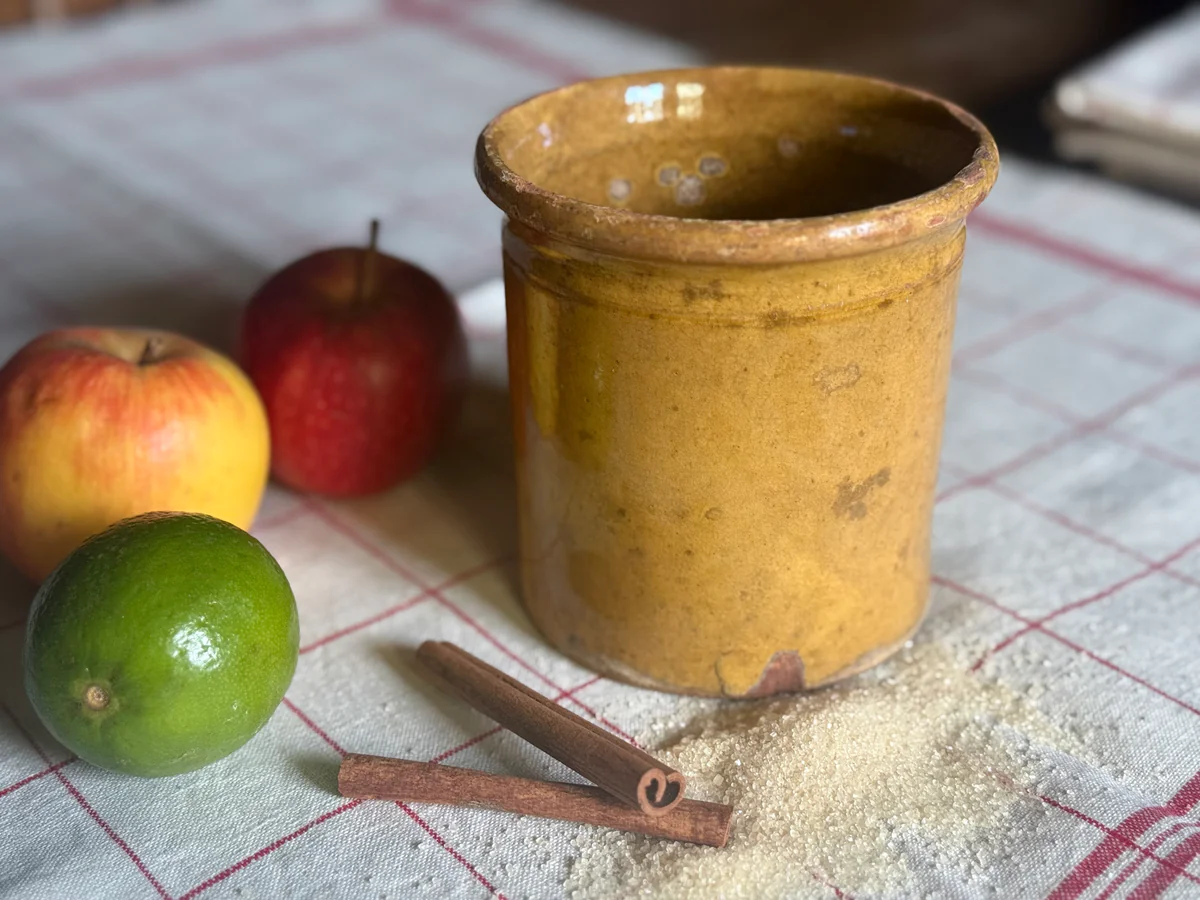
A traditional French jam pot, thrown in pale terracotta and dressed in a lovely honey-yellow glaze that catches the light. Its simple, upright, generous form evokes plum jam simmering on the stove and grandmothers' pantry shelves. A genuine flea-market find, as useful as it is...
☞ Read more
Set it aside — it may be waiting for you
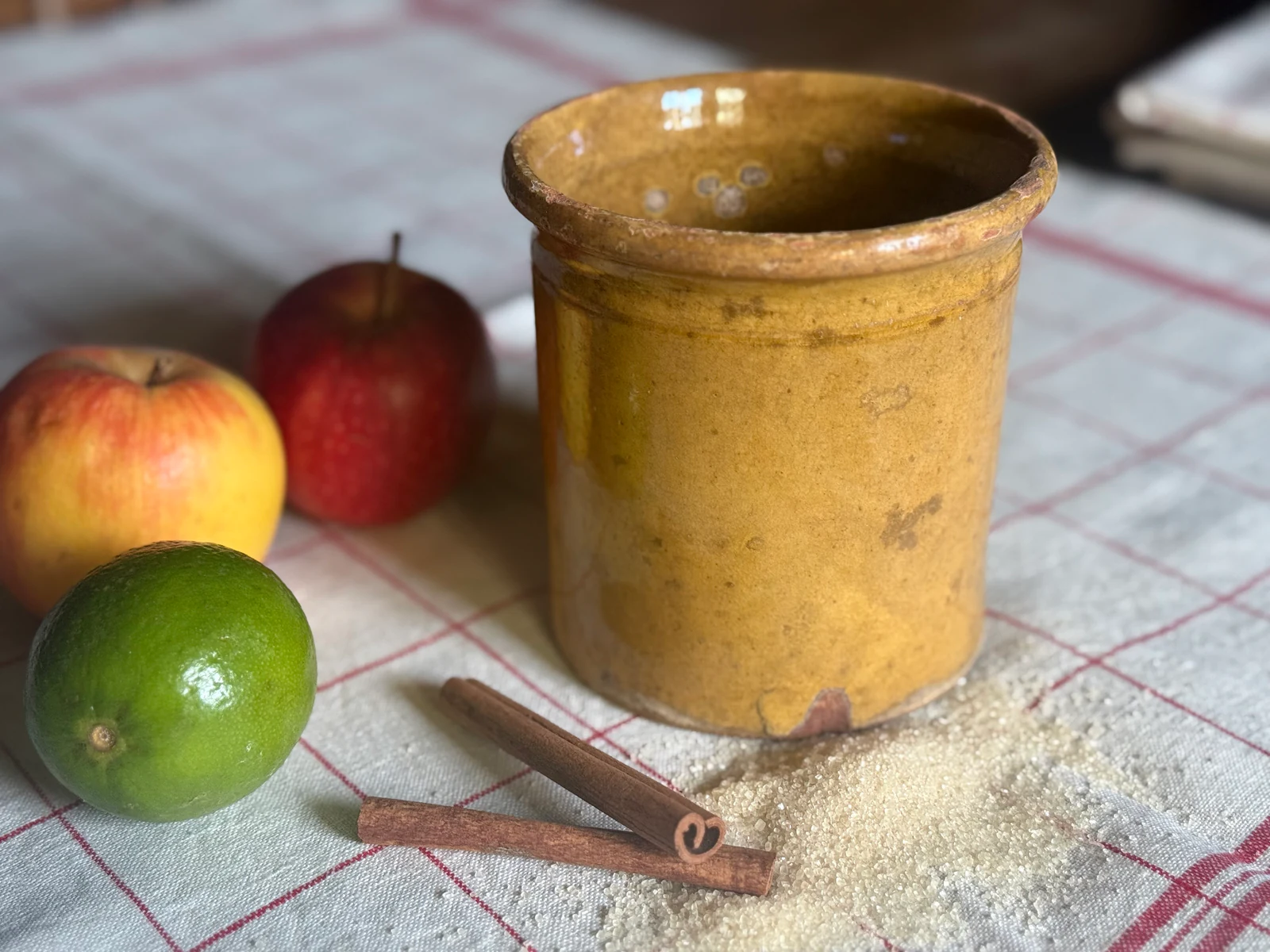
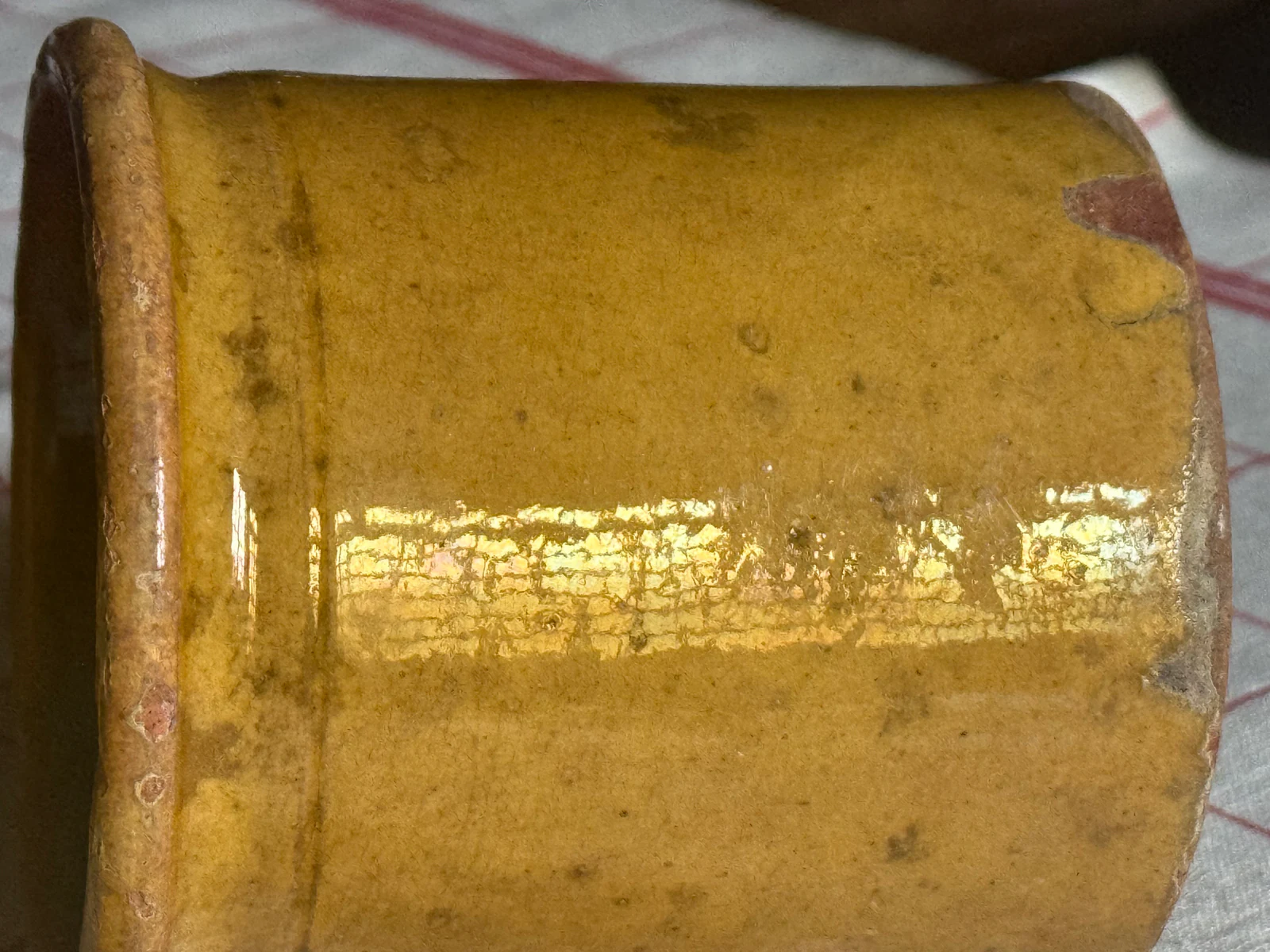
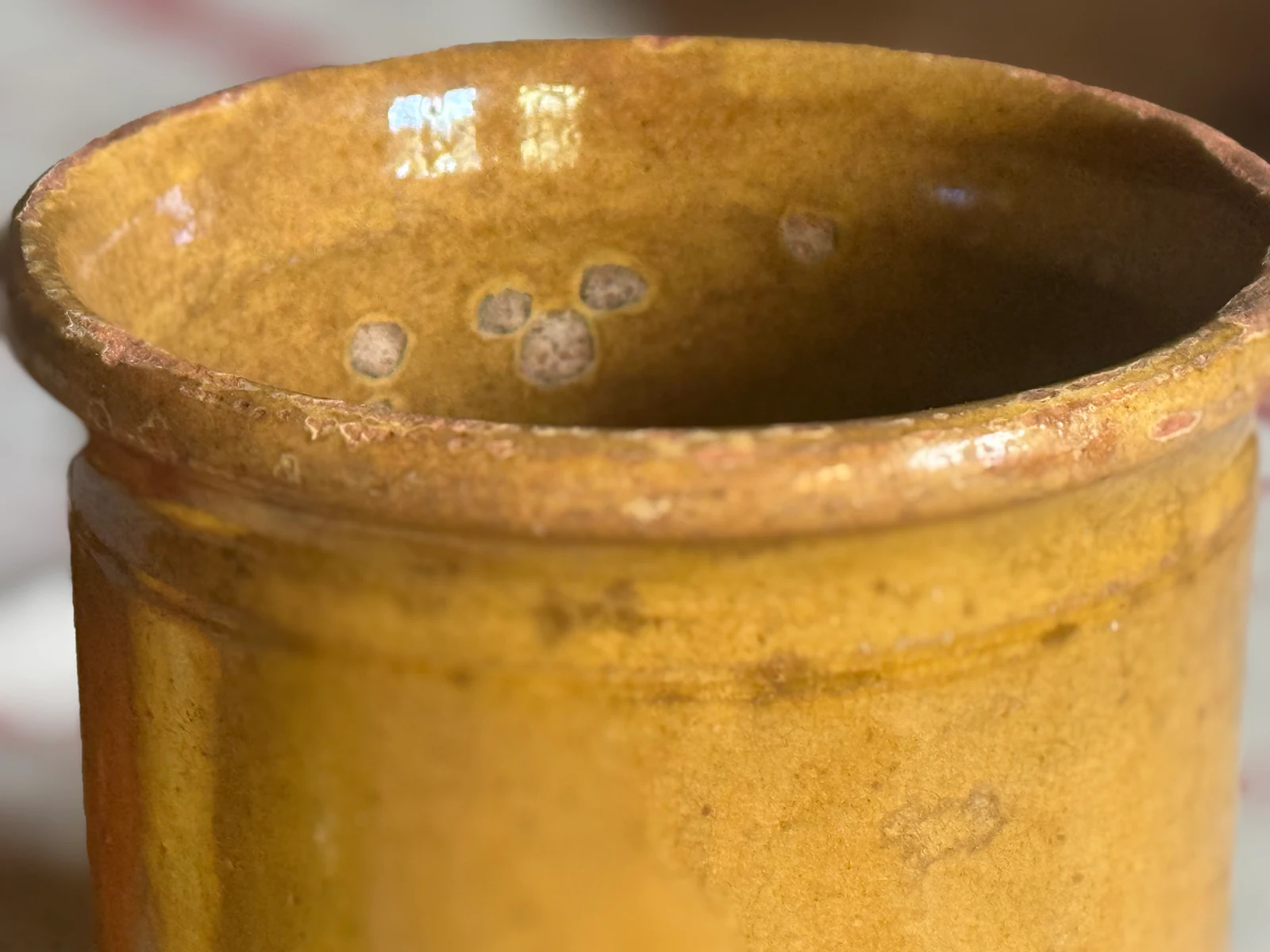
A traditional French jam pot, thrown in pale terracotta and dressed in a lovely honey-yellow glaze that catches the light. Its simple, upright, generous form evokes plum jam simmering on the stove and grandmothers' pantry shelves. A genuine flea-market find, as useful as it is wonderfully decorative.
❝A jam pot the likes of which nobody makes anymore, its honey-yellow glaze carrying the memory of grand old kitchens. ❞
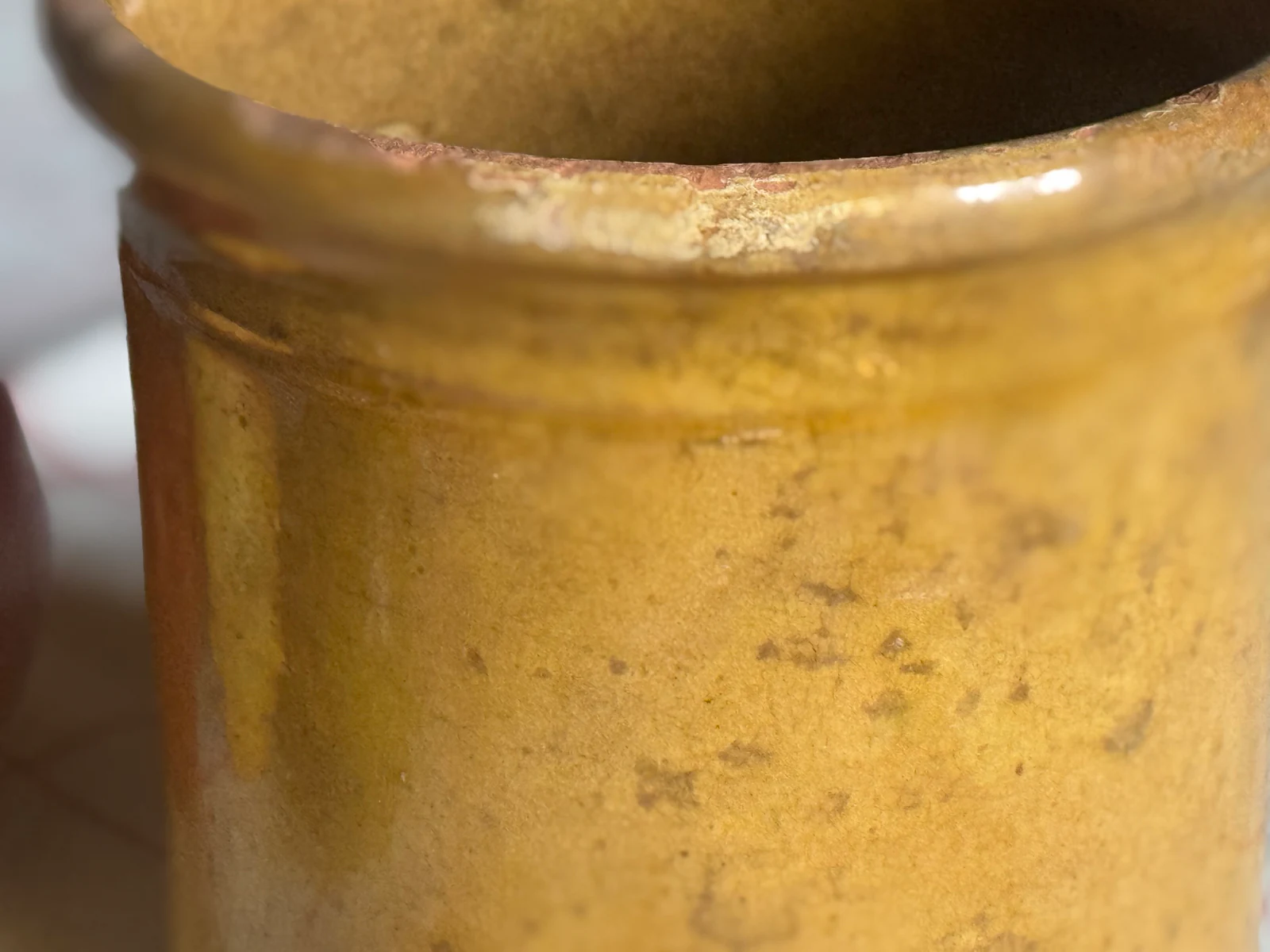
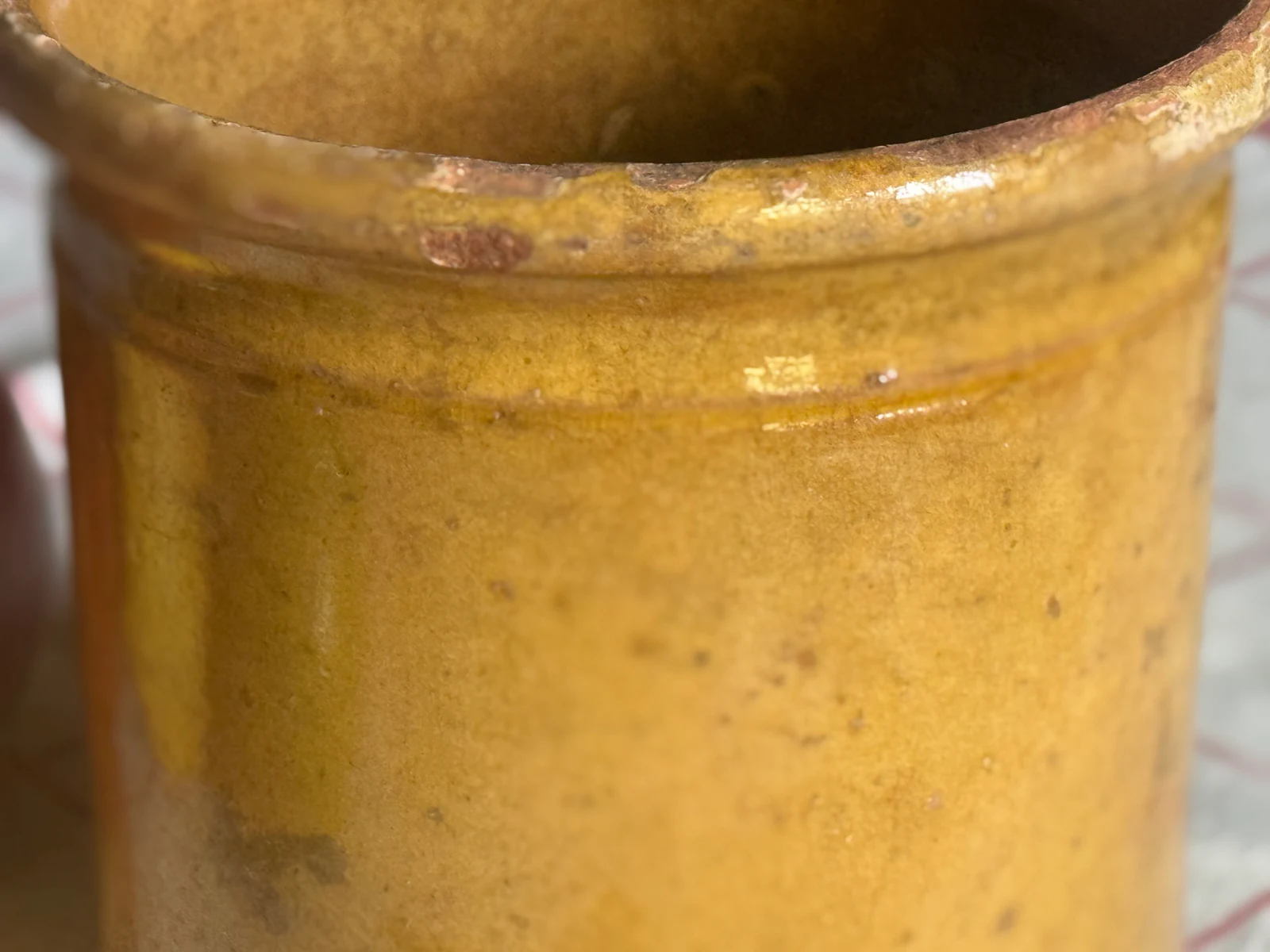
Set on a checked tablecloth beside a few apples and a cinnamon stick, this jam pot immediately commands attention. Its honey-yellow glaze, lightly speckled and glossy in places, catches the light and brings a touch of sunshine to a worktop, a shelf or a farmhouse table. It's the kind of piece you notice before you even know what it was used for.
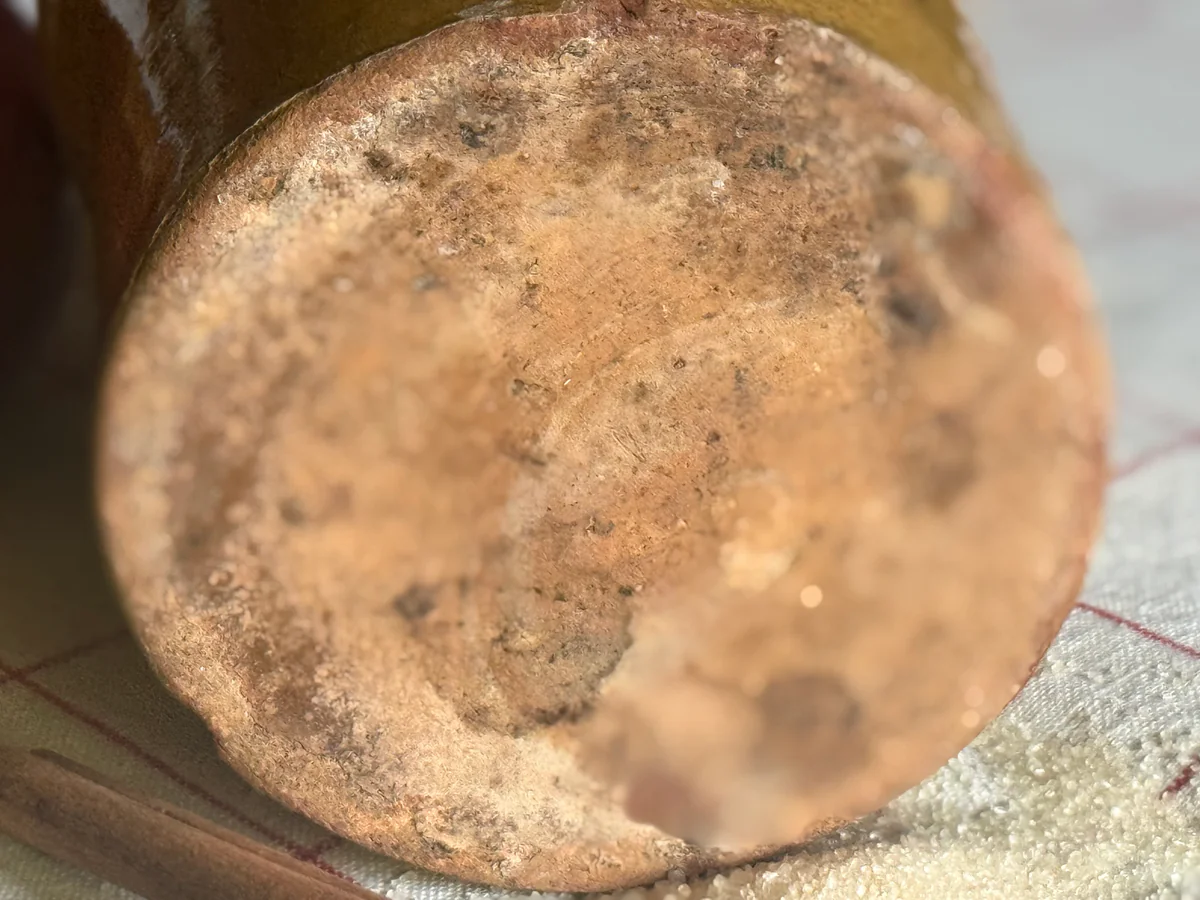
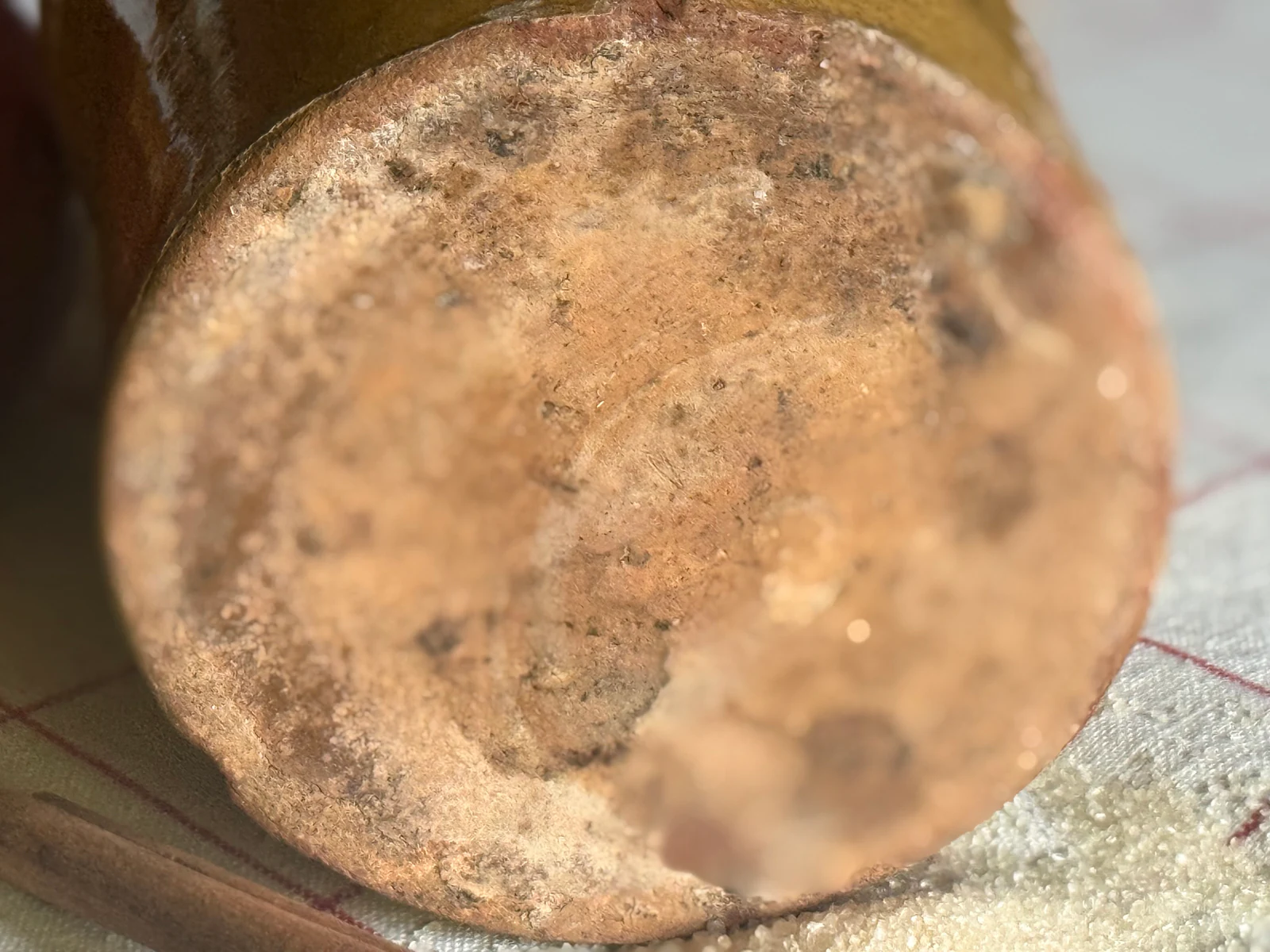
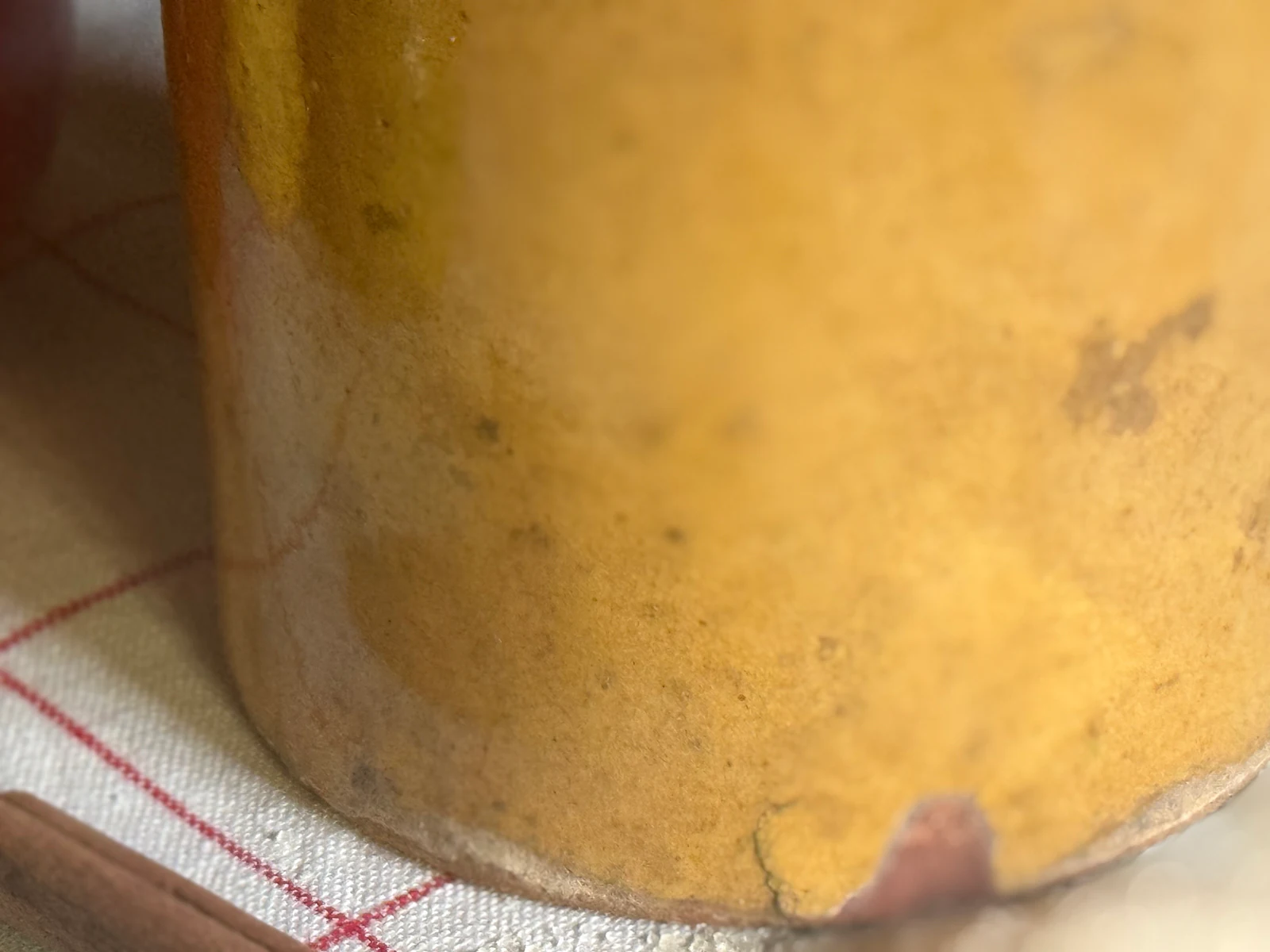
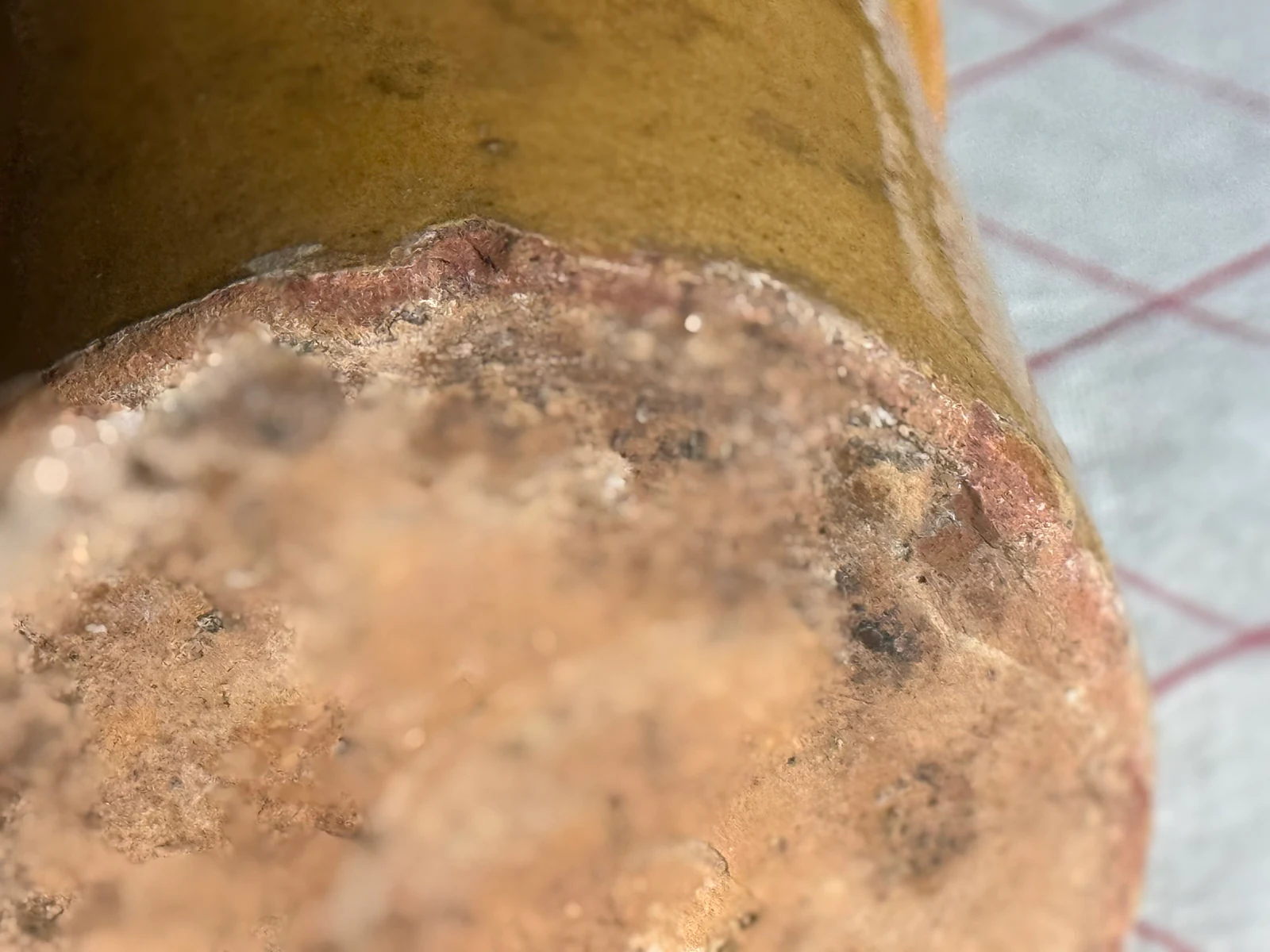
The throwing shows in the imperfect regularity of the belly, in the small ridge marked beneath the neck and in the generous opening, finished with a rounded rim. The base, deliberately left unglazed, reveals an orange-red clay flecked with firing marks: the discreet signature of the workshop. No maker's mark or stamp is visible, which is common for these utilitarian pots produced in series by small regional potters.
This type of pot was used to preserve jams, fruit preserves, fruit in syrup or honey, sealed with a simple cloth or a makeshift lid. It's easy to picture the kitchen filled with fragrance in late summer, the copper pans, the pots lined up on the pantry shelf. A whole slice of French culinary culture fits inside this little cylinder of glazed clay.
Now a decorative object, it holds wooden utensils, dried flowers, brushes or a small succulent. On a kitchen shelf, in a collector's cabinet of utilitarian ceramics or on a festive table, it instantly creates the atmosphere of a family home. Lovers of tableware and flea-market finds will see a characterful piece at a modest price, just waiting to be styled.
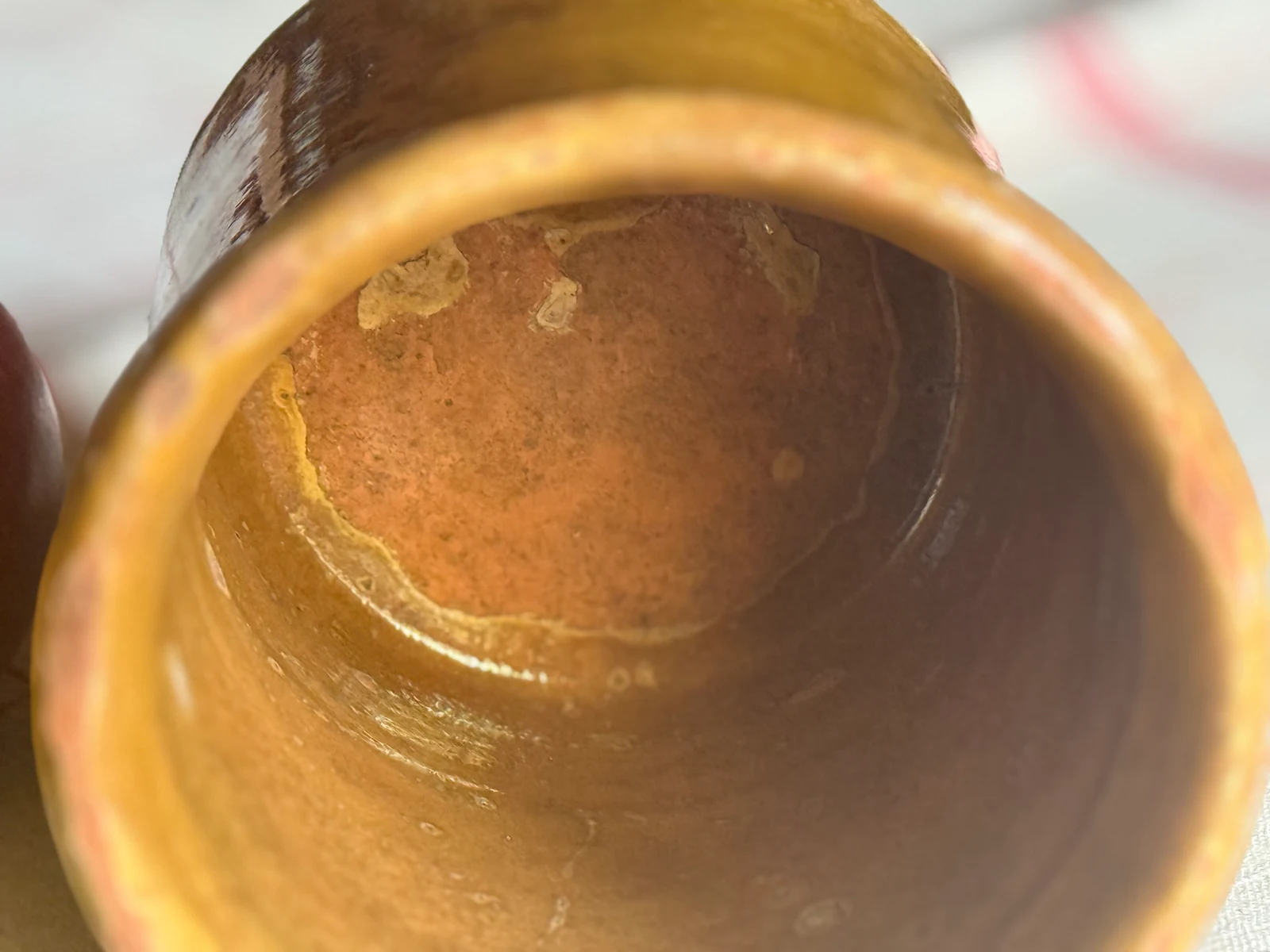
The piece shows the marks of time and use: a few chips and nibbles on the rim and foot, glaze wear, dark traces inside and a base patinated by the years. Nothing that affects its apparent solidity or its charm — quite the opposite: these scars tell the story of its life in a French kitchen. Exact dimensions have not been recorded and remain to be confirmed.
A flea-market find, presumed to be French artisan-made, with no documented history or workshop mark. The circa-1900 dating is based on the seller's notes and on the characteristics of the clay and glaze, and remains to be confirmed.
Why this French jam pot is hard to resist
- Its luminous honey-yellow glaze, hard to find on modern pieces
- Its authenticity: hand-thrown terracotta from around 1900, with nothing artificial about it
- Its versatility: jam pot, utensil holder, planter or vase for dried flowers
- The old-world kitchen atmosphere it brings to a shelf in an instant
- An affordable collector's piece, perfect for starting a collection of French utilitarian ceramics
Set it aside — it may be waiting for you