2
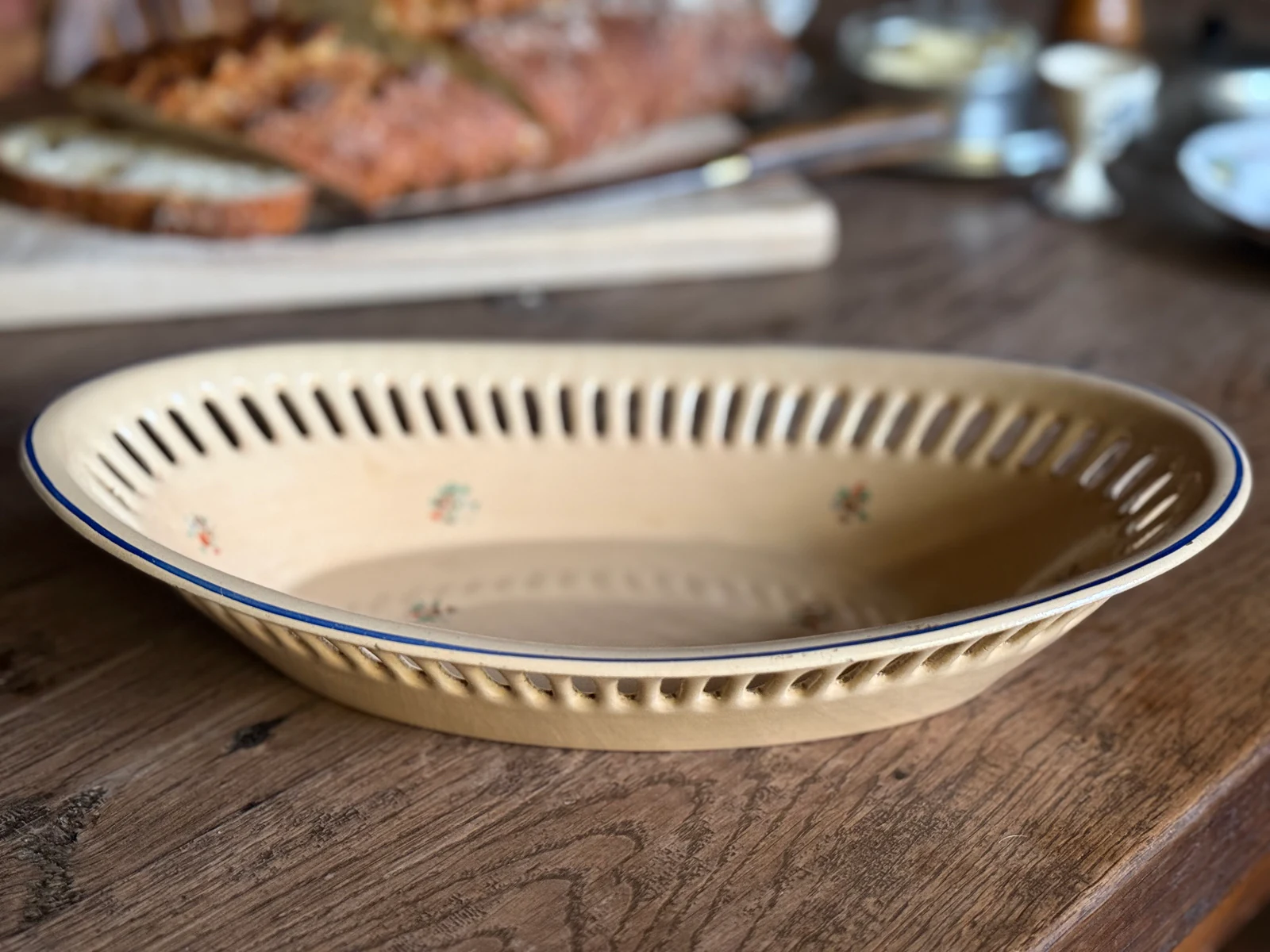
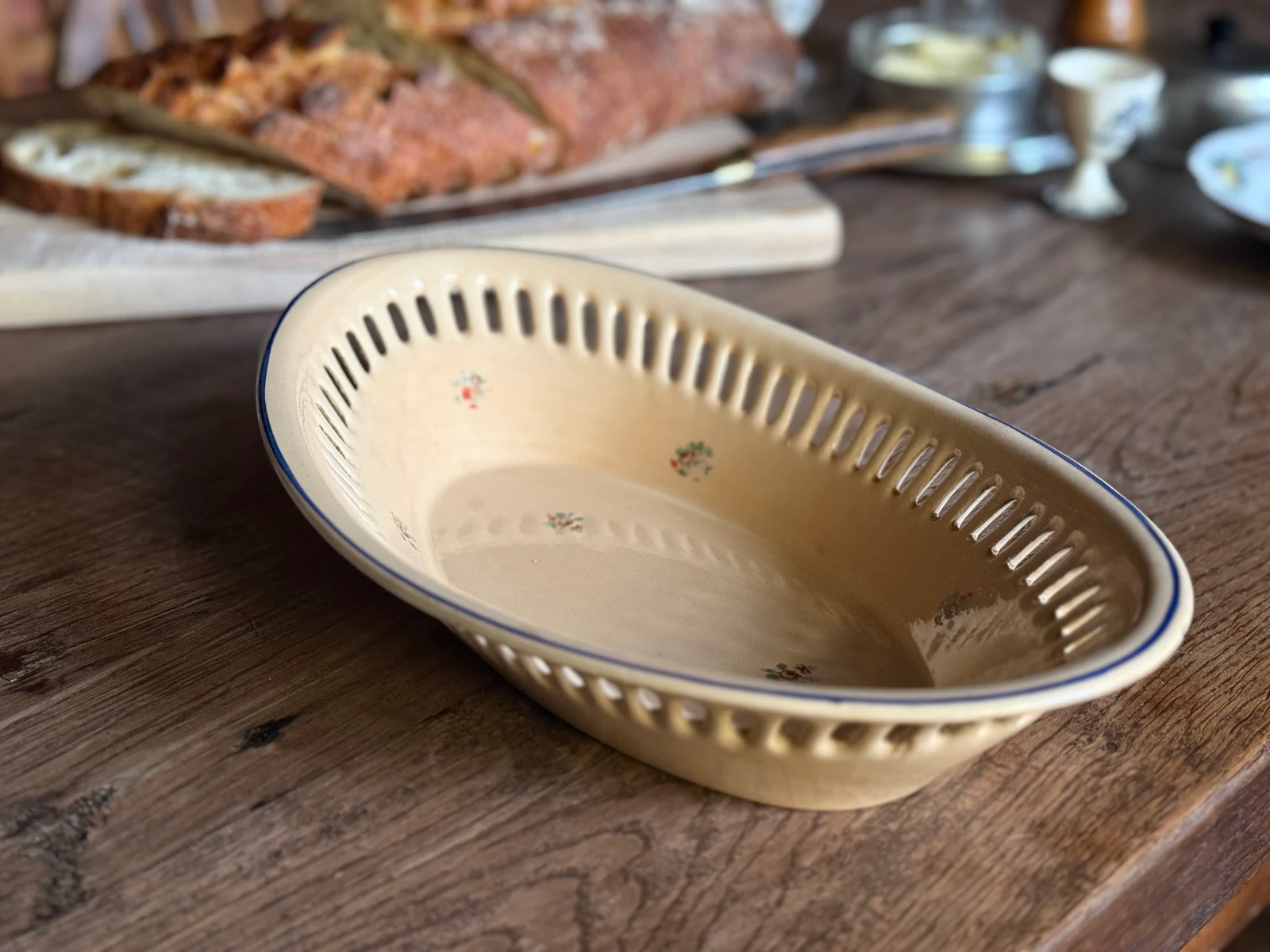
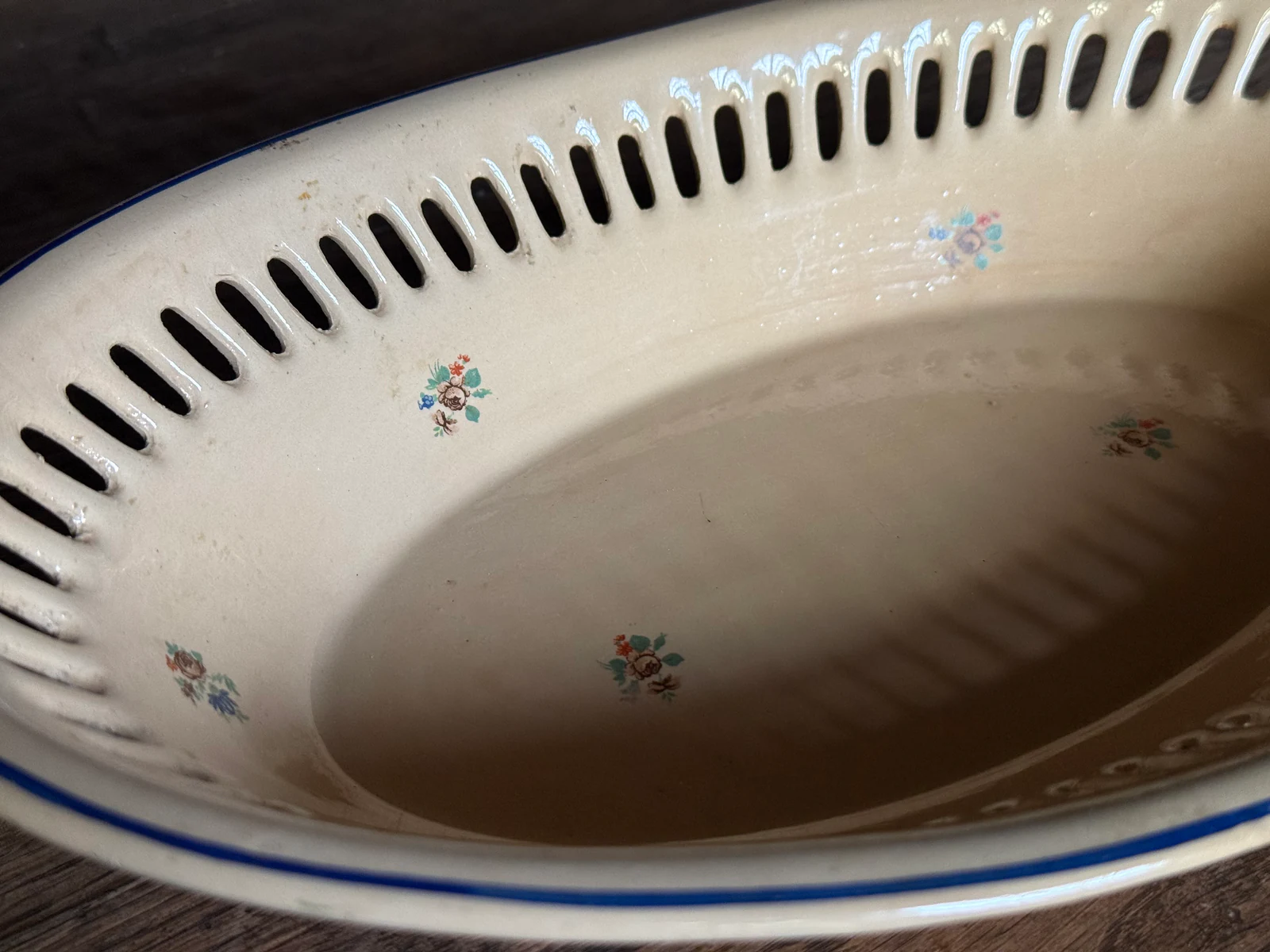
Here is a piece that carries the warmth of a family table: an openwork basket in Badonviller Lunéville faience, edged with a fine blue line and scattered with delicate polychrome flower sprays. A rustic, retro object typical of mid-century Lorraine tableware, it brings an...
☞ Read more
Set it aside — it may be waiting for you
♯baskets ♯table-arts ♯bread ♯faiencerie-de-badonviller-luneville ♯ceramic ♯faience-tin-glazed-earthenware
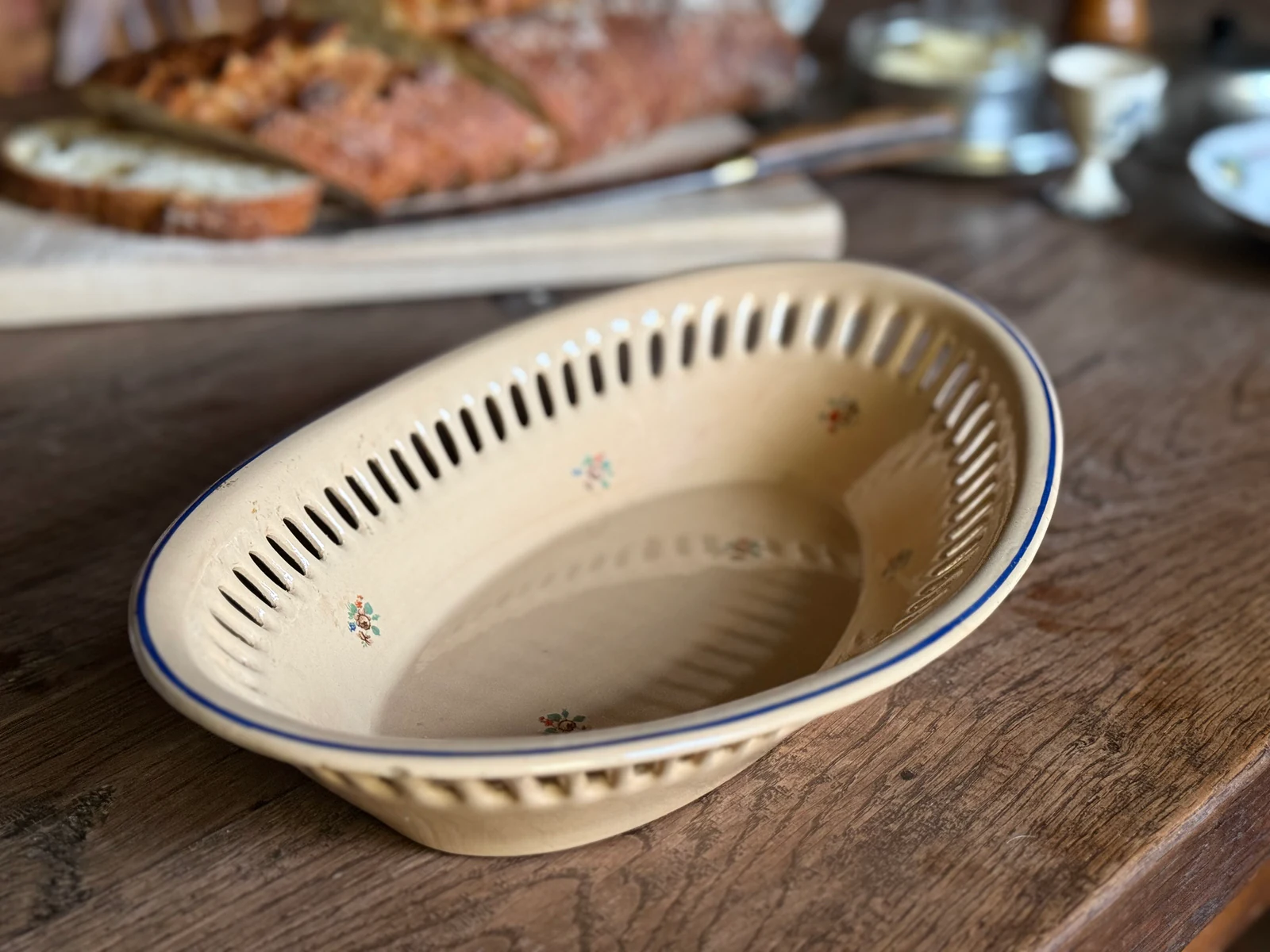
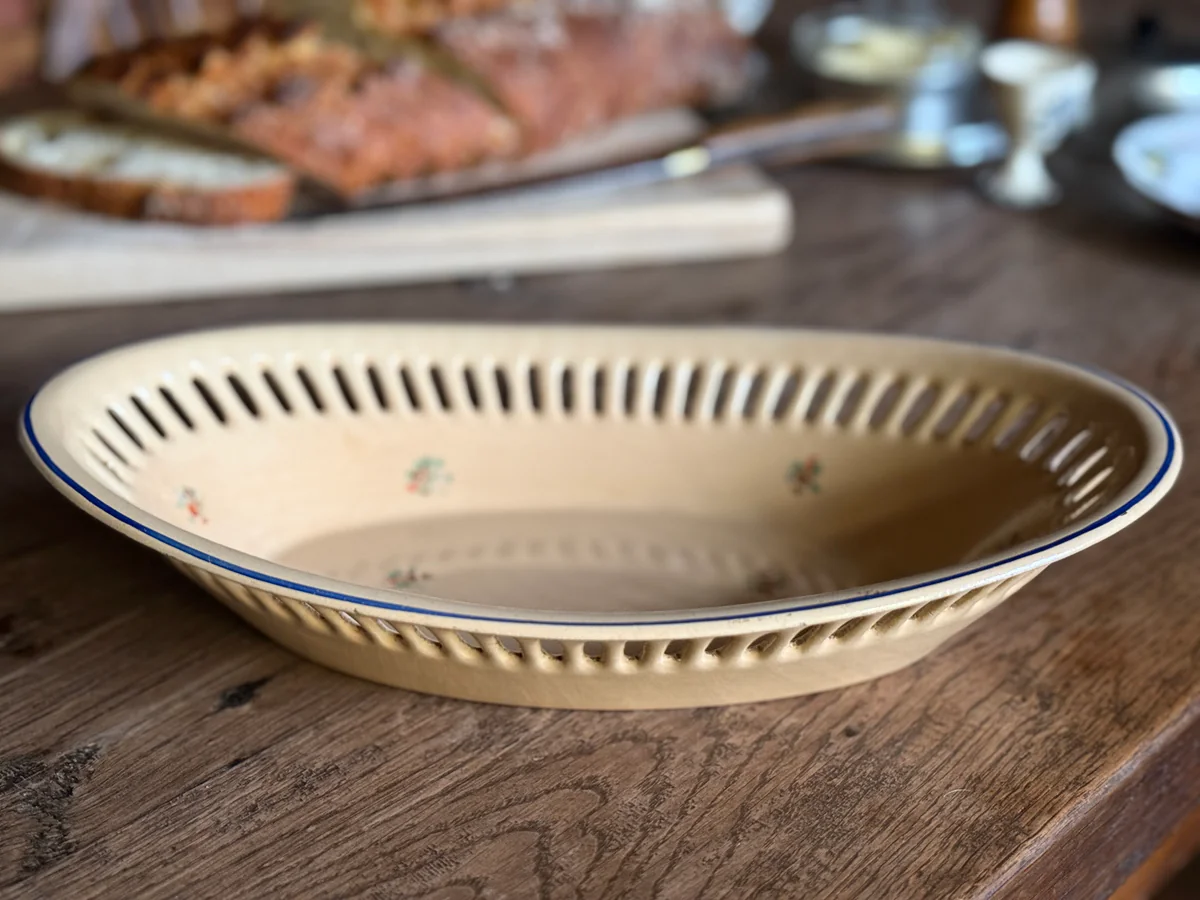
Here is a piece that carries the warmth of a family table: an openwork basket in Badonviller Lunéville faience, edged with a fine blue line and scattered with delicate polychrome flower sprays. A rustic, retro object typical of mid-century Lorraine tableware, it brings an instant country soul to a dining table or a kitchen shelf.
❝An openwork Badonviller Lunéville faience basket, where every little painted bouquet seems to tell of a Sunday in the countryside. ❞
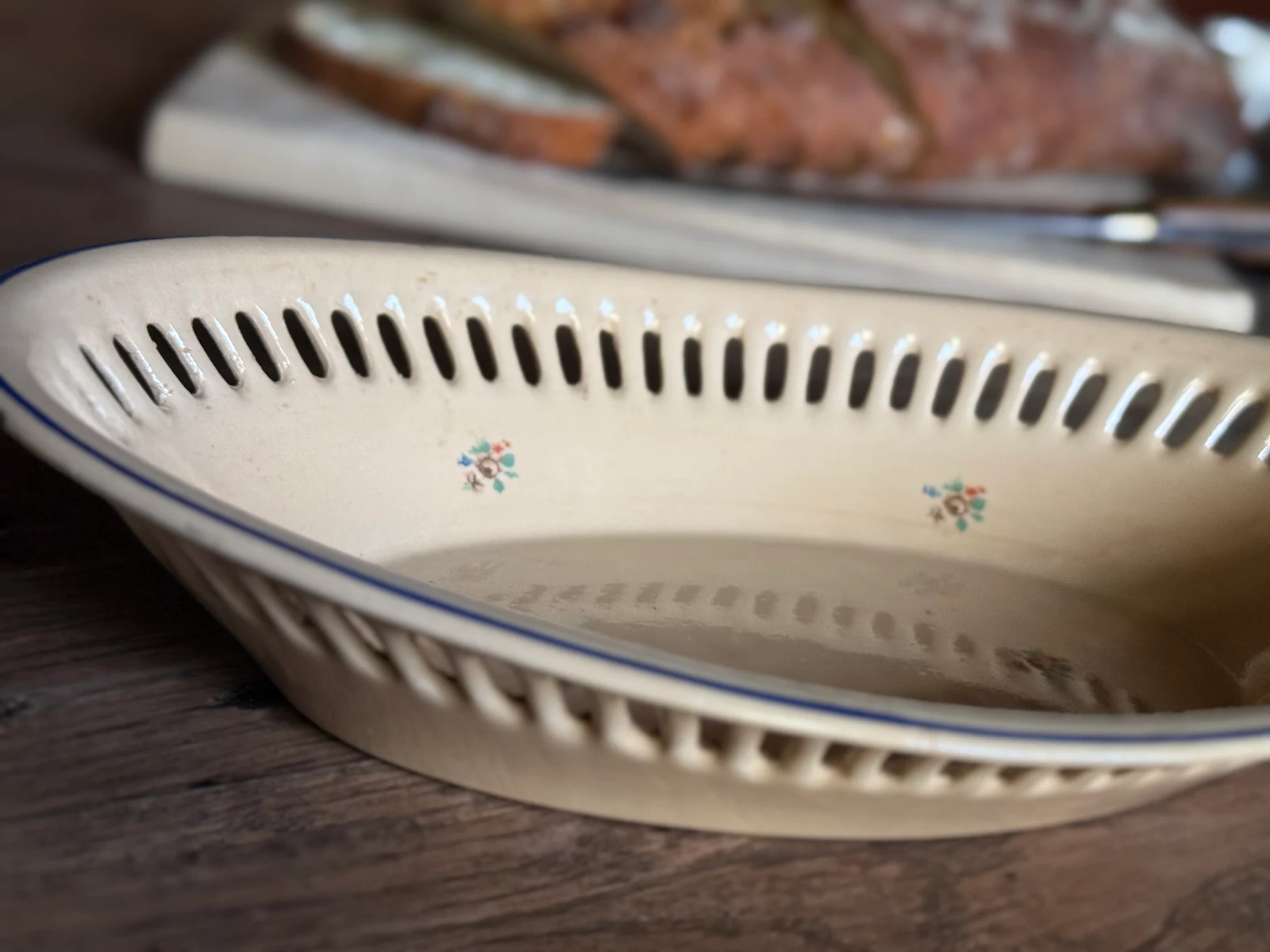
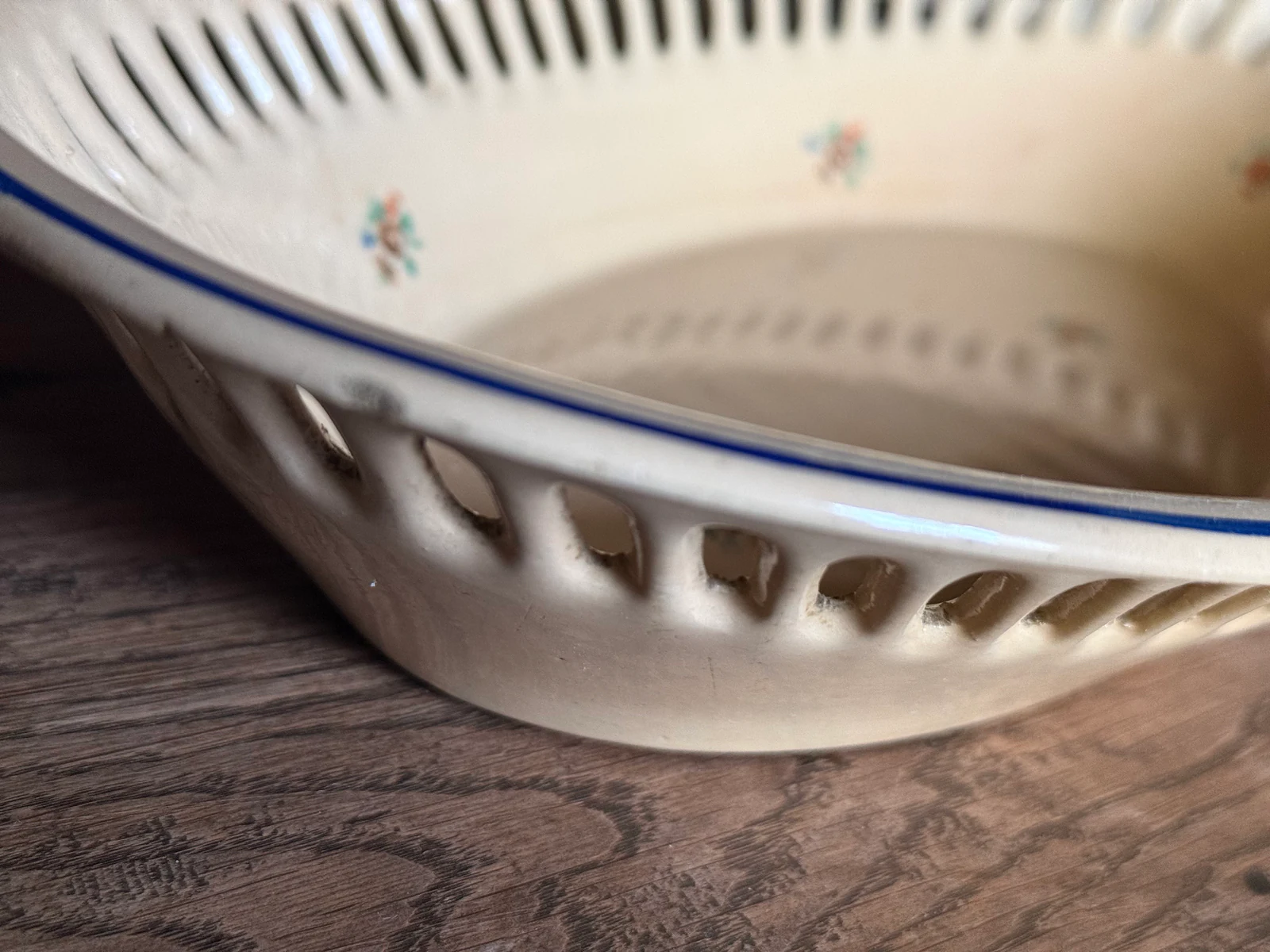
Oval and gently flared, this piece has a pierced shoulder worked with a row of regular vertical slots — the celebrated openwork motif that lets the contents breathe and the light play through. The upper rim, picked out with a bold blue line, draws a simple, elegant contour that gives the whole silhouette its structure.
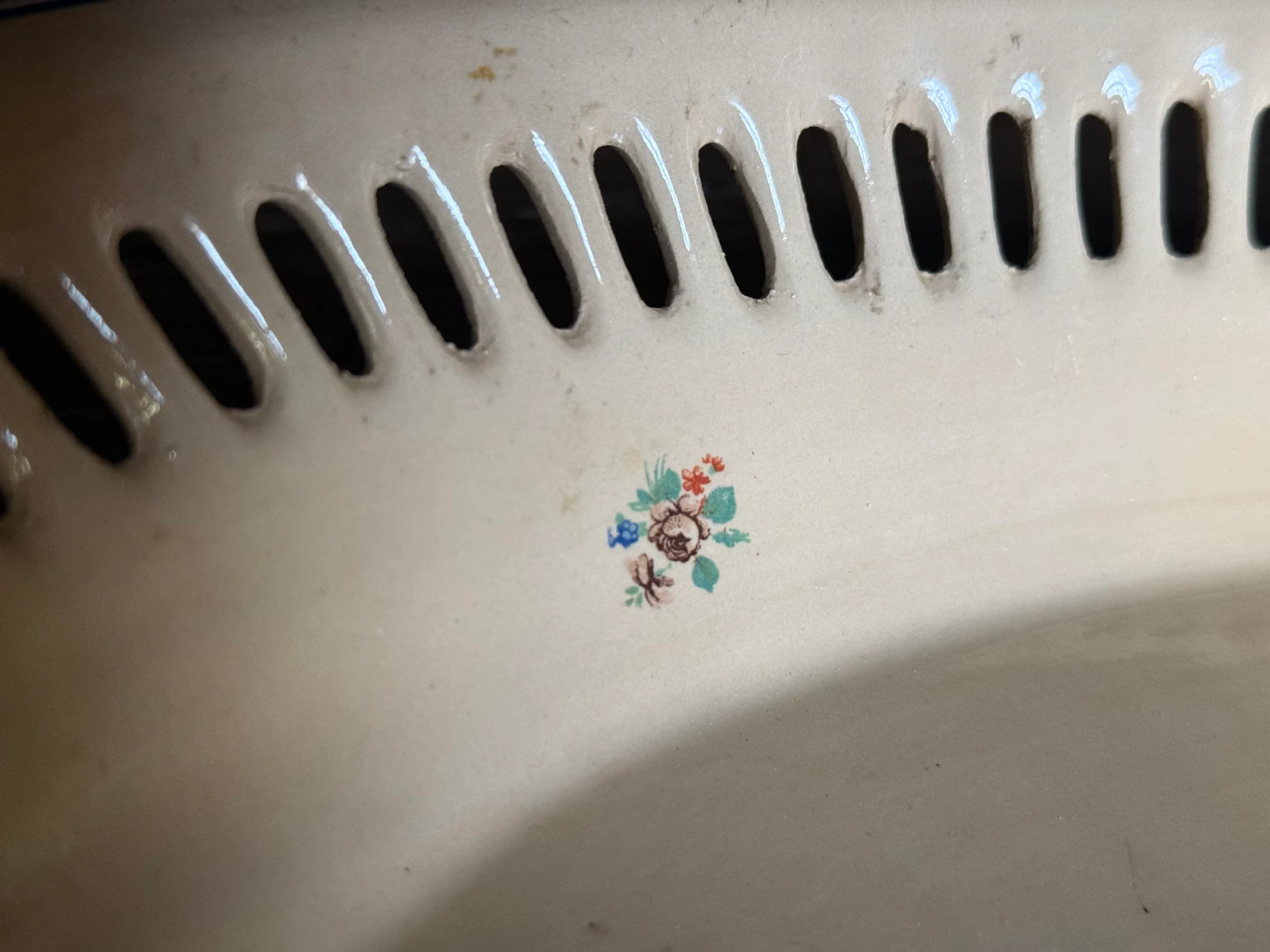
Inside and out, small scattered bouquets of polychrome flowers — pinks, blues, soft greens — are sown with the quiet regularity of traditional decoration. It is precisely this floral repertoire, at once naive and refined, that built the reputation of Badonviller and Lunéville table services in the last century.
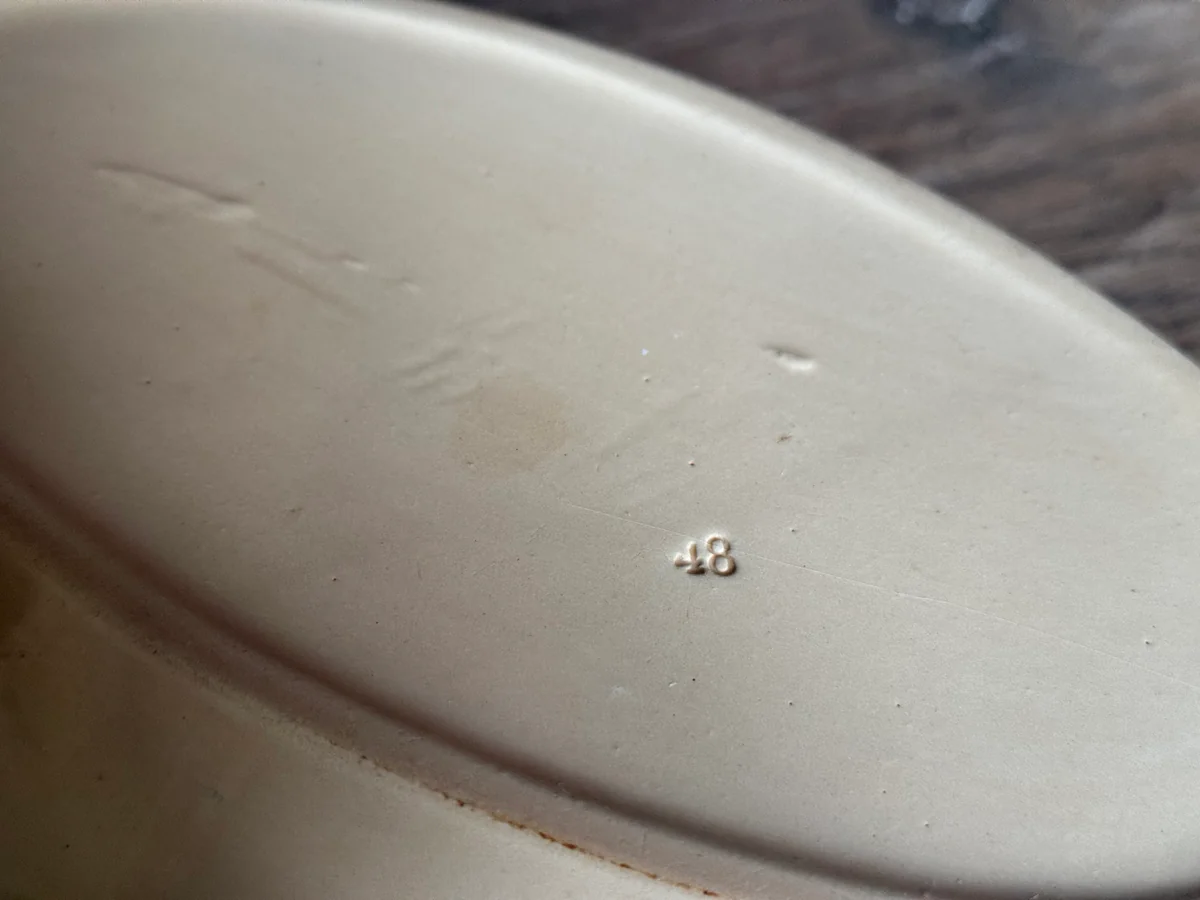
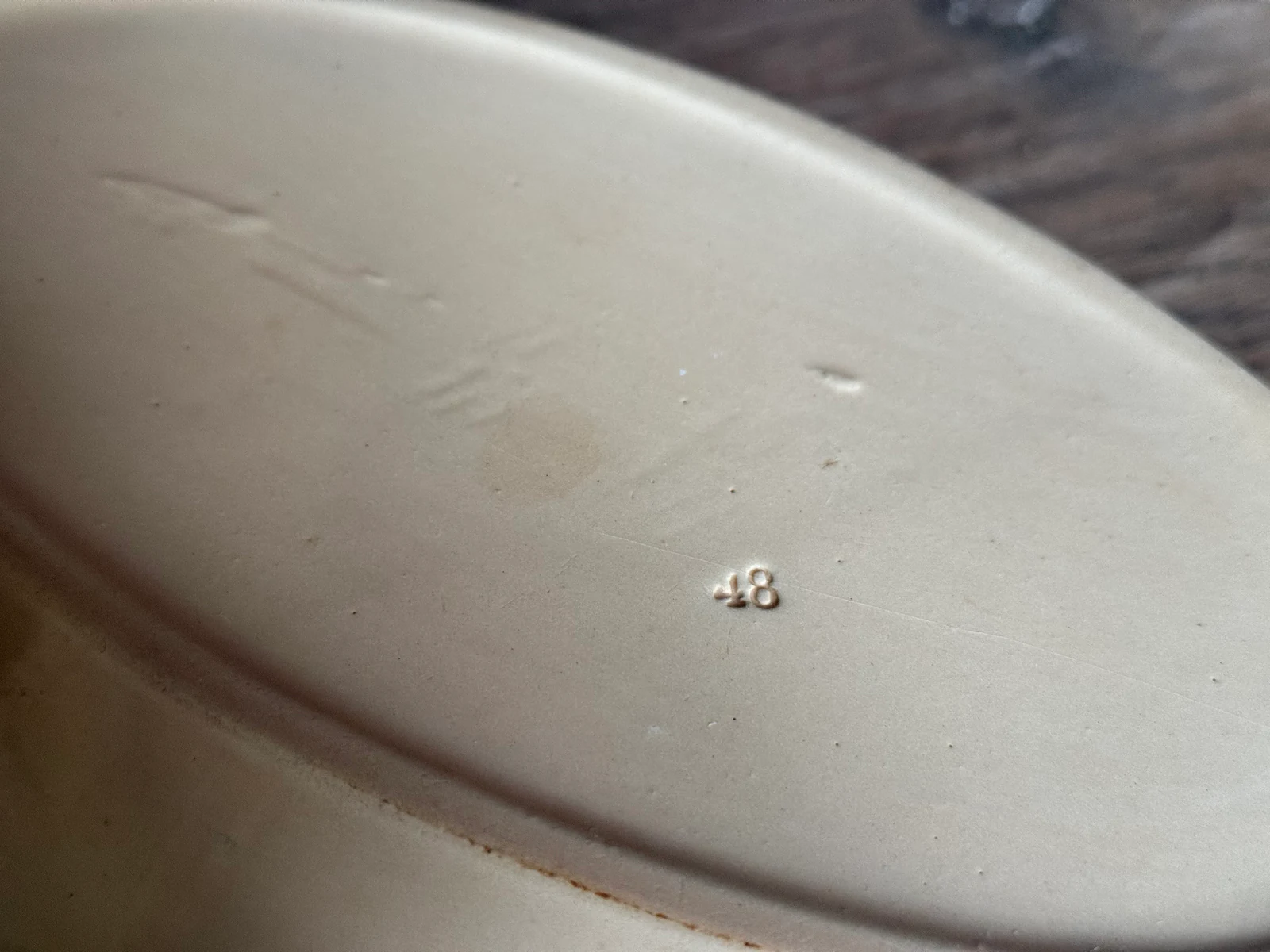
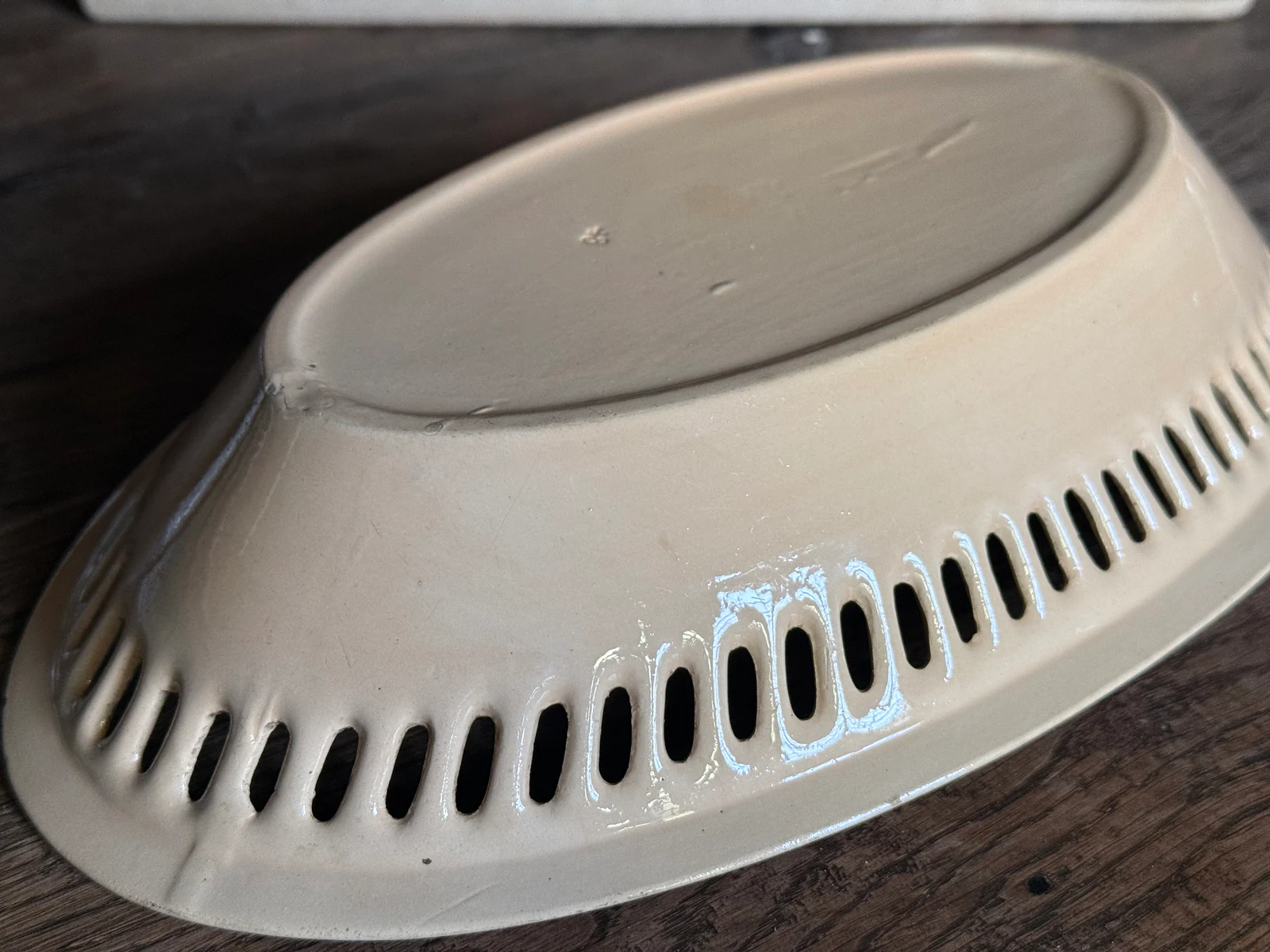
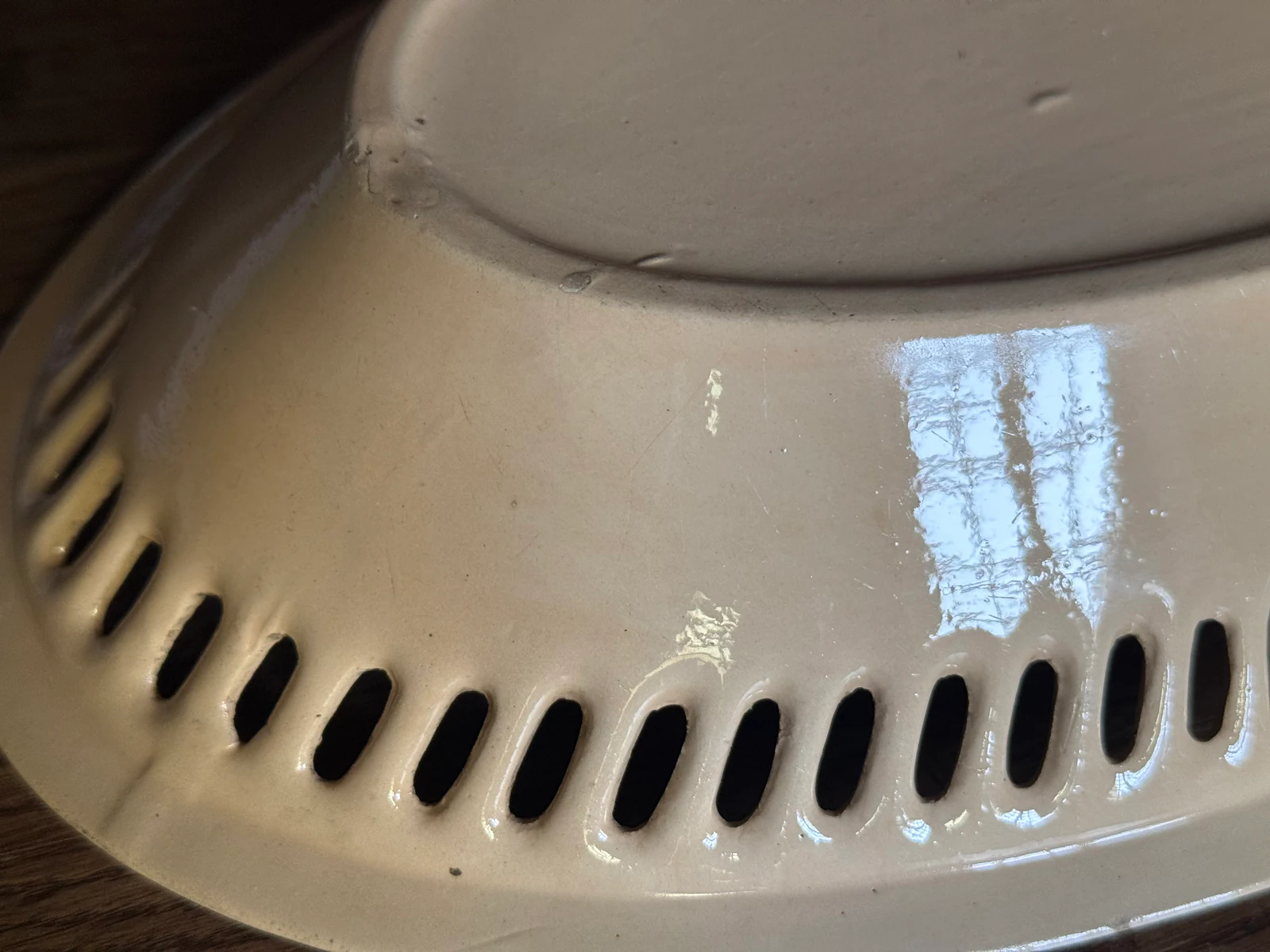
The piece is faience, a warm material with a soft touch and a slightly glossy ivory glaze. Under the base, the figure "48" pressed into the clay most likely indicates a shape or size number, a common practice in Lorraine potteries; no handwritten signature is visible in the photographs provided.
On a festive table it holds sliced bread, eggs, fruit or small treats; on a sideboard it becomes a poetic catch-all or a simple decorative object. Paired with mismatched plates, old glasses and a linen cloth, it creates the much sought-after brocante and table-arts mood.
The modelling, the regular slots and the hand-painted decoration all point to artisanal work. Some signs of use and slight glaze irregularities are visible, consistent with the object's age and history; exact dimensions have not been recorded and remain to be confirmed.
Faience attributed to the Badonviller Lunéville works in Lorraine (now part of the Grand Est region). The incised number "48" under the base is a shape or size marker common among Lorraine faience makers.
Why bring home this openwork basket?
- A polychrome floral decoration typical of Badonviller Lunéville faience
- A rare, graphic openwork shape, instantly recognisable
- The rustic, retro charm of Lorraine tables in the mid-20th century
- A versatile piece: bread, eggs, fruit, or simply a decorative object
- The authenticity of French faience that grows a little more valuable every day
Set it aside — it may be waiting for you