2
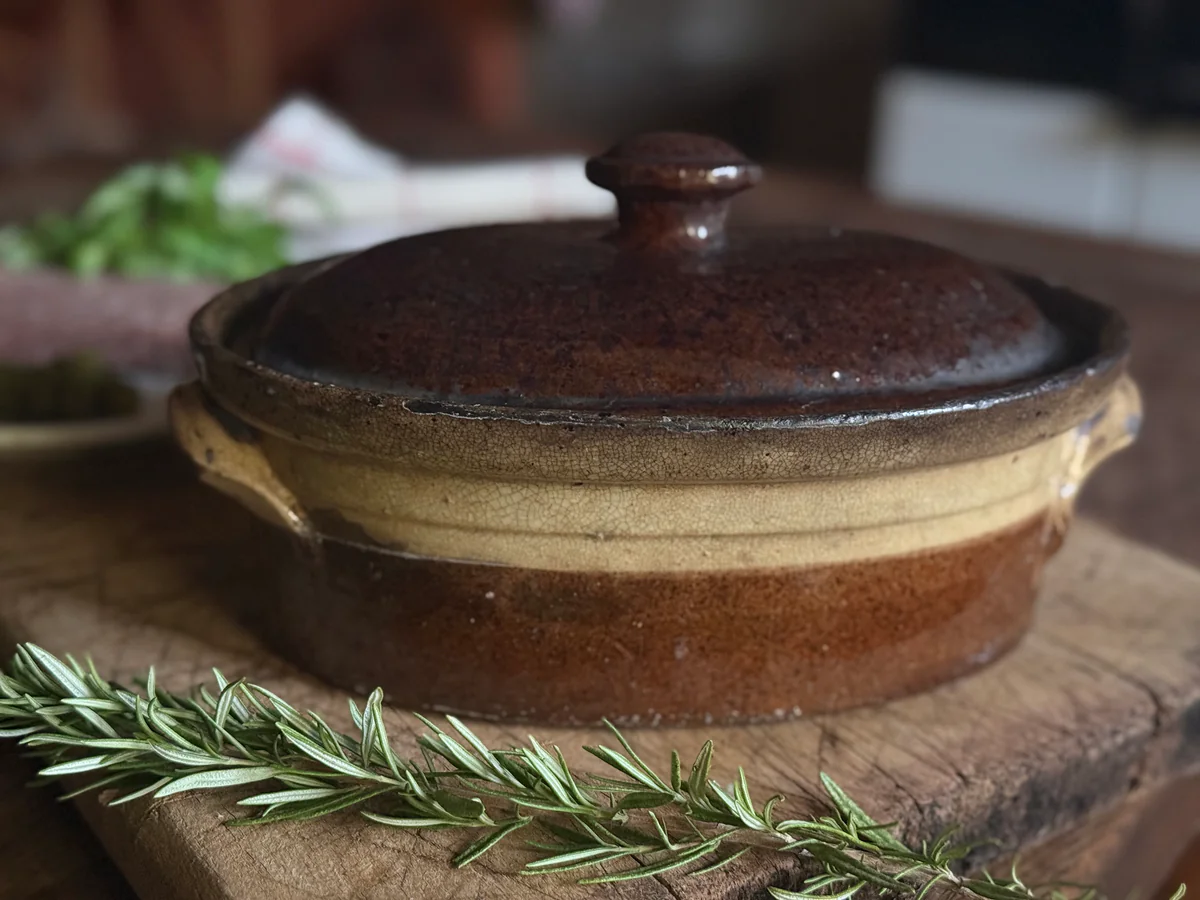
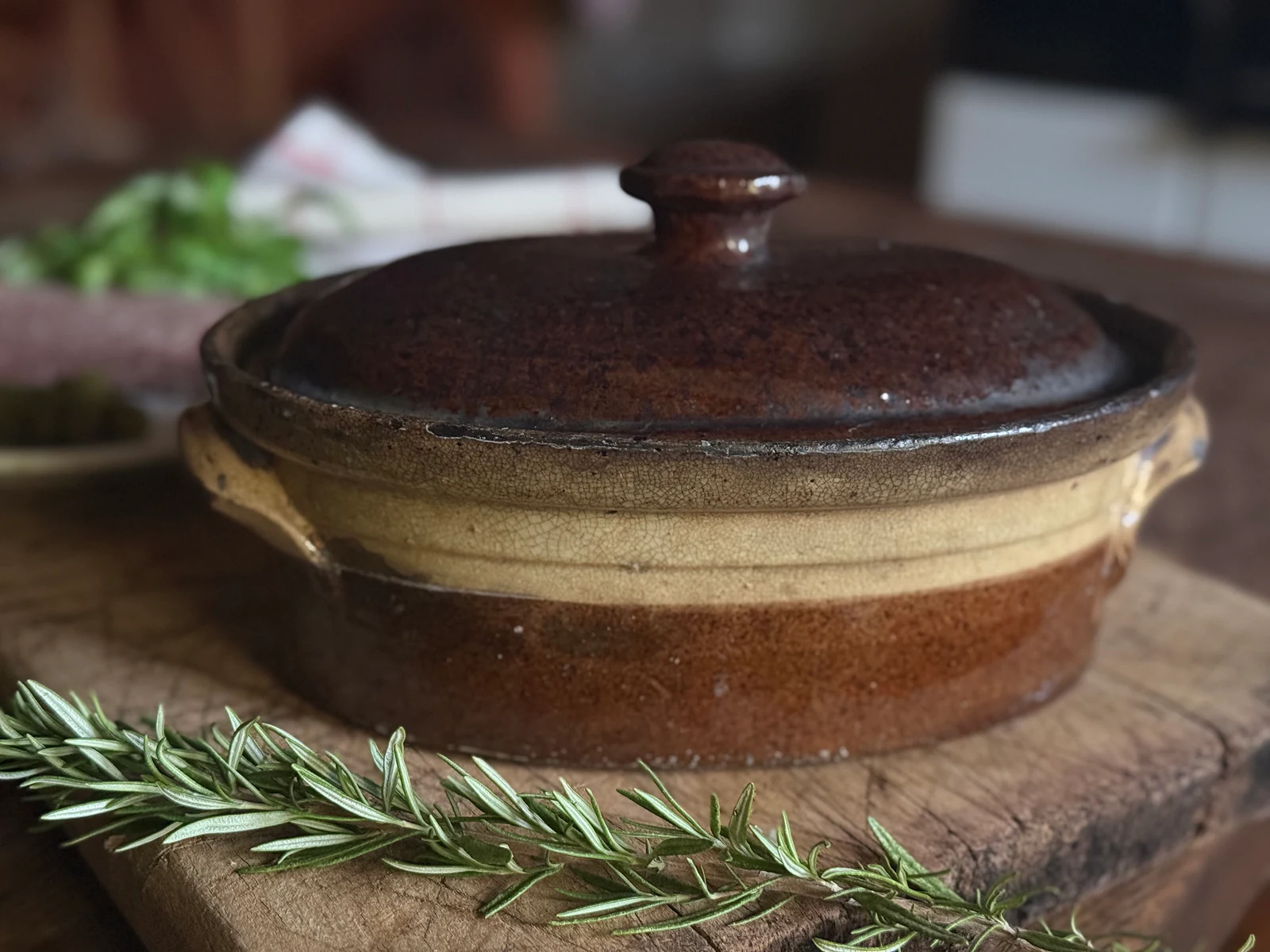
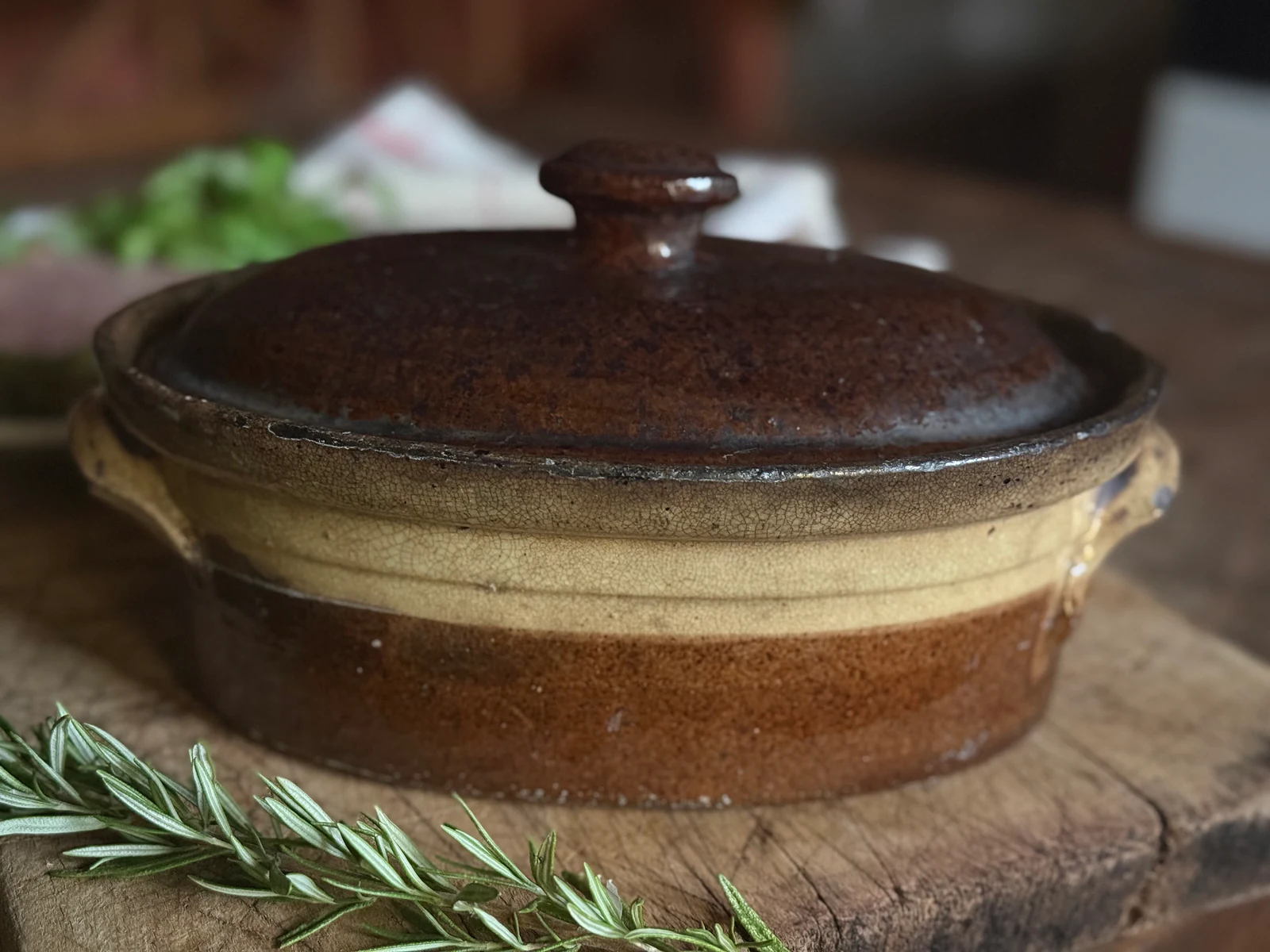
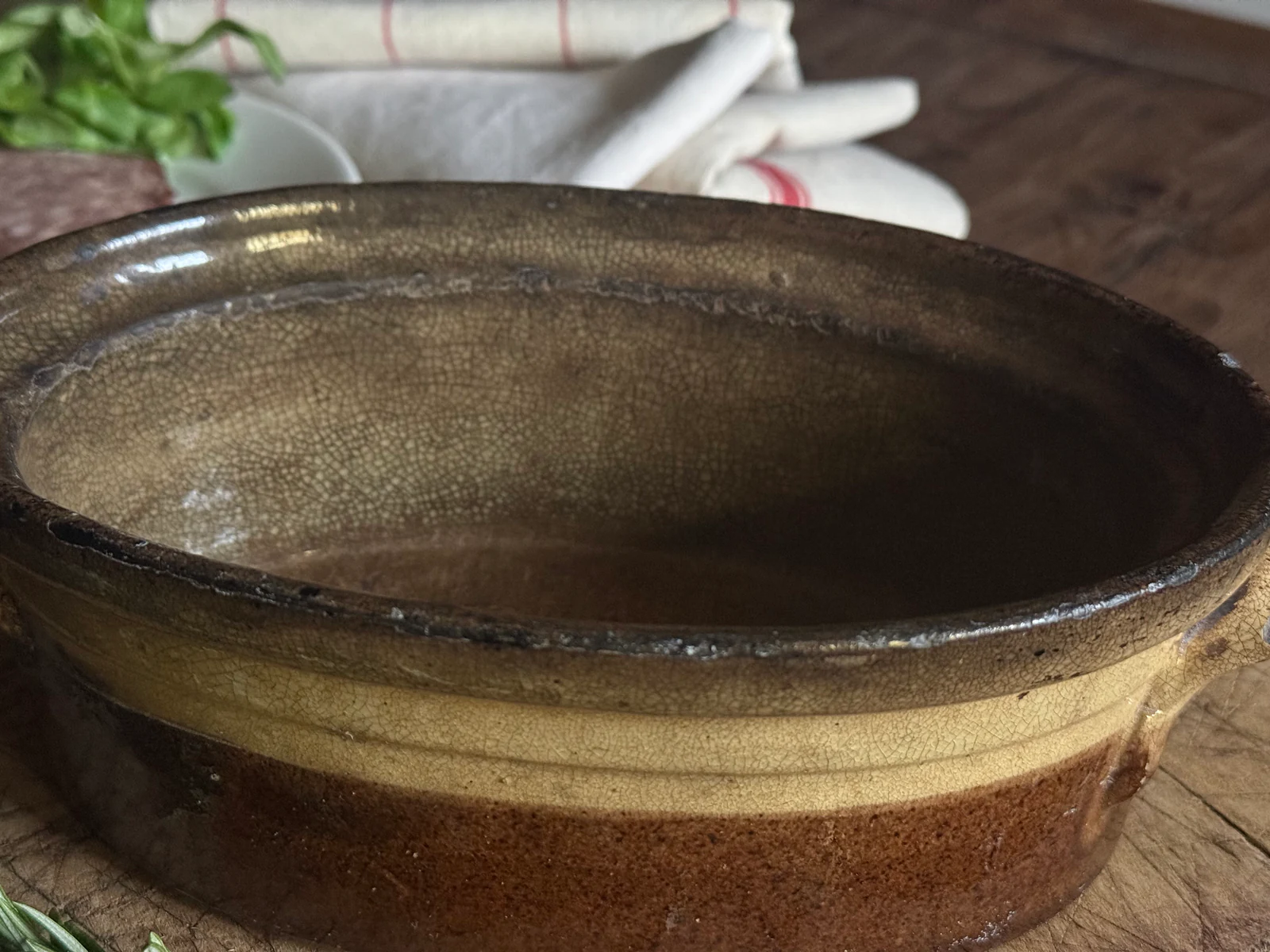
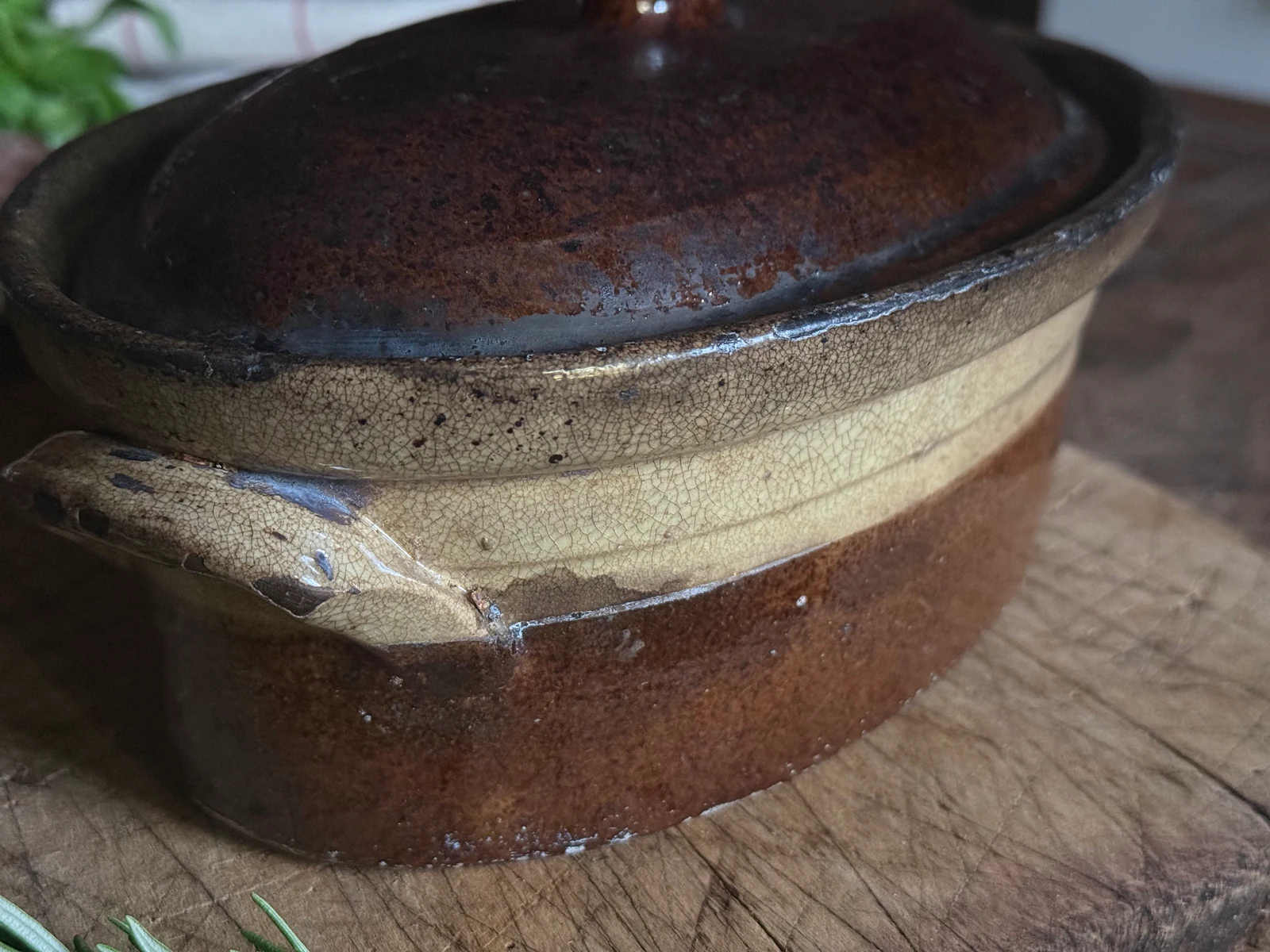
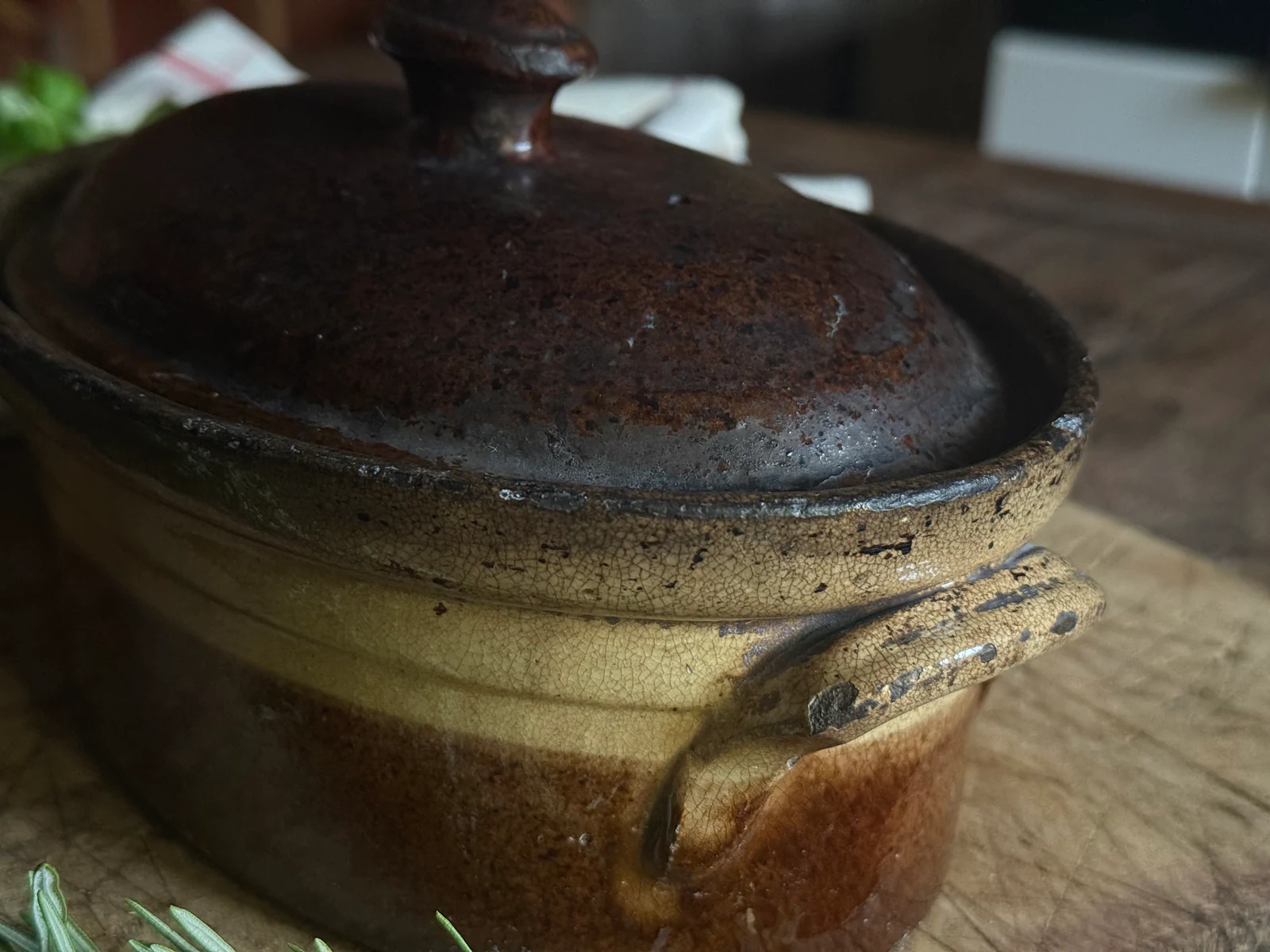
Here is an antique glazed stoneware terrine, round and sturdy, with two side handles and its domed lid topped by a knob. Its deep brown glaze is crossed by a broad ochre band around the belly, beneath a fine web of even crazing. A piece with real presence — rustic and refined at...
☞ Read more
Set it aside — it may be waiting for you
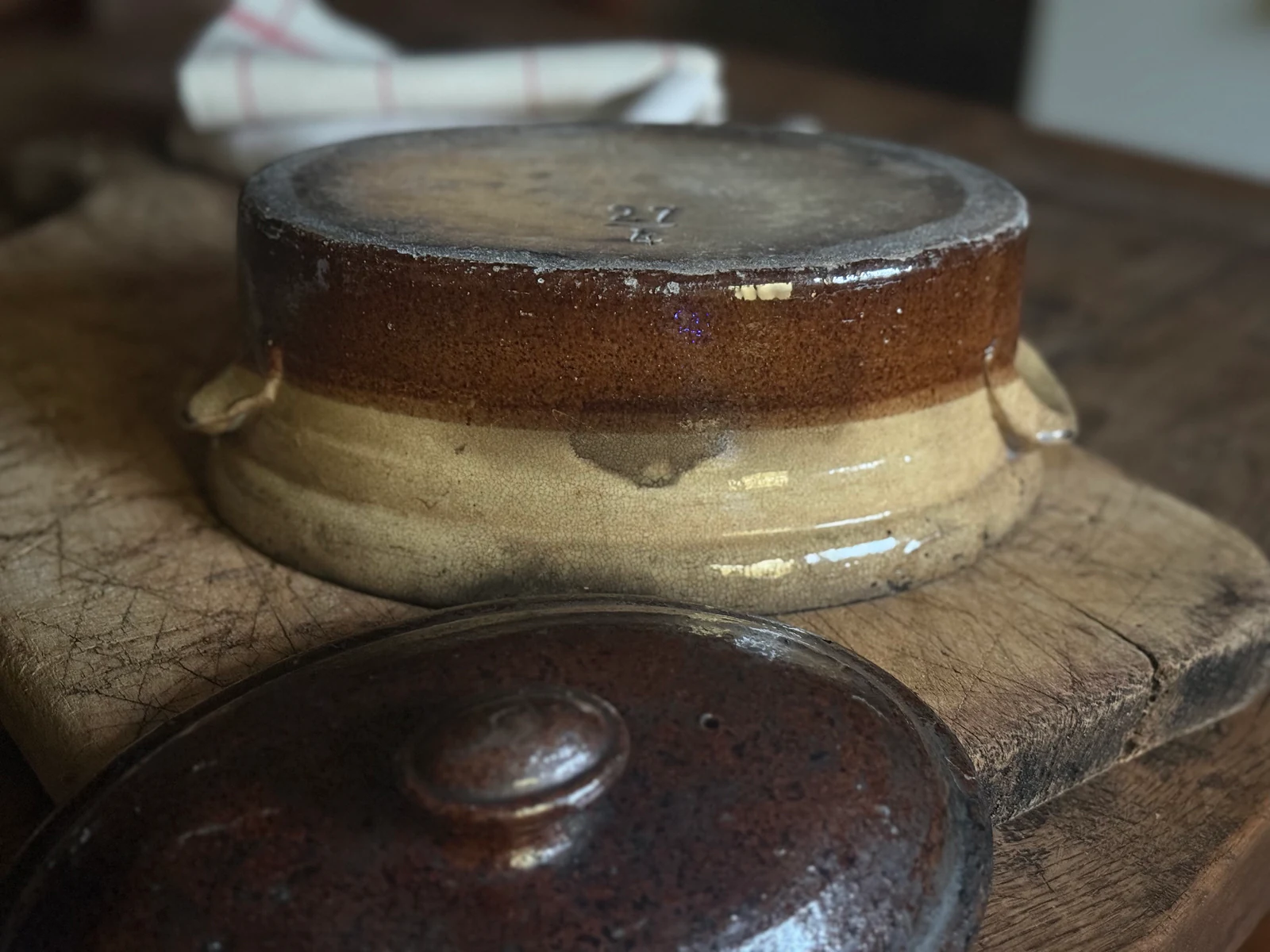
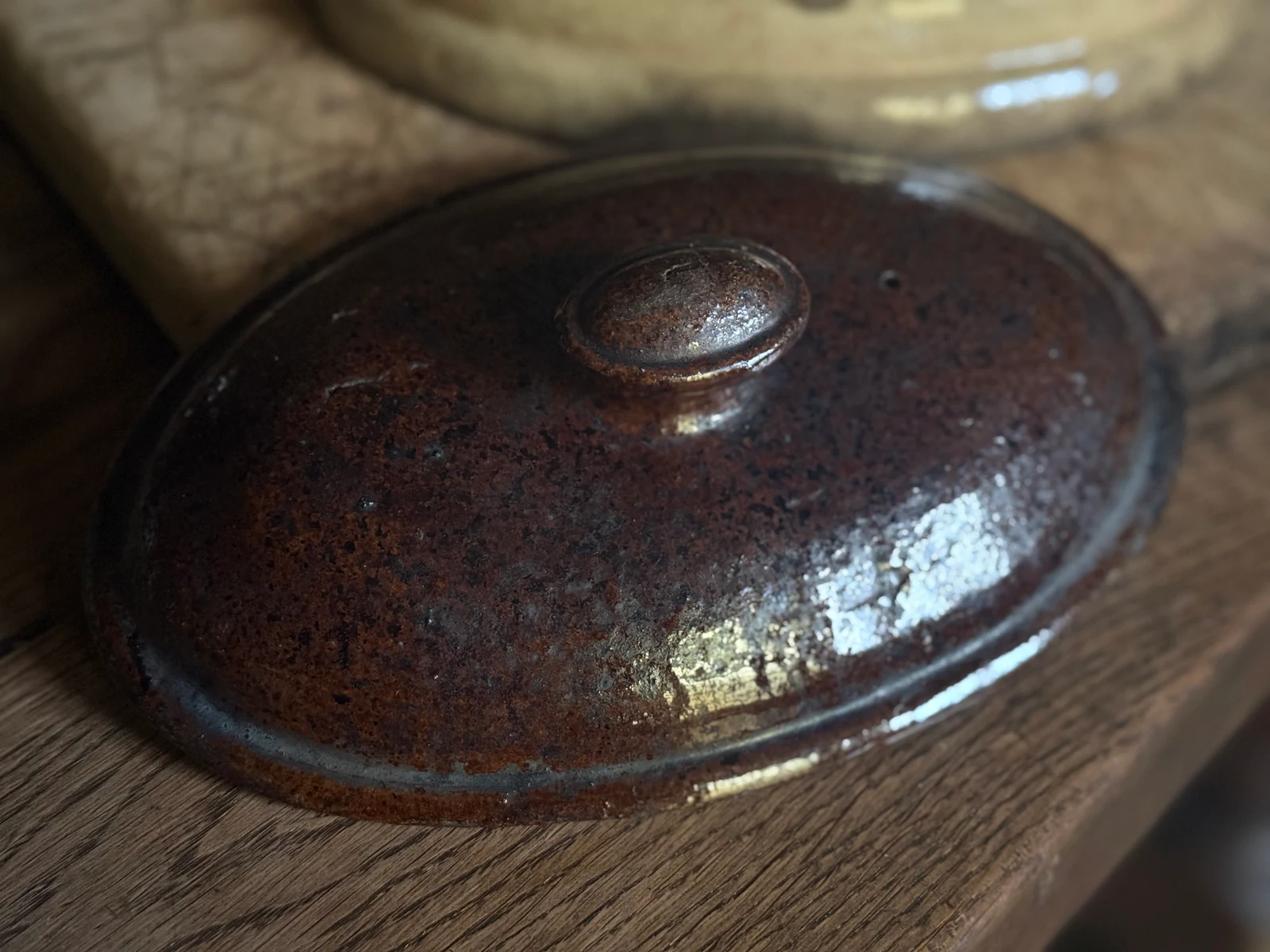
Here is an antique glazed stoneware terrine, round and sturdy, with two side handles and its domed lid topped by a knob. Its deep brown glaze is crossed by a broad ochre band around the belly, beneath a fine web of even crazing. A piece with real presence — rustic and refined at once — that speaks of kitchens from another era.
❝A rustic terrine with the soft glow of age, as if it had just stepped out of a family dresser. ❞
This glazed stoneware terrine takes us back to the turn of the twentieth century, when country terrines held pride of place on farmhouse tables and in middle-class homes alike. Pâtés, rillettes, slow-cooked stews and hearty dishes were prepared in it, then it was set proudly on the sideboard as a symbol of family generosity.
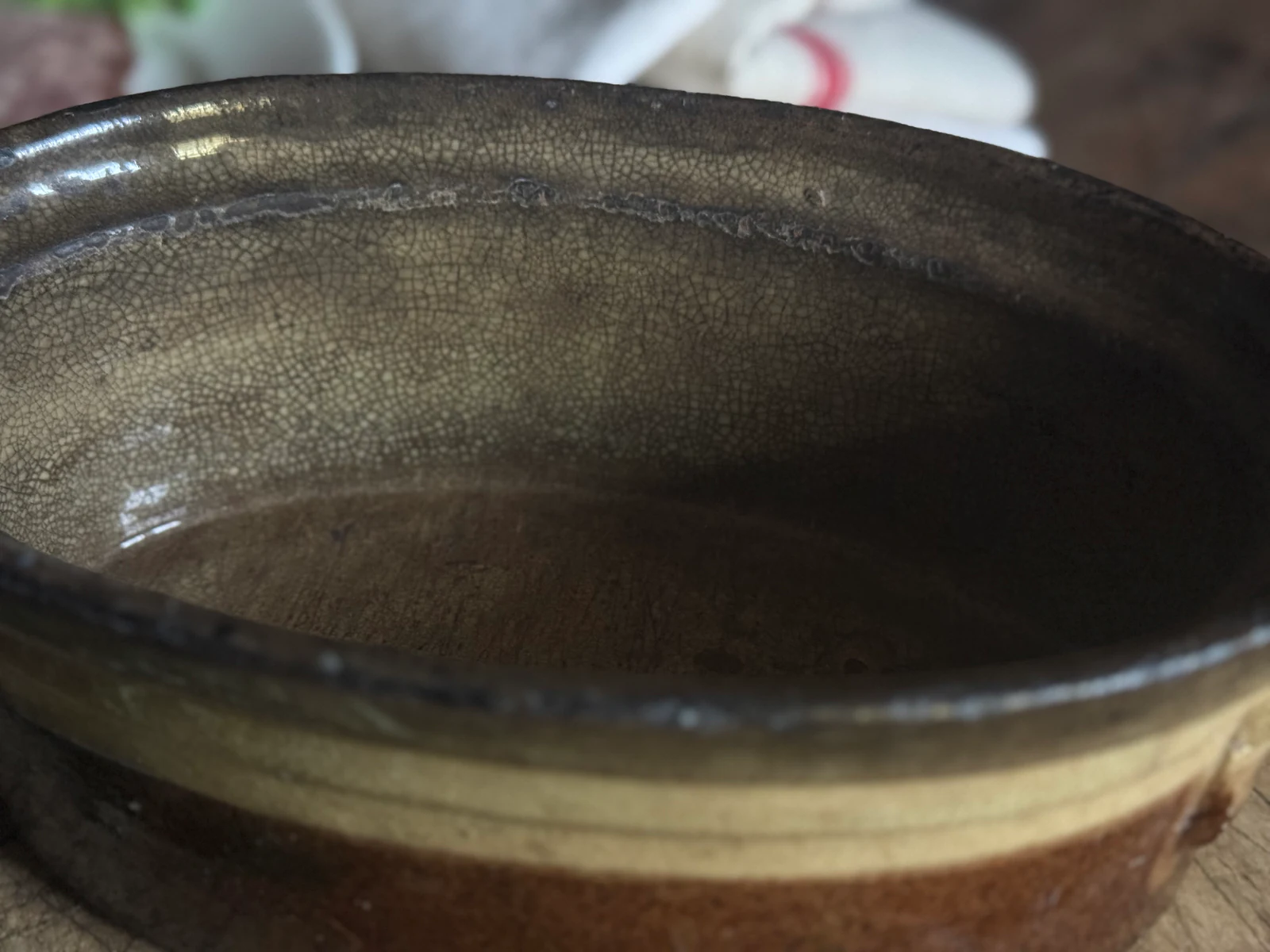
The piece wins you over with its glossy glaze and deep reflections: chocolate brown on the lid and base, broken by a broad band of golden ochre around the belly. The fine web of crazing — the celebrated crackle glaze of old ceramics — gives it a living, inimitable patina that no new piece can ever imitate.
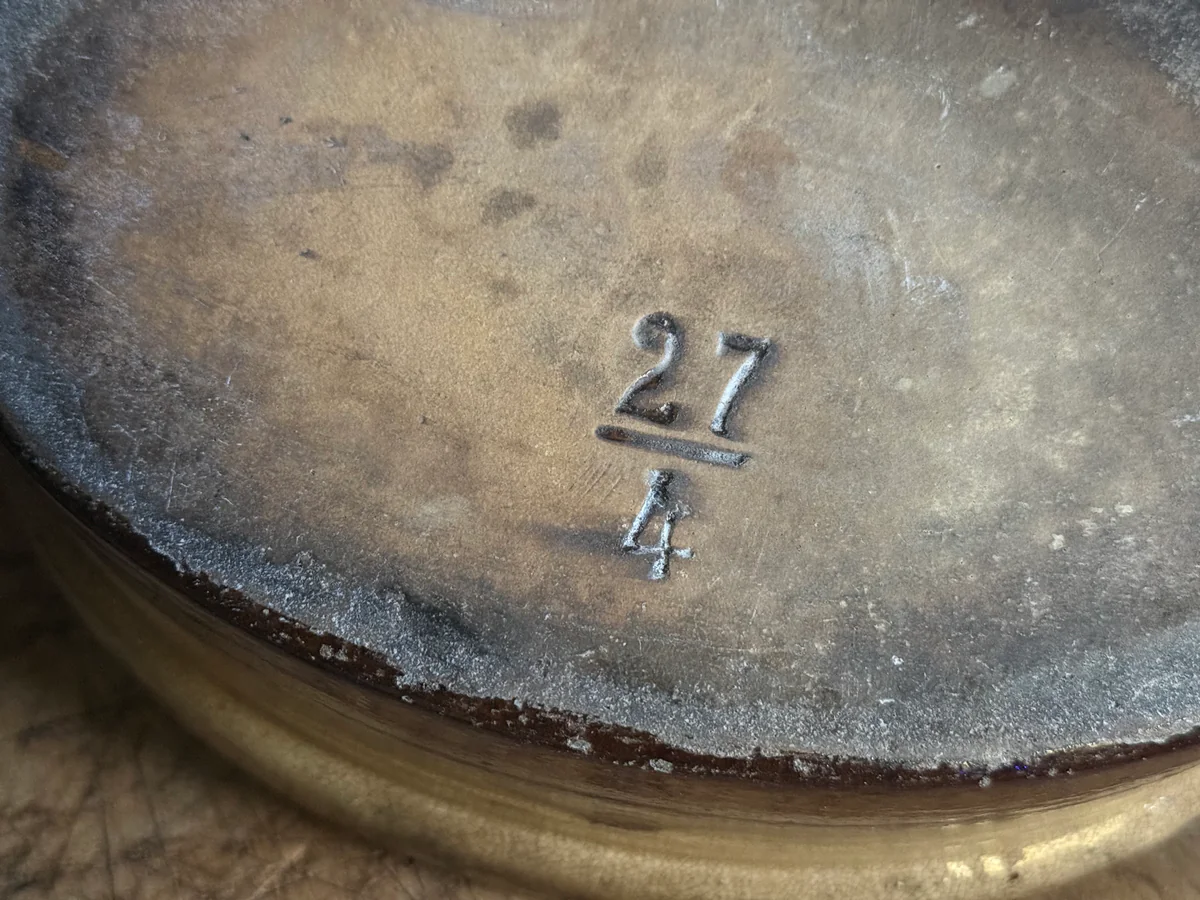
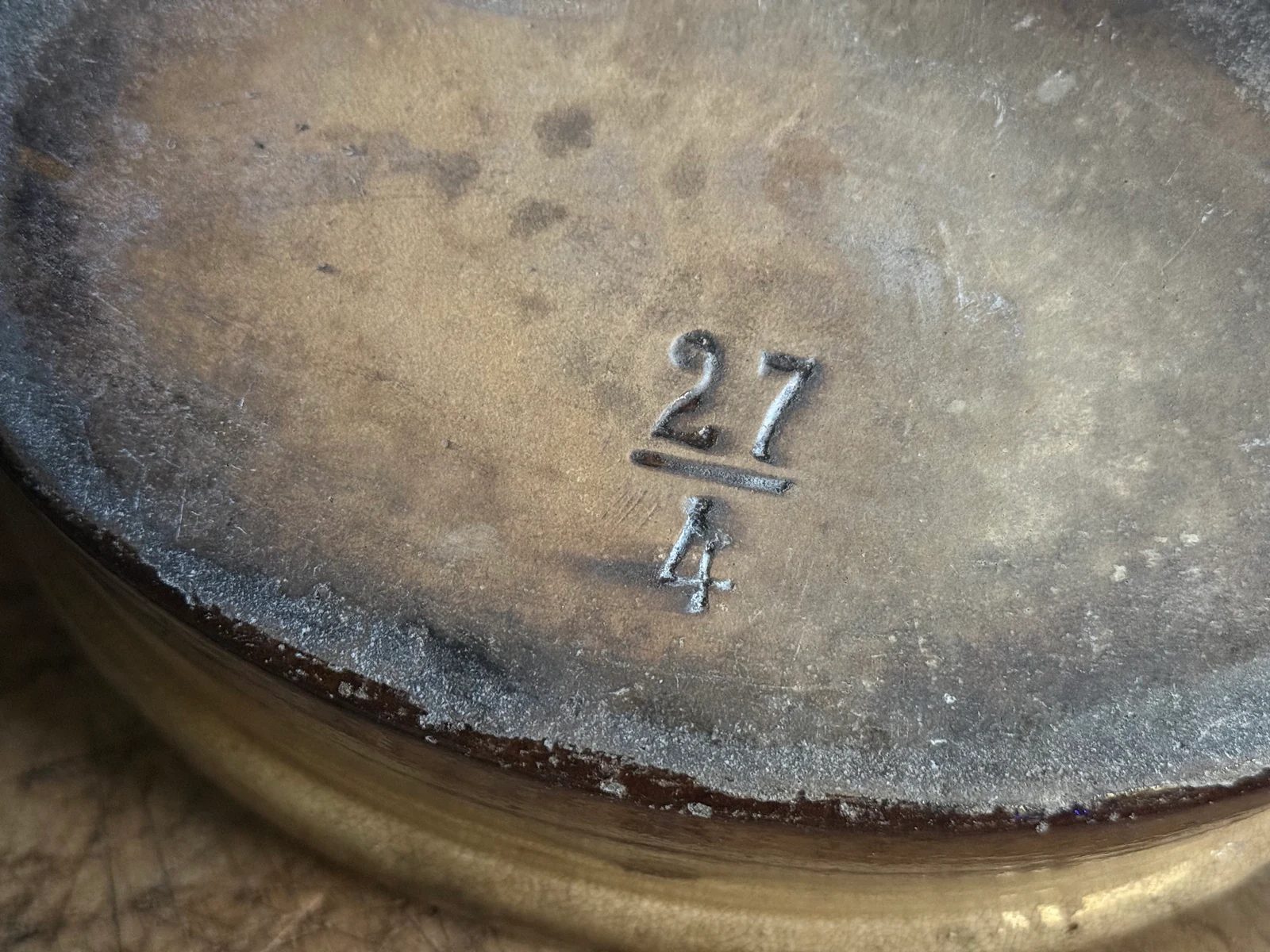
Underneath, the incised mark "27 / 4" points to the potter's work: most likely a mould or capacity number inscribed before firing. The two side handles, shaped by hand, make it easy to lift, while the domed lid with its knob holds the heat beautifully.
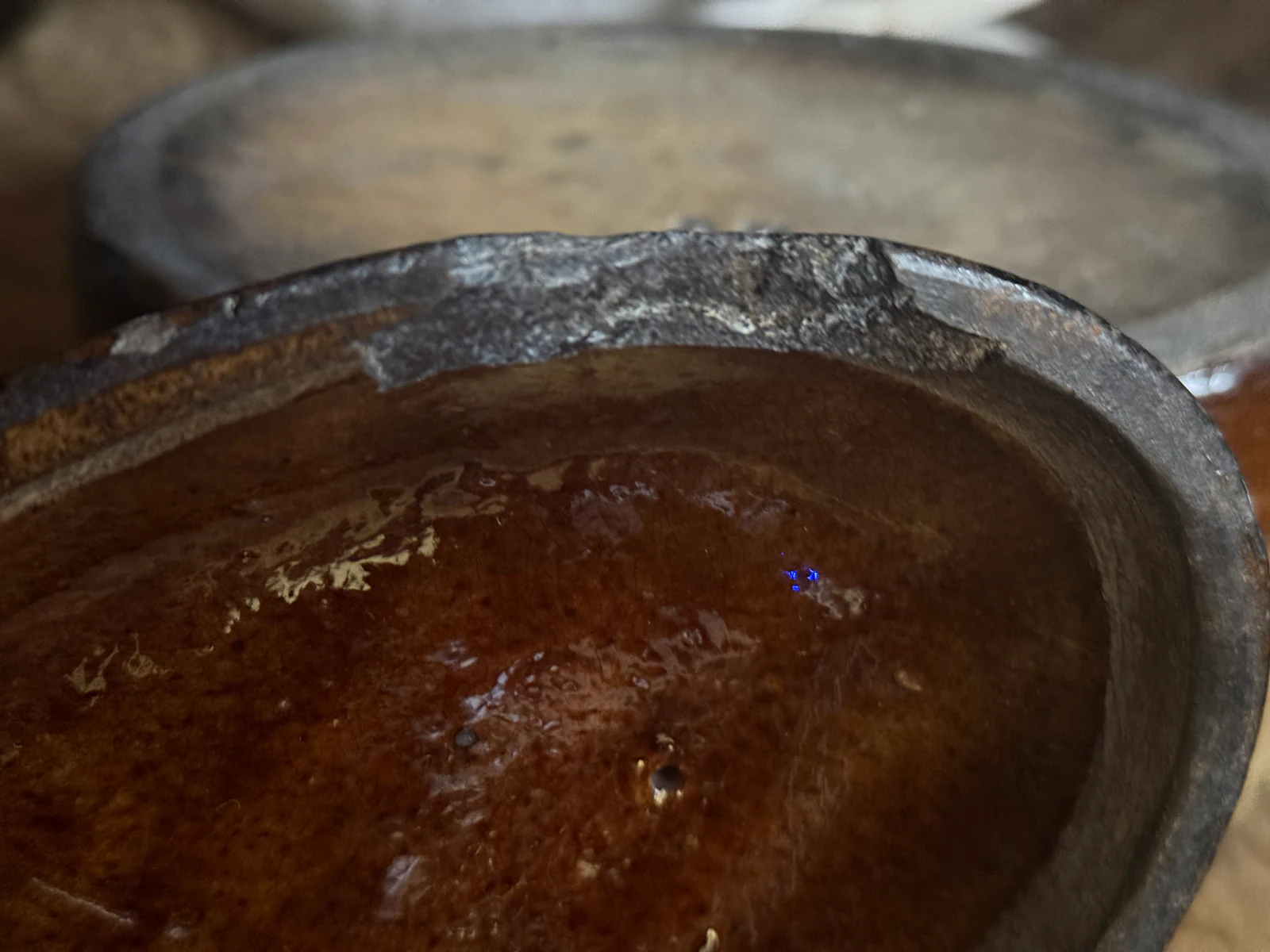
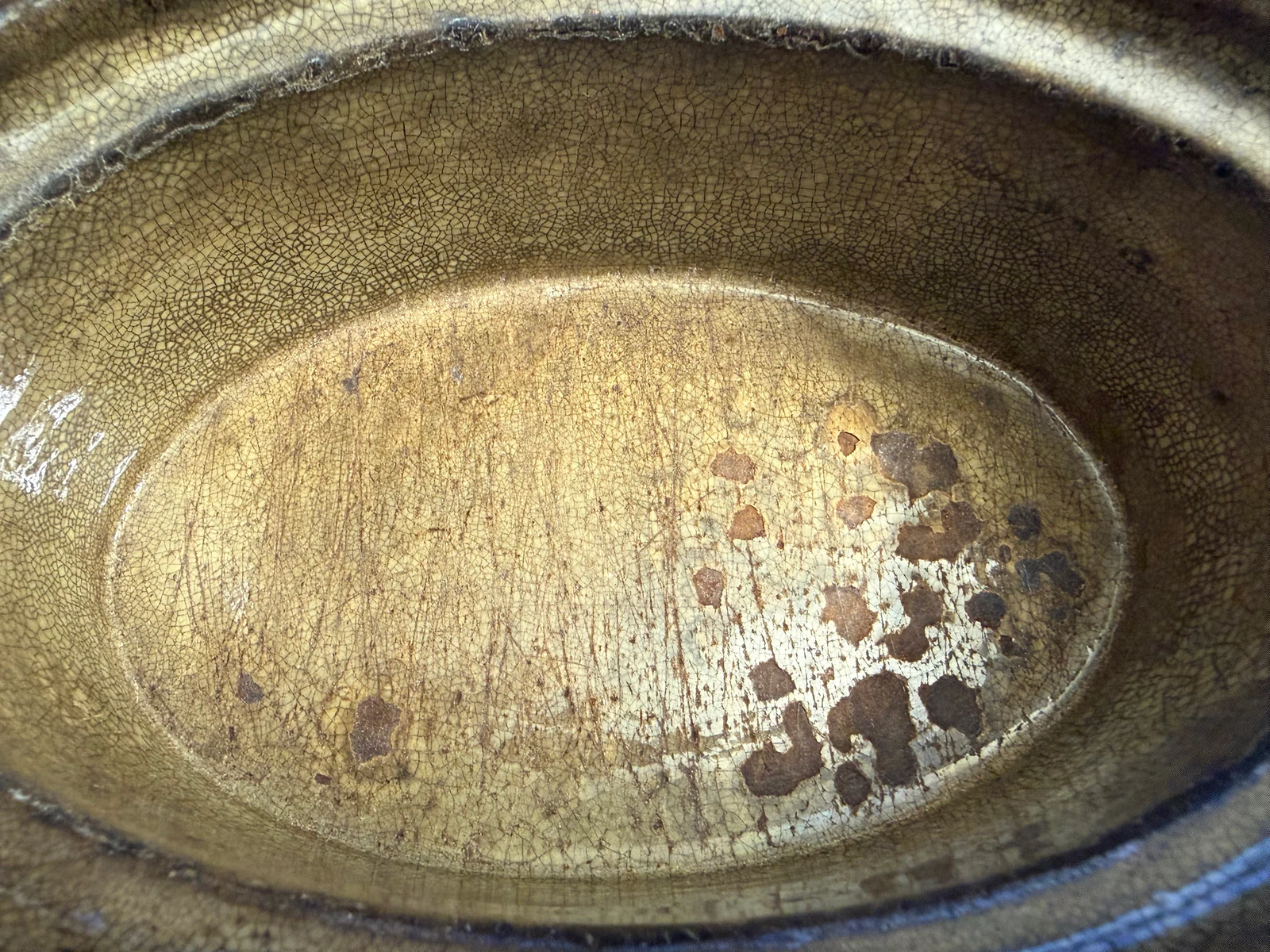
Like any piece that has lived, it shows small flaws: chips to the glaze along the rim, crazing and signs of use inside. None of this affects its apparent sturdiness or its decorative appeal; on the contrary, these marks are its certificate of authenticity and give it the soft lustre that flea-market lovers cherish.
You can of course use it to serve a country pâté, a vegetable terrine or fresh cheese on a summer buffet. But above all it is a decorative object: set on a kitchen shelf, a raw wood table or a dresser, surrounded by rosemary and a few old pieces of cutlery, it instantly creates the atmosphere of a family home.
Provenance undocumented.
Why bring home this antique terrine?
- Rare authenticity: a Belle Époque terrine with its original patina and the potter's mark incised beneath the base
- Warm decoration: the chocolate-brown glaze and ochre band suit any kitchen, rustic or more contemporary
- Its period crazing, the signature of old ceramics, is impossible to reproduce exactly
- Dual use: bring it to the table for pâtés, terrines and cheeses, or simply display it on a dresser
- A characterful piece at a modest price, ideal for starting a collection of French ceramics
Set it aside — it may be waiting for you