2
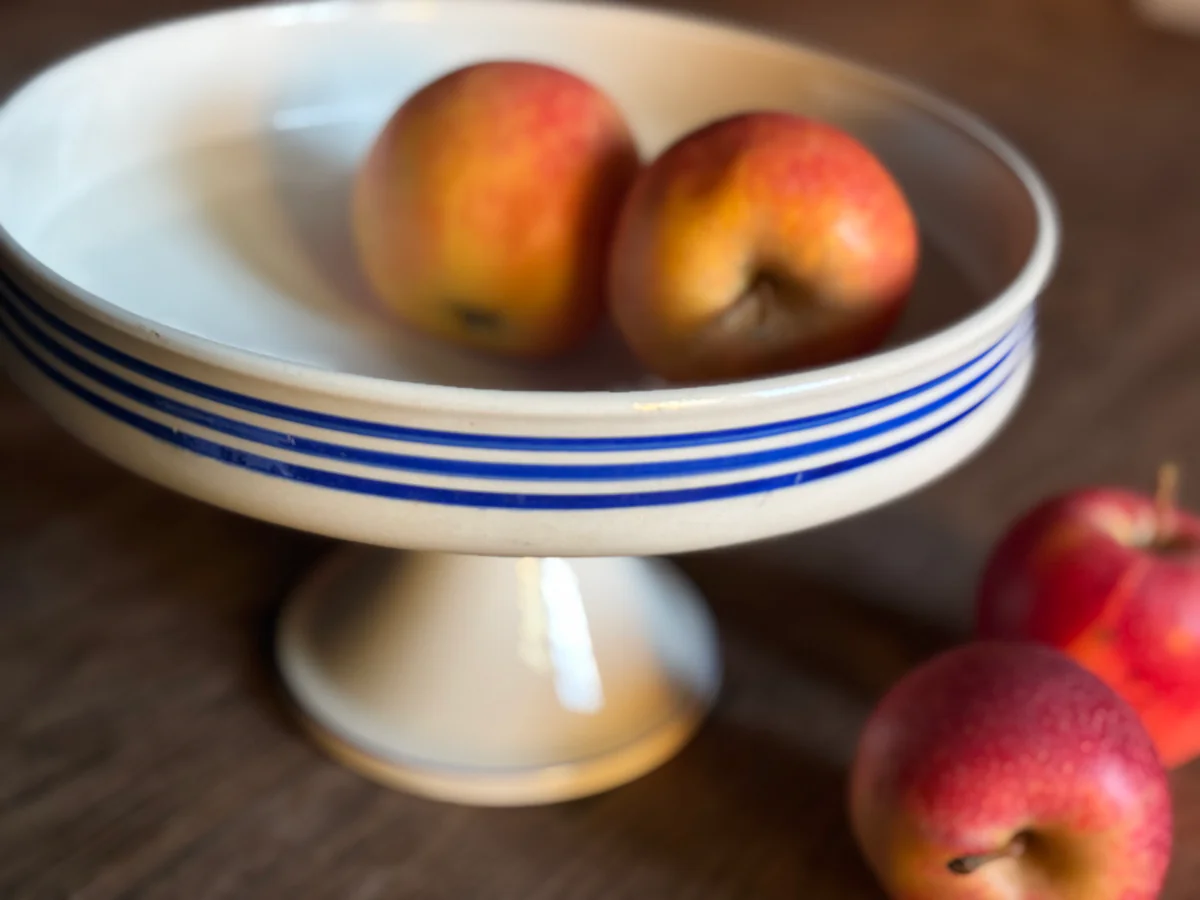
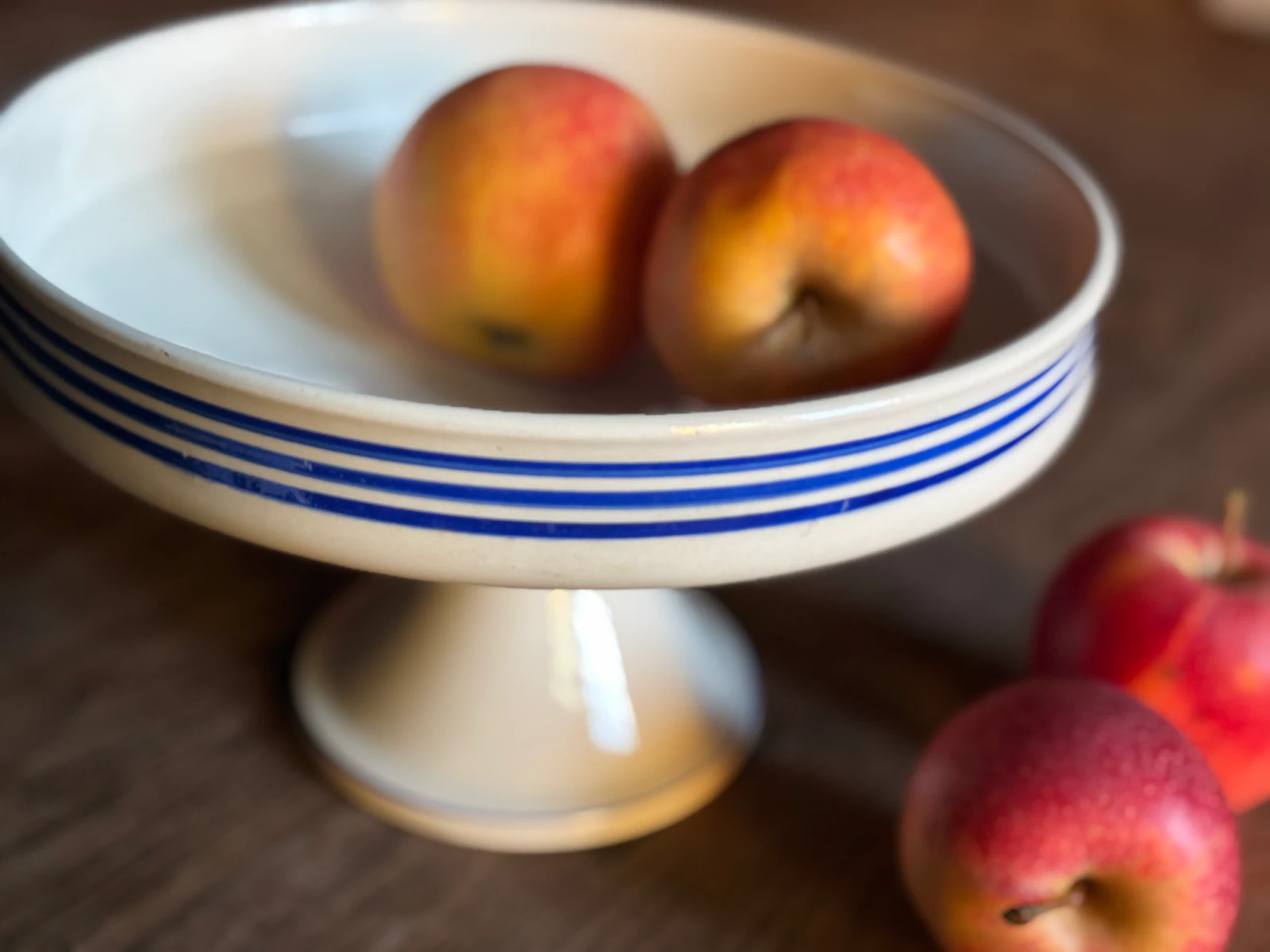
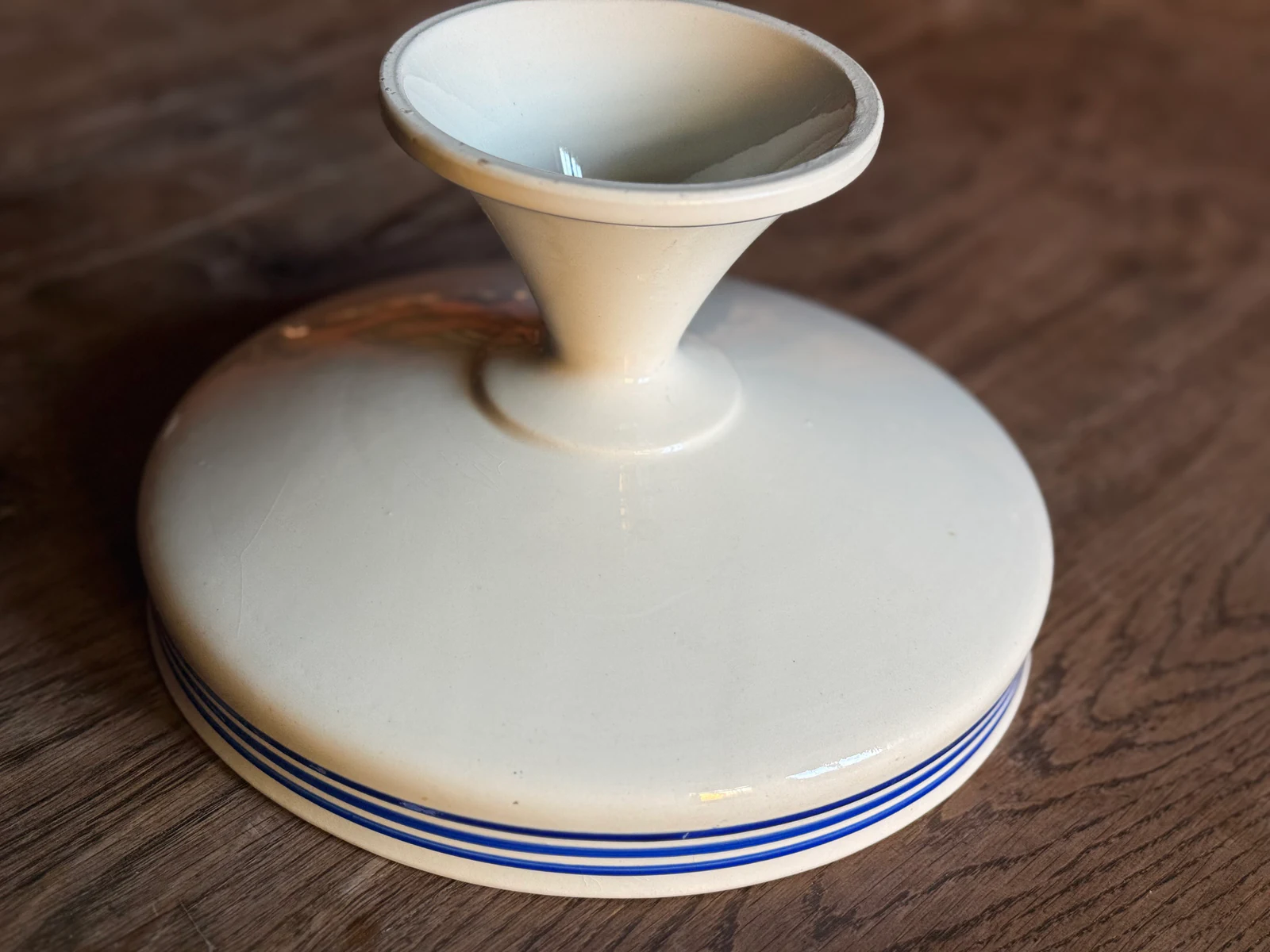
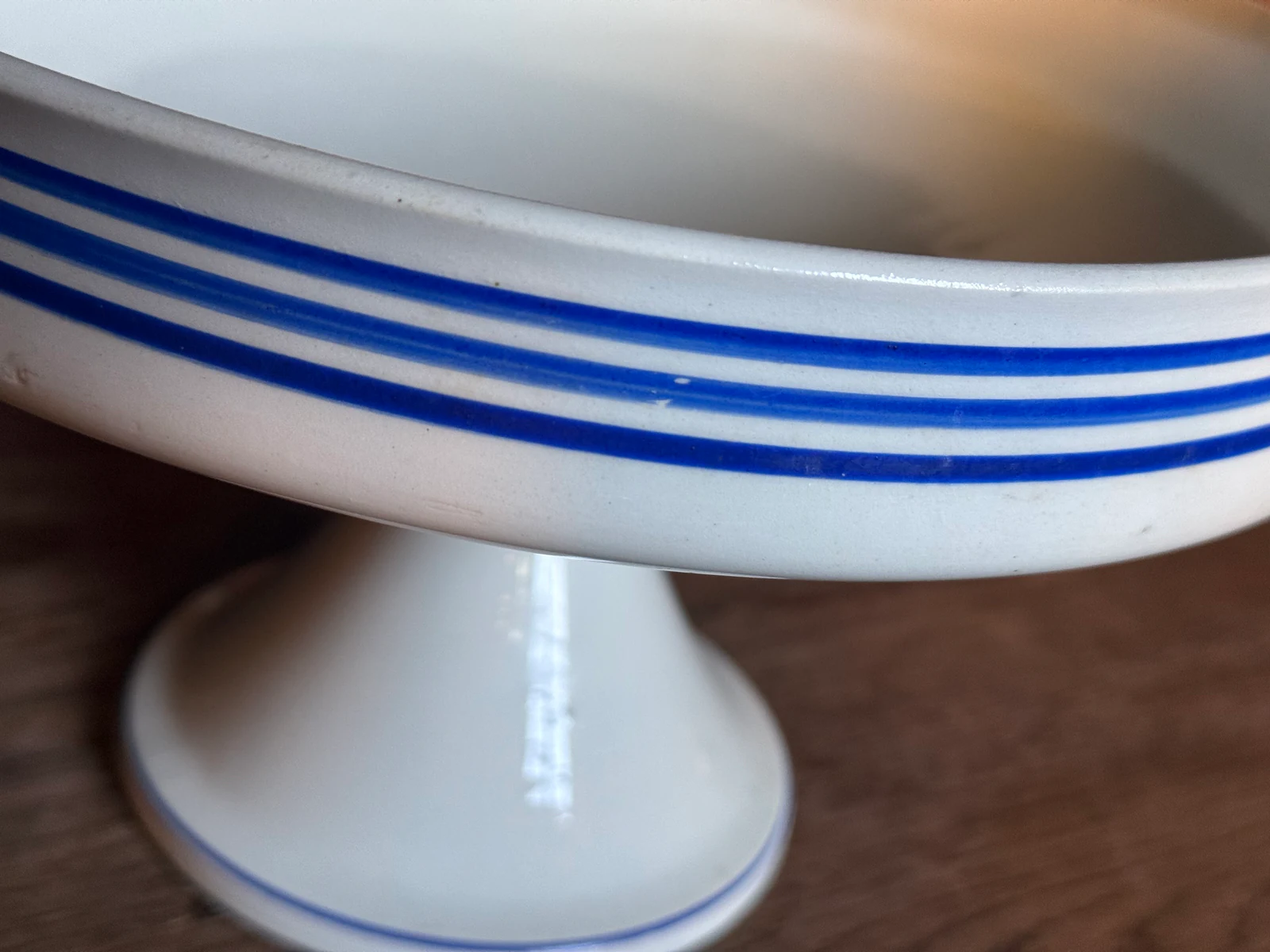
Here is a footed faience compote dish, instantly recognisable by its flared bowl and elegant pedestal foot. Signed by the Keller et Guérin pottery of Lunéville, it wears the classic blue-line decoration on a cream ground that made French tableware famous. A Belle Époque piece...
☞ Read more
Set it aside — it may be waiting for you
♯footed-dish ♯table-arts ♯faiencerie-keller-et-guerin-k-et-g-luneville ♯faience-tin-glazed-earthenware
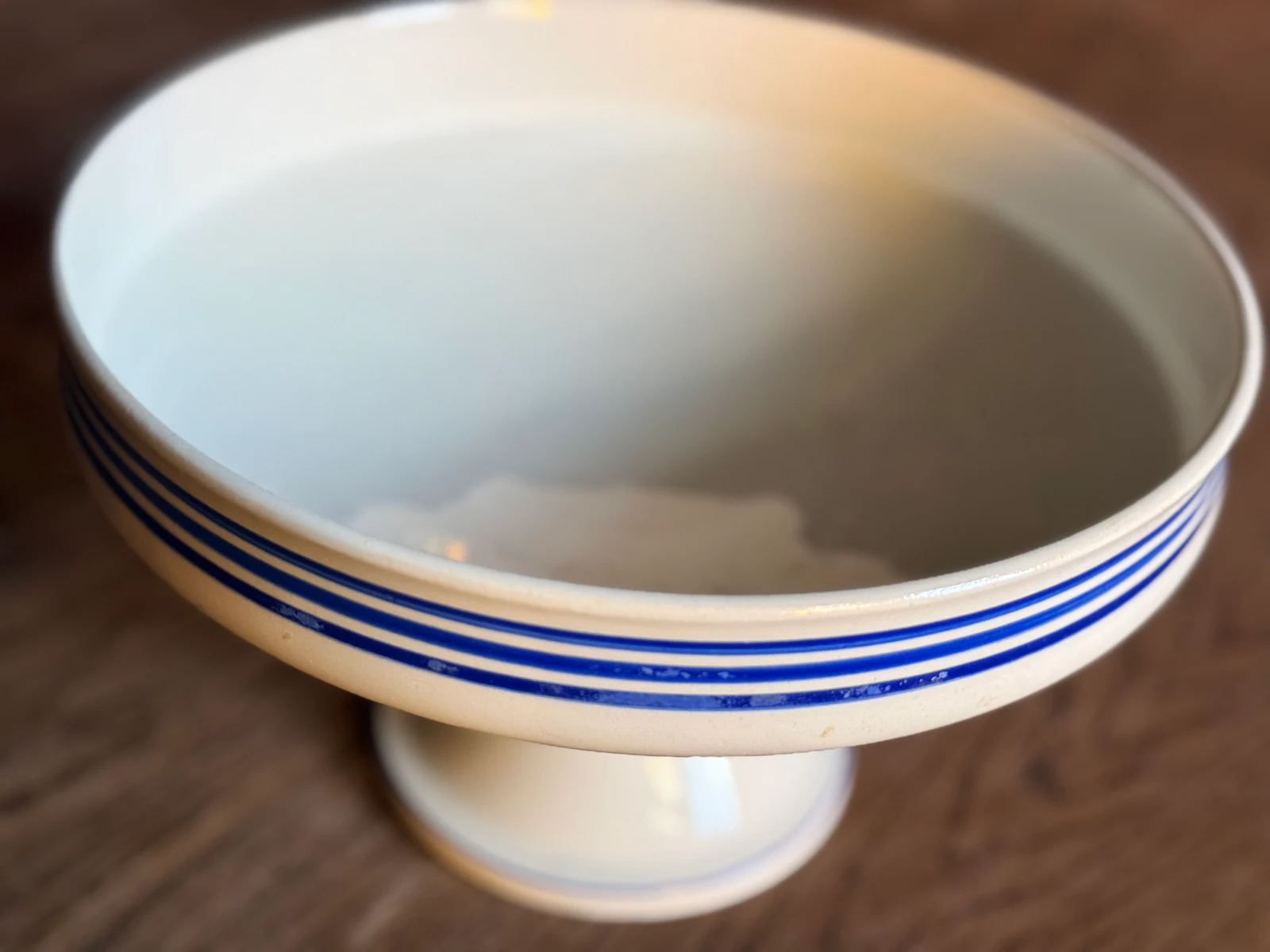
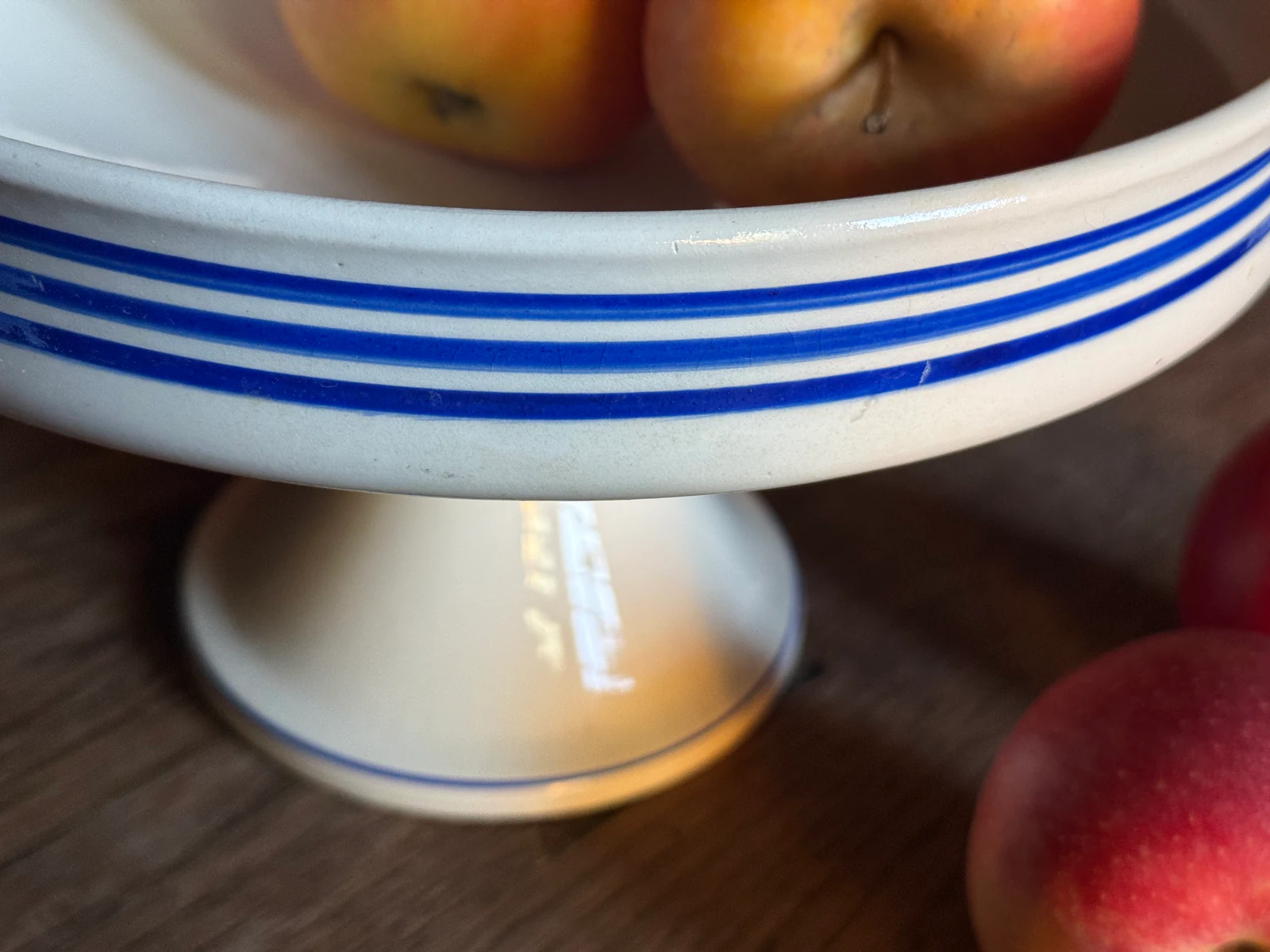
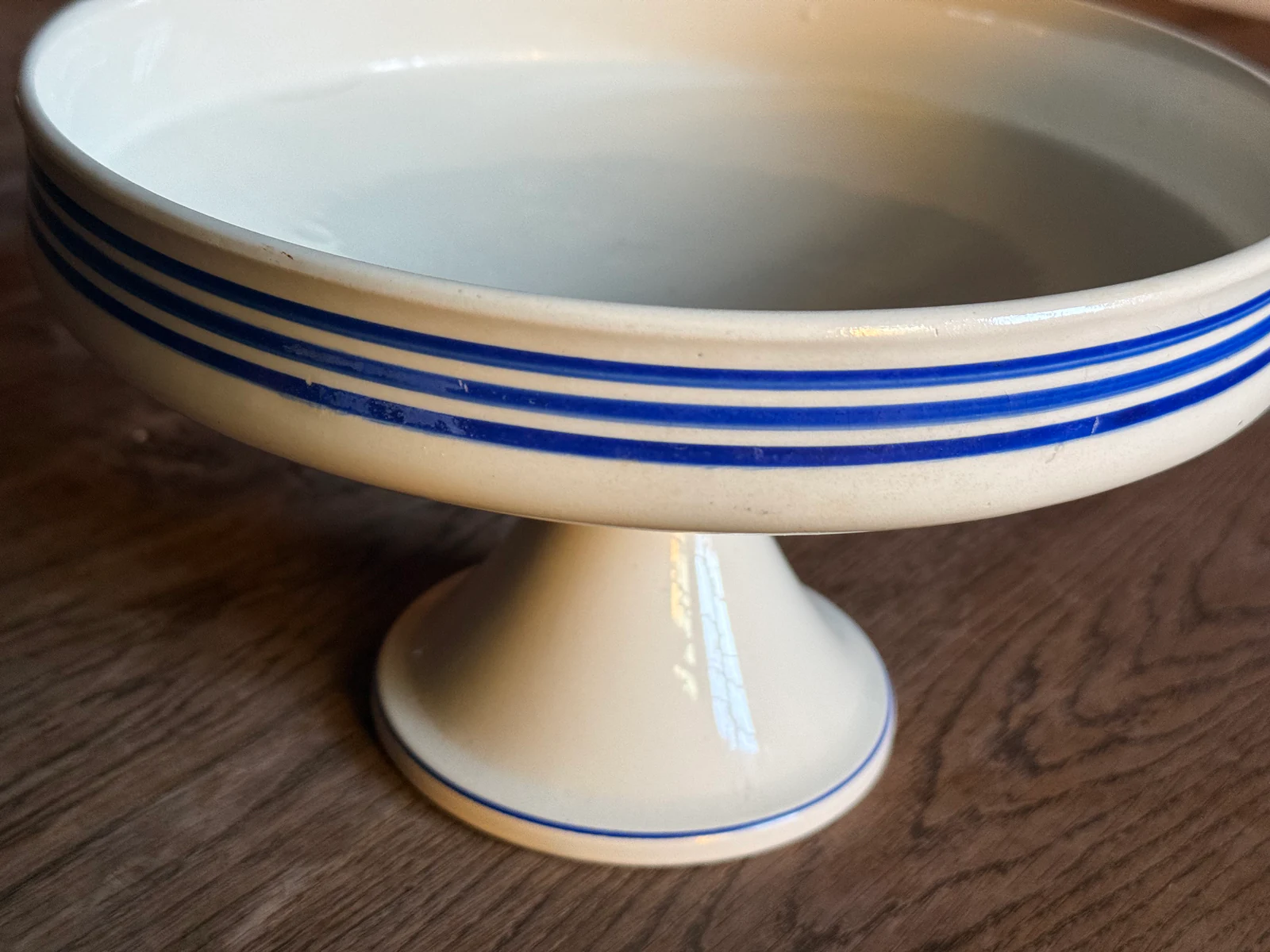
Here is a footed faience compote dish, instantly recognisable by its flared bowl and elegant pedestal foot. Signed by the Keller et Guérin pottery of Lunéville, it wears the classic blue-line decoration on a cream ground that made French tableware famous. A Belle Époque piece that is as useful as it is wonderfully decorative.
❝A footed compote dish straight from the Lunéville potteries: the quiet charm of the Belle Époque, set right on your table. ❞
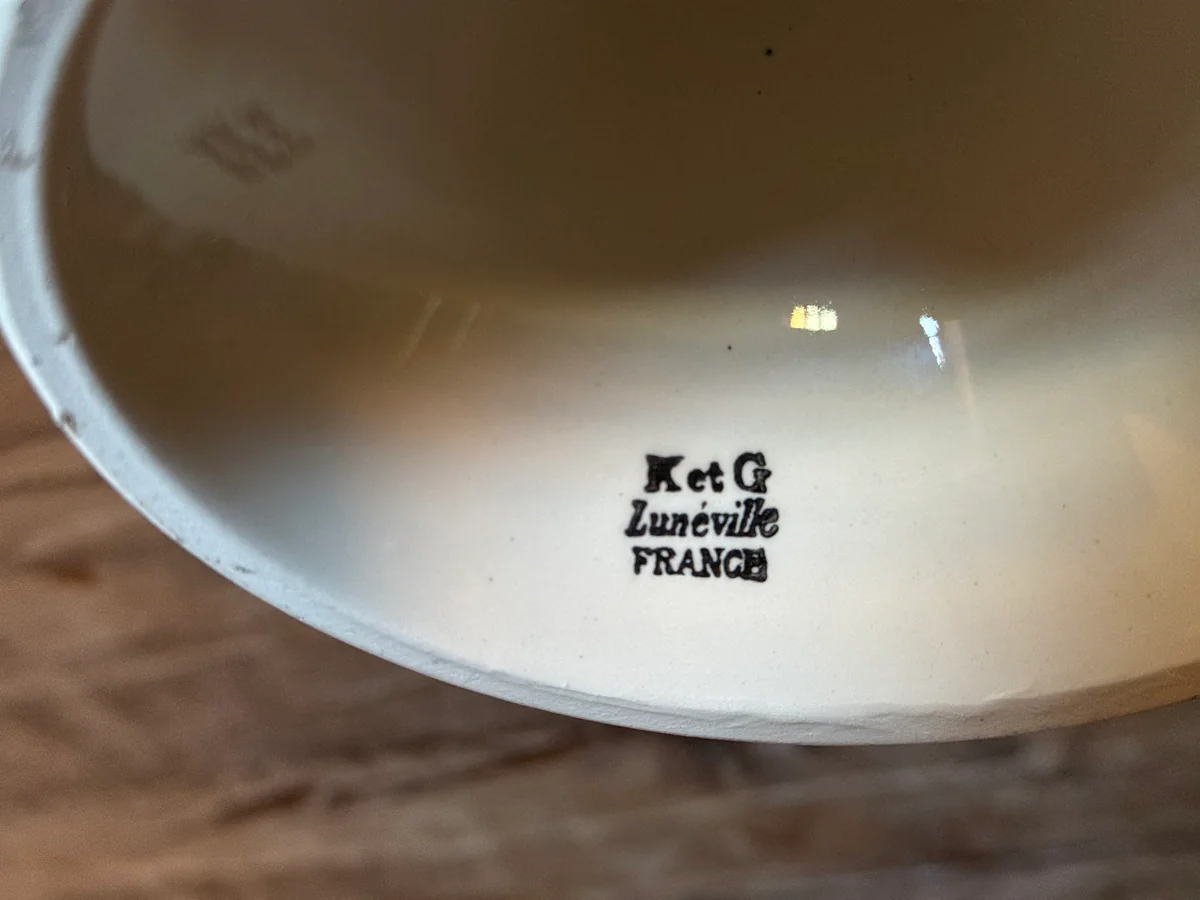
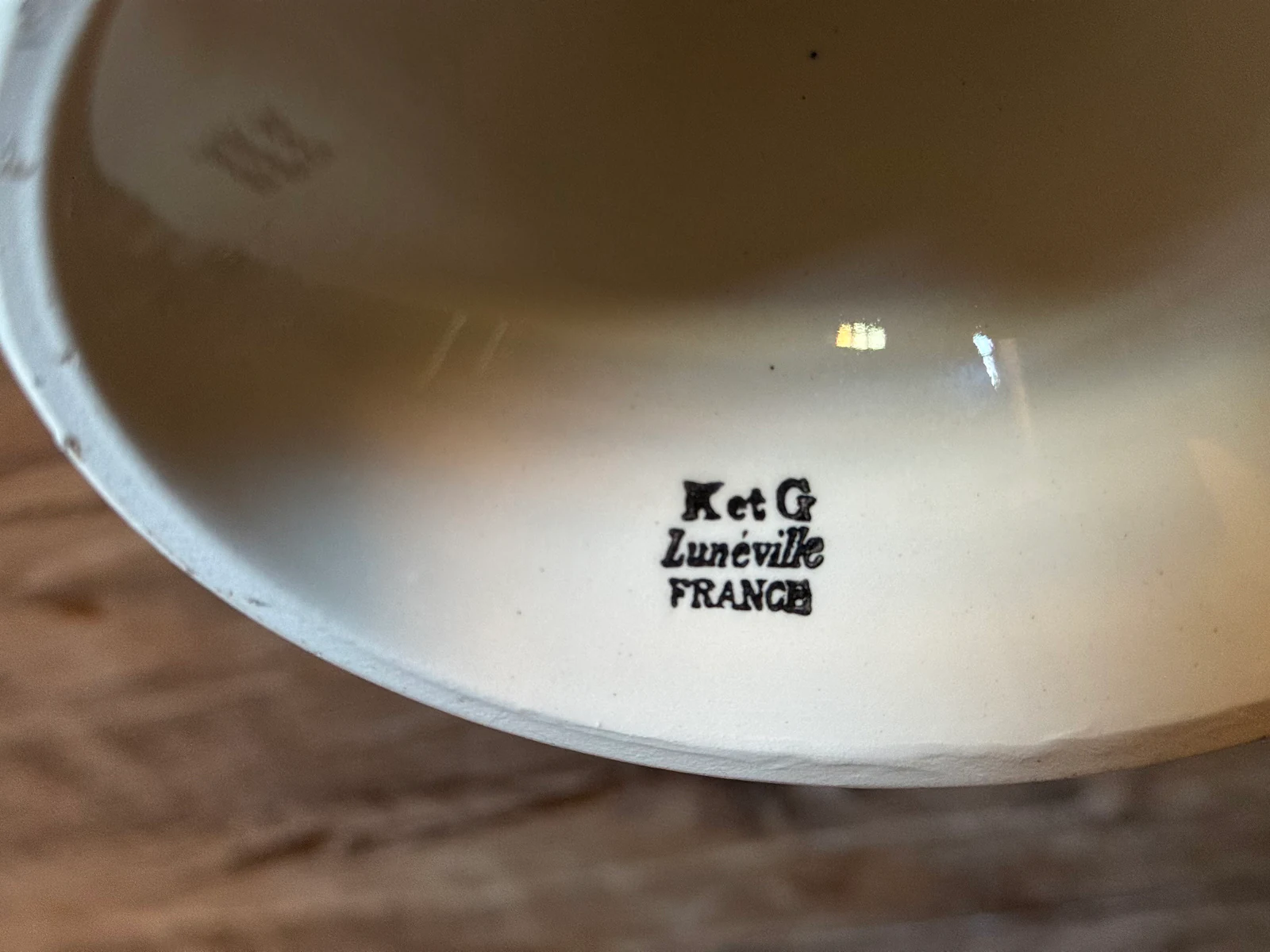
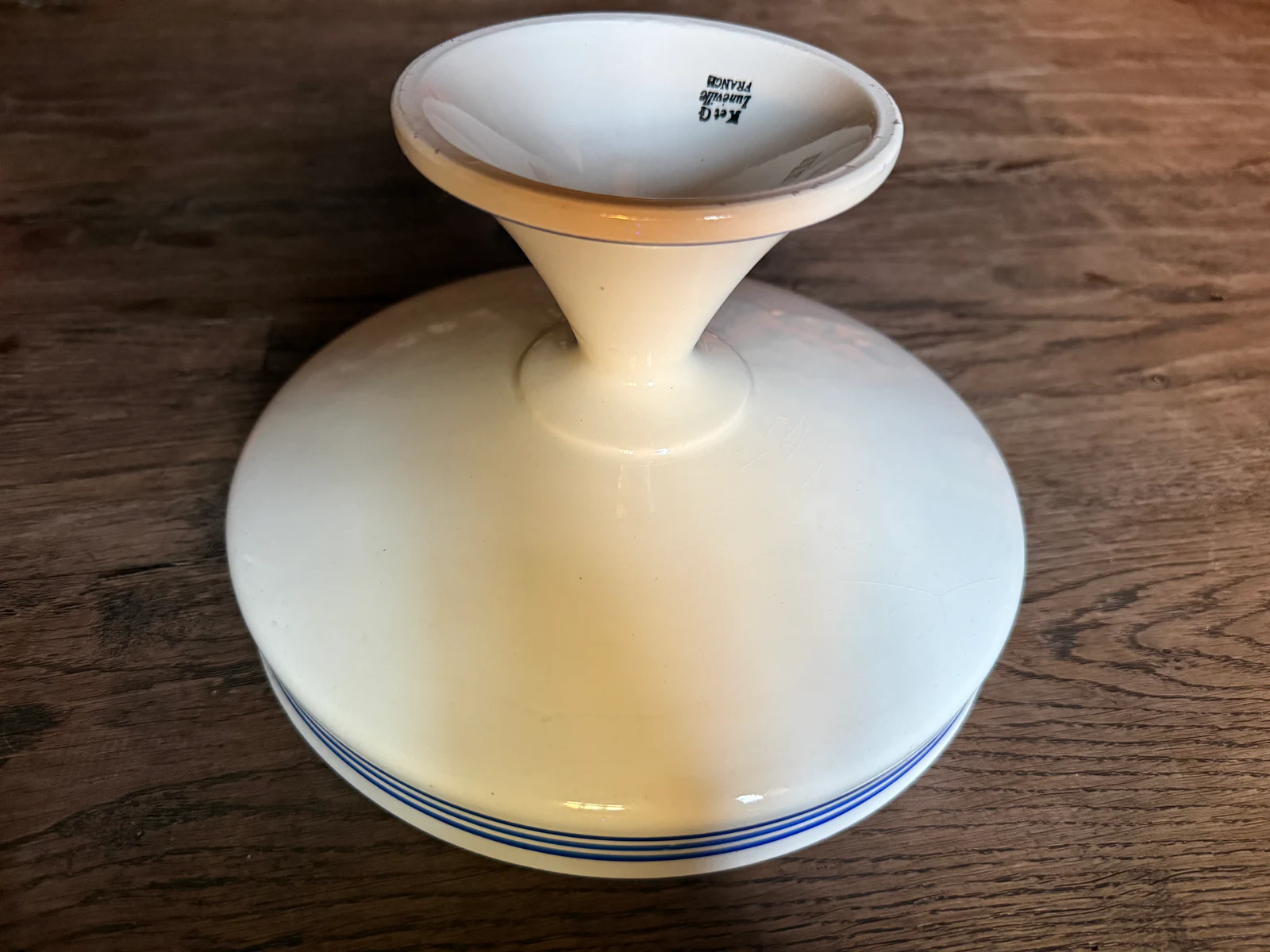
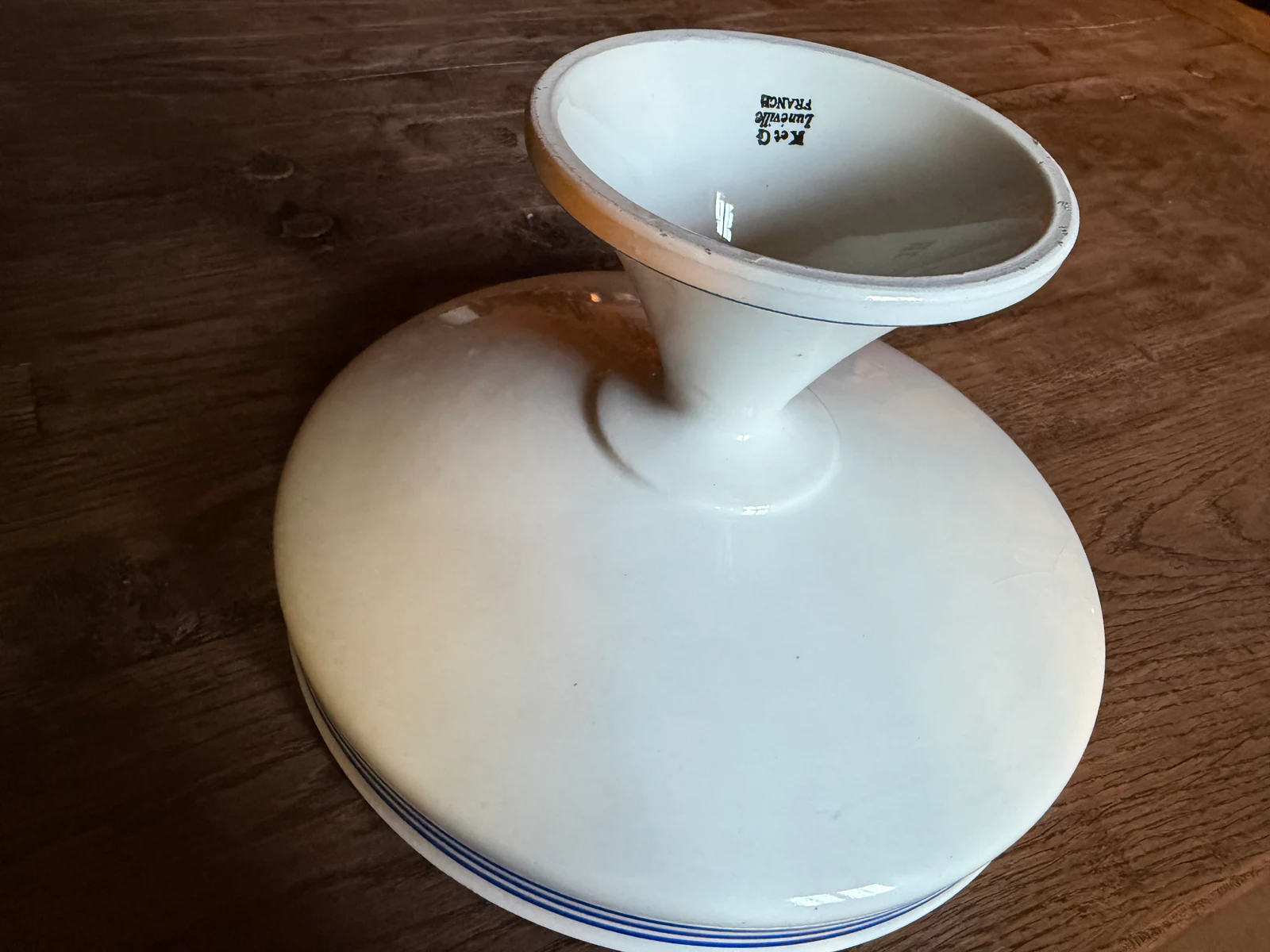
Under the foot of the dish, the mark printed in black leaves no doubt: "K et G / Lunéville / FRANCE". It identifies the Keller et Guérin pottery, based in Lunéville in Meurthe-et-Moselle, a historic heartland of French faience. A signature that delights collectors and authenticates the piece at first glance.
The form is simple and true: a shallow, wide-open bowl carried on a tapered pedestal foot. Around the body, three vivid blue lines run along the rim and emphasise the roundness of the object. This graphic decoration, with a restraint typical of the Belle Époque, sits just as happily on a linen-dressed table as alongside contemporary china.
On a sideboard it holds fruit, clementines or pastries; at the centre of the table it becomes a festive compote dish for special occasions. On a kitchen dresser it turns into an elegant catch-all or a display for little brocante treasures. It is the versatile piece par excellence.
That pivotal era, between the end of the 19th century and the First World War, gave rise to a prolific and popular faience production. This compote dish is a direct witness to it: neither ostentatious nor ordinary, it embodies the craft of the factories of eastern France. A piece of domestic history, within easy reach.
Glazed faience should be washed in warm water with a little mild soap; avoid the dishwasher and thermal shocks. A few faint traces of use on the lines and the rim bear witness to its past life and add to its authenticity. Handle it by the pedestal foot to preserve the glaze.
Keller et Guérin pottery works, Lunéville (Meurthe-et-Moselle), Grand Est region, France.
Why this Lunéville compote dish will win you over
- A verified Keller et Guérin signature, sought after by collectors of eastern French faience
- A timeless blue-line border that works with any table setting
- A footed shape that shows off fruit, pastries and little treats beautifully
- A Belle Époque piece that is both useful and decorative
- A chance to step into the world of French ceramics without breaking the bank
Set it aside — it may be waiting for you