2
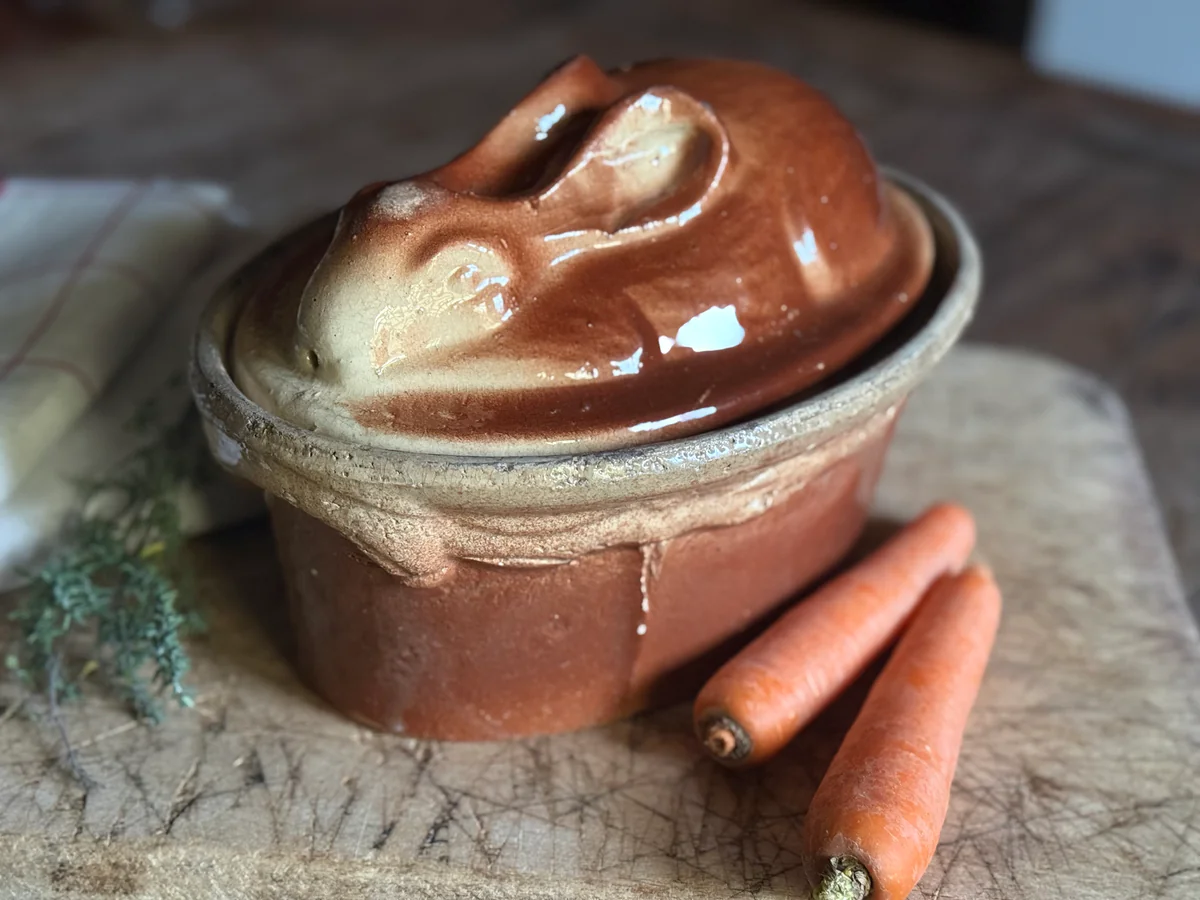
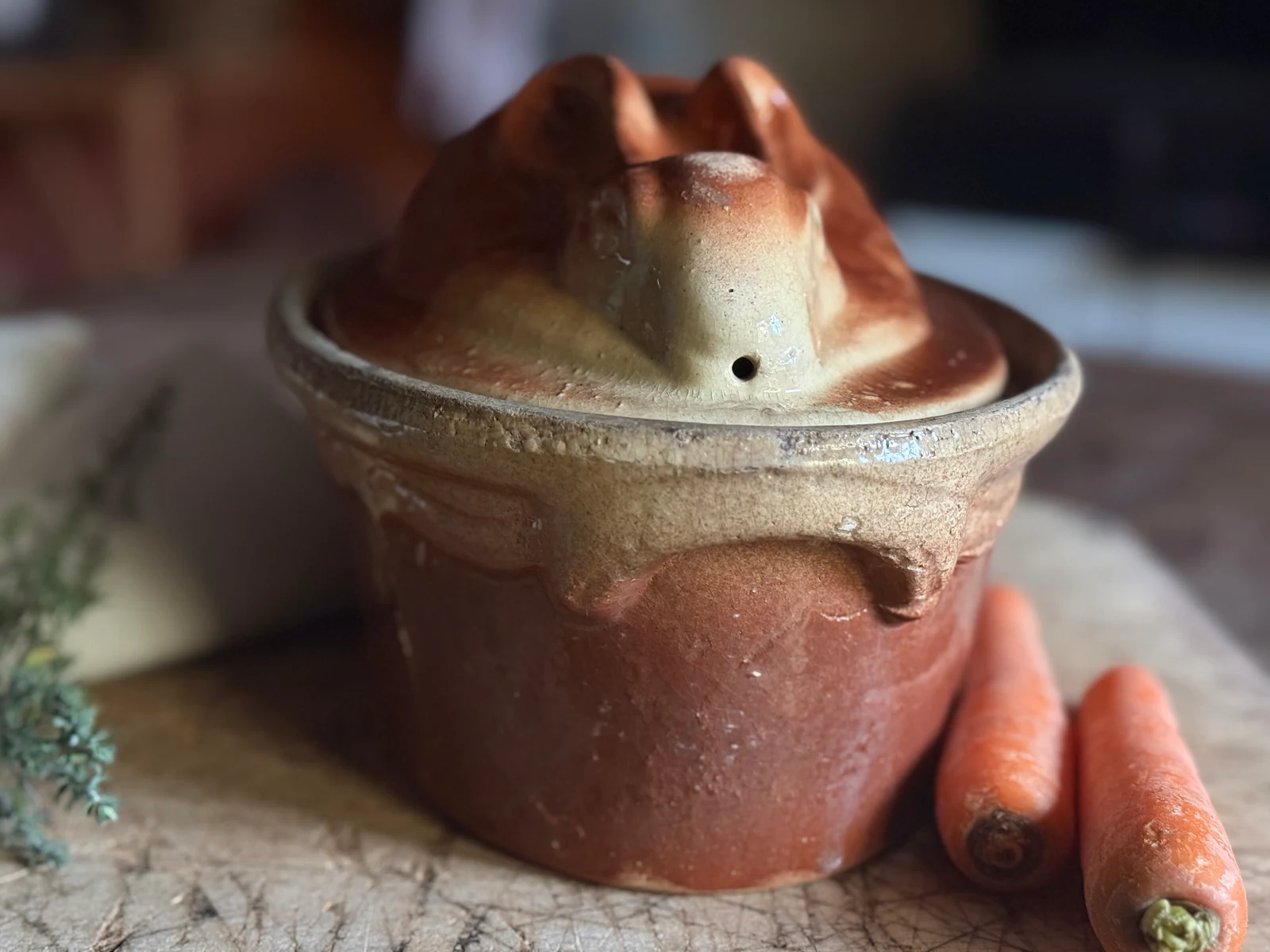
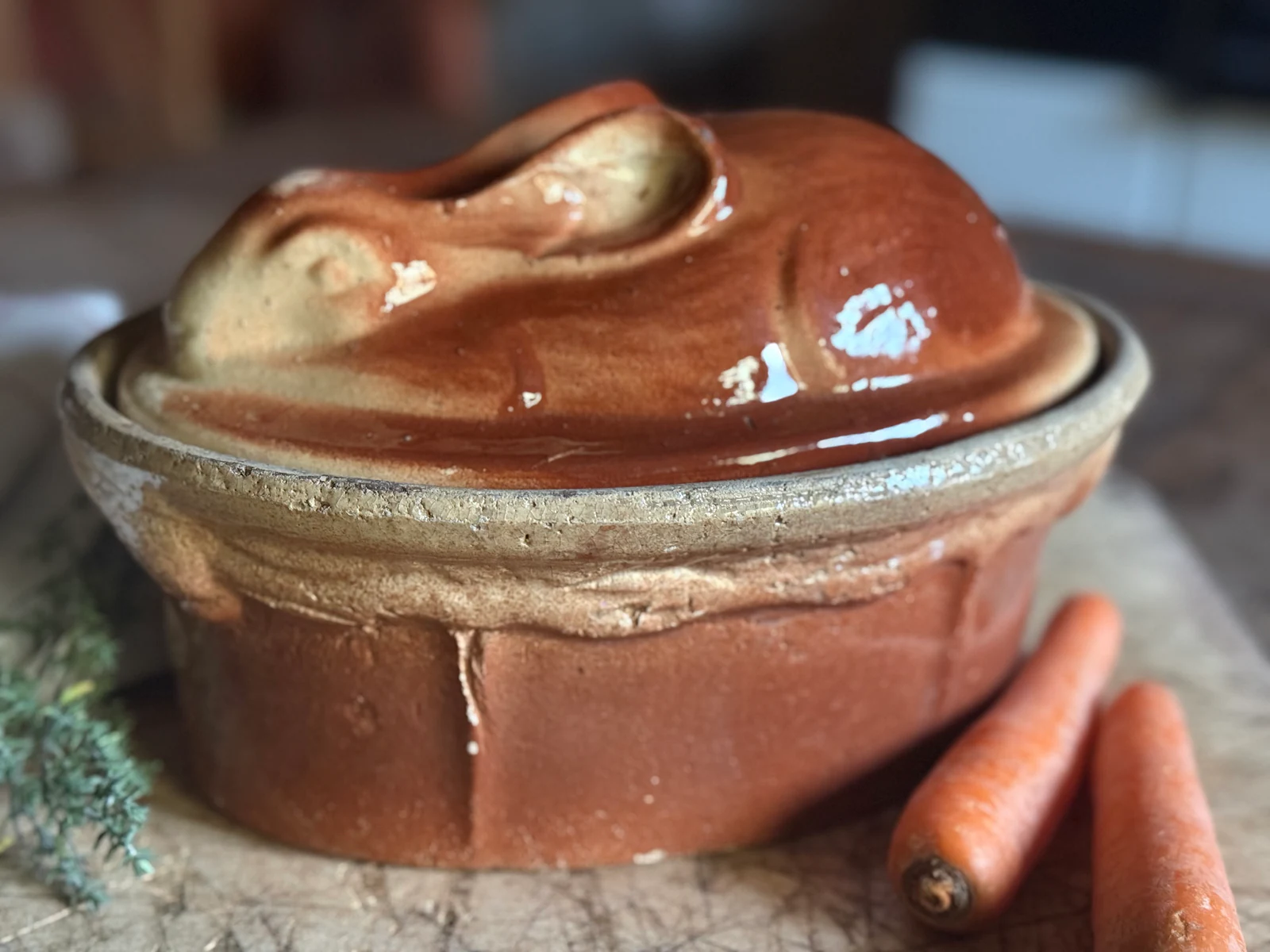
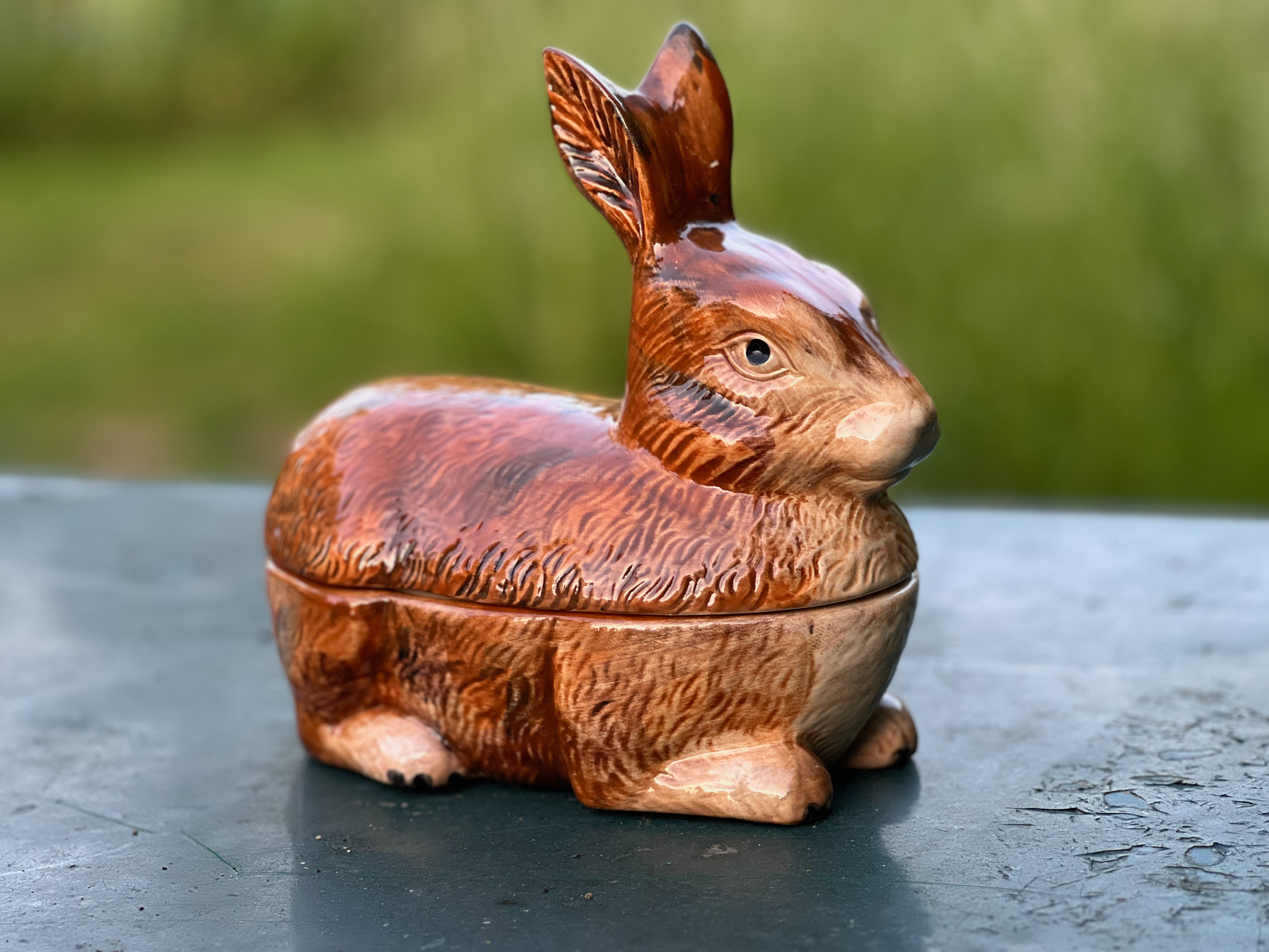
A rabbit terrine in glazed ceramic like no other: its lid, sculpted into a crouching hare, catches the eye before you even lift it. Part cookware, part decoration, it carries all the character of the early 20th century.
☞ Read more
Set it aside — it may be waiting for you
♯ceramic-mold ♯table-arts ♯animal-ceramics ♯stoneware ♯terracotta
A rabbit terrine in glazed ceramic like no other: its lid, sculpted into a crouching hare, catches the eye before you even lift it. Part cookware, part decoration, it carries all the character of the early 20th century.
❝A lid shaped like game, a glaze mellowed by time: the raw charm of old-fashioned terrines. ❞
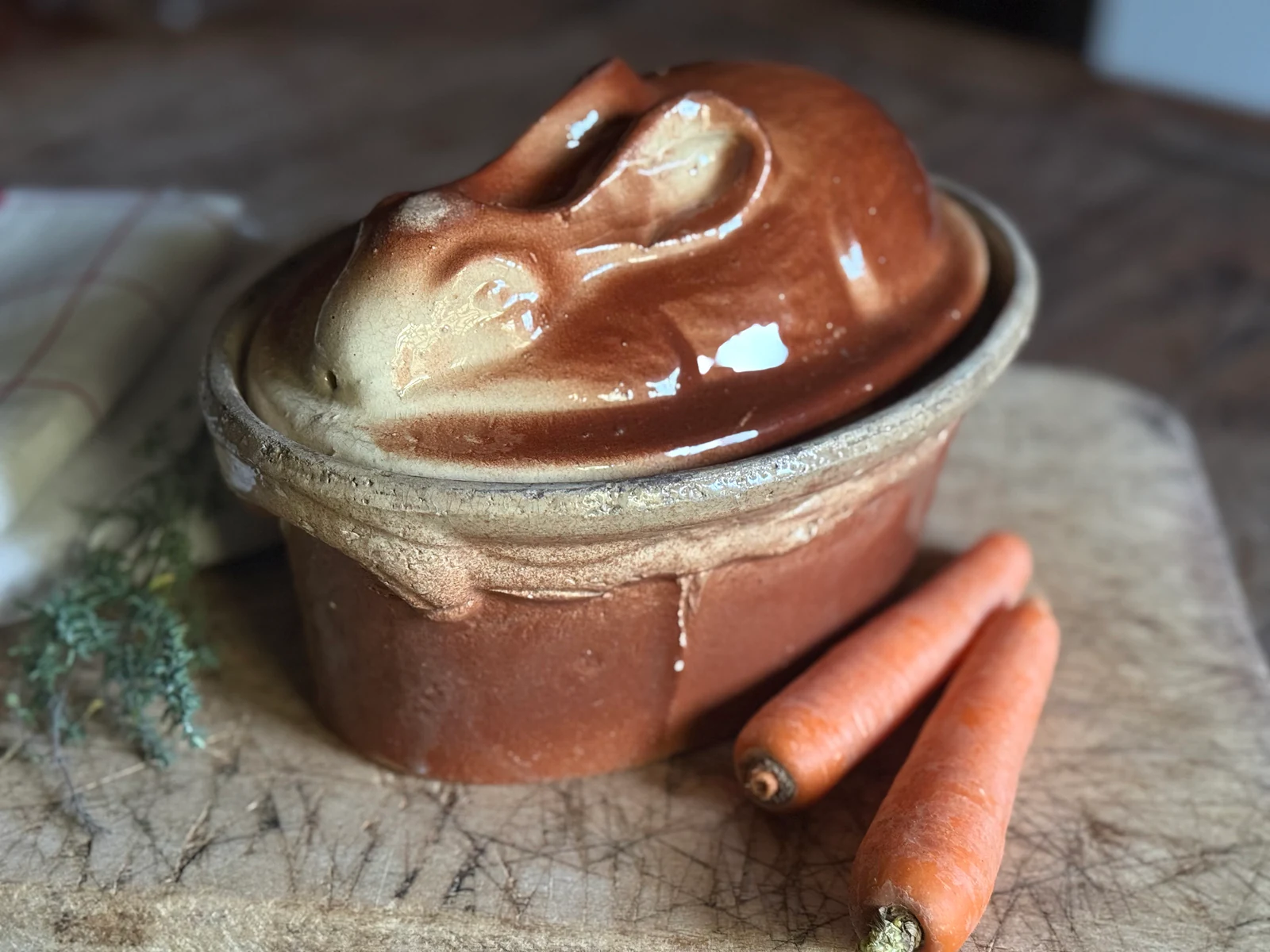
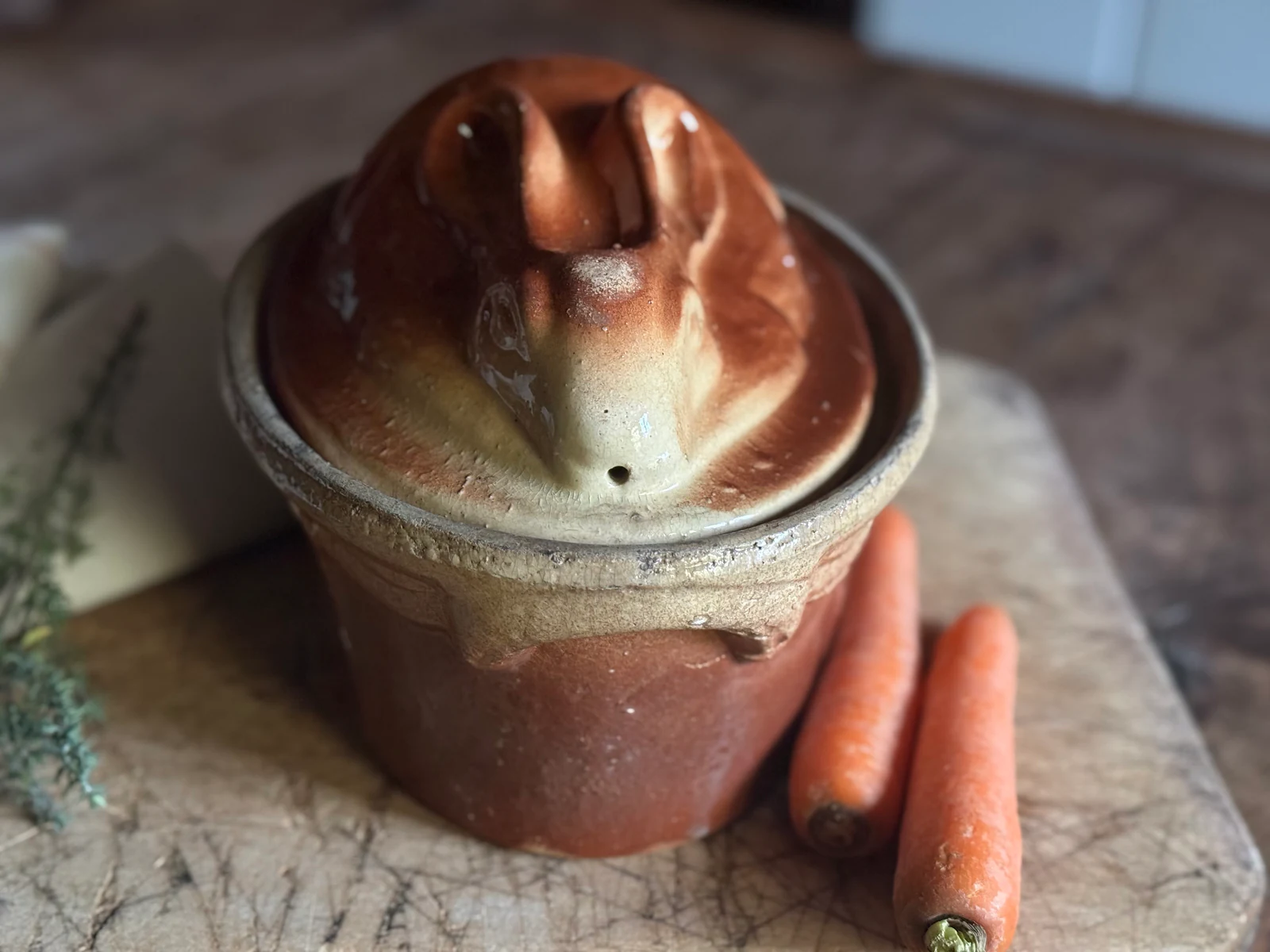
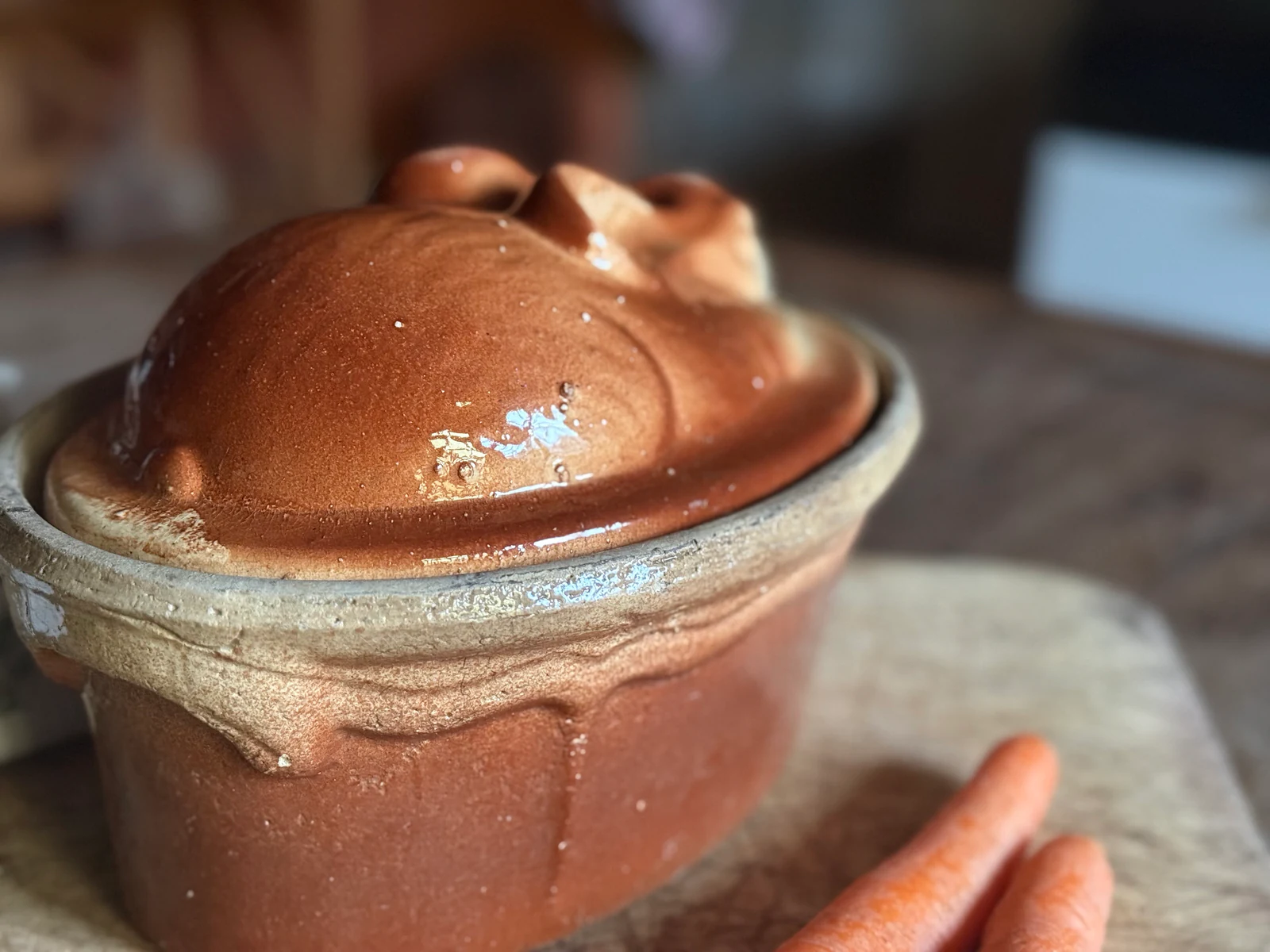
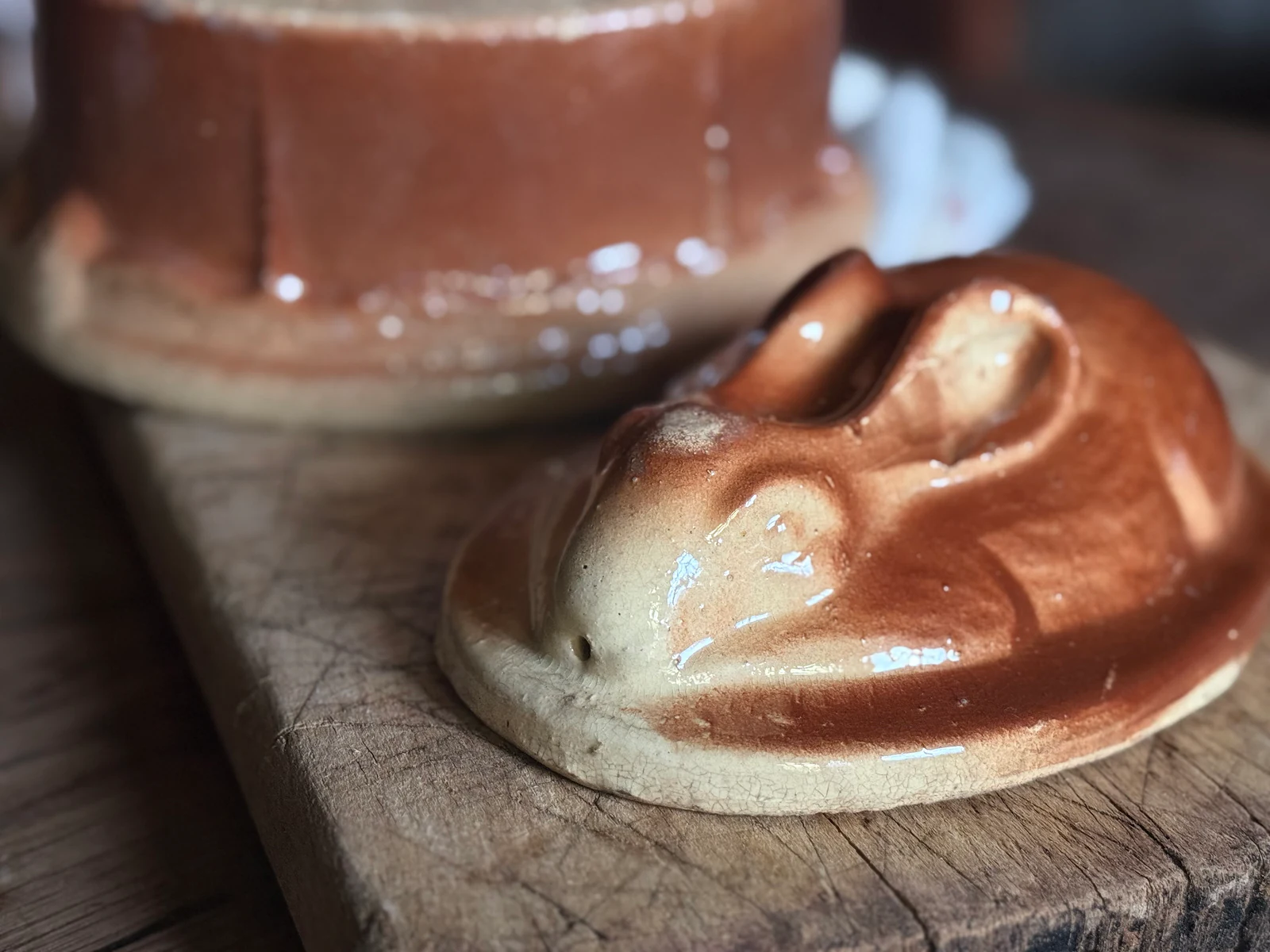
This terrine is a small monument of home cooking: a domed lid sculpted in the round to suggest a rabbit or hare curled up on itself, ears folded back and body gleaming. The modelling is bold, almost naive, with the bumps and tool marks that reveal the artisan's hand rather than industrial production.
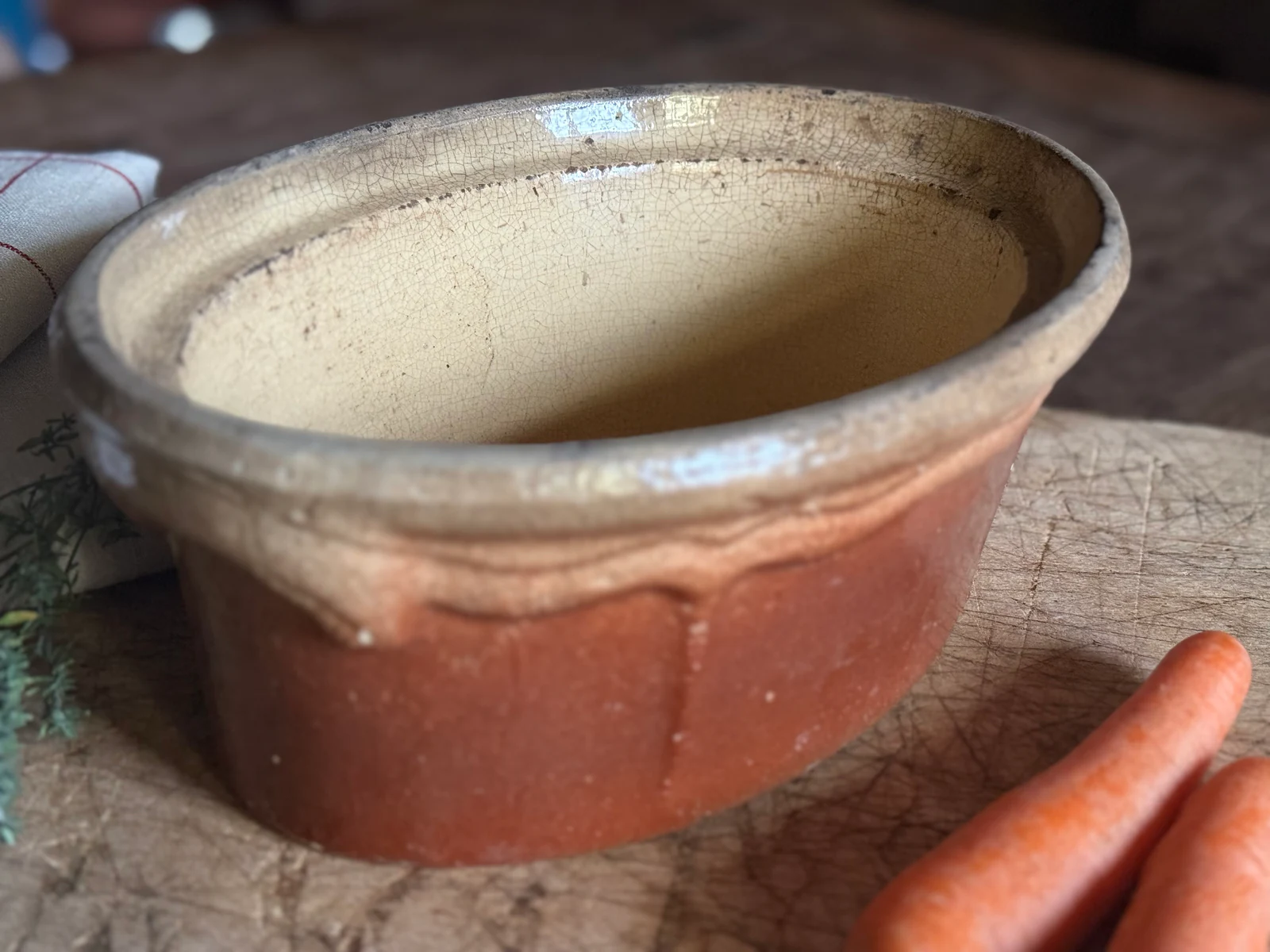
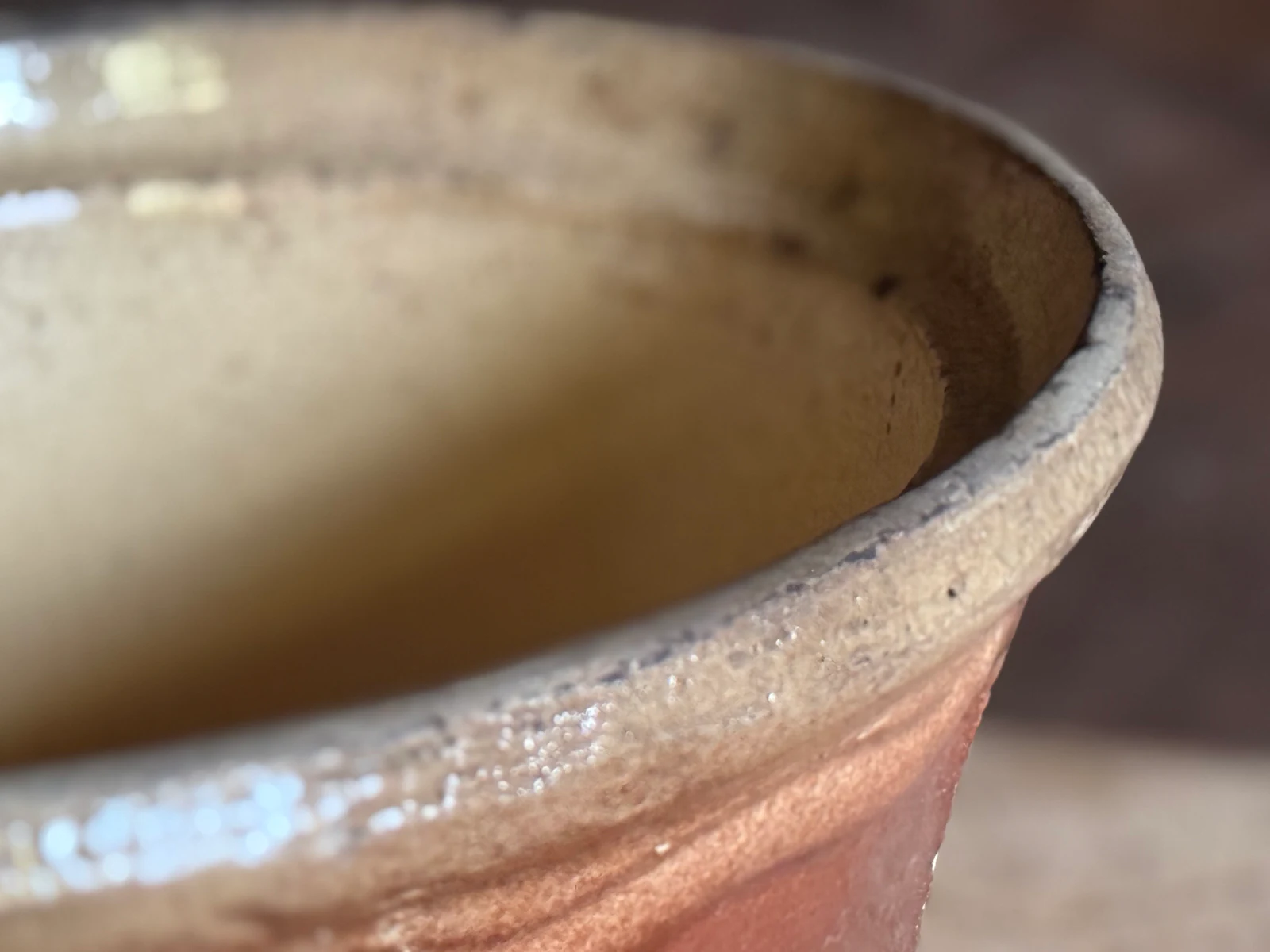
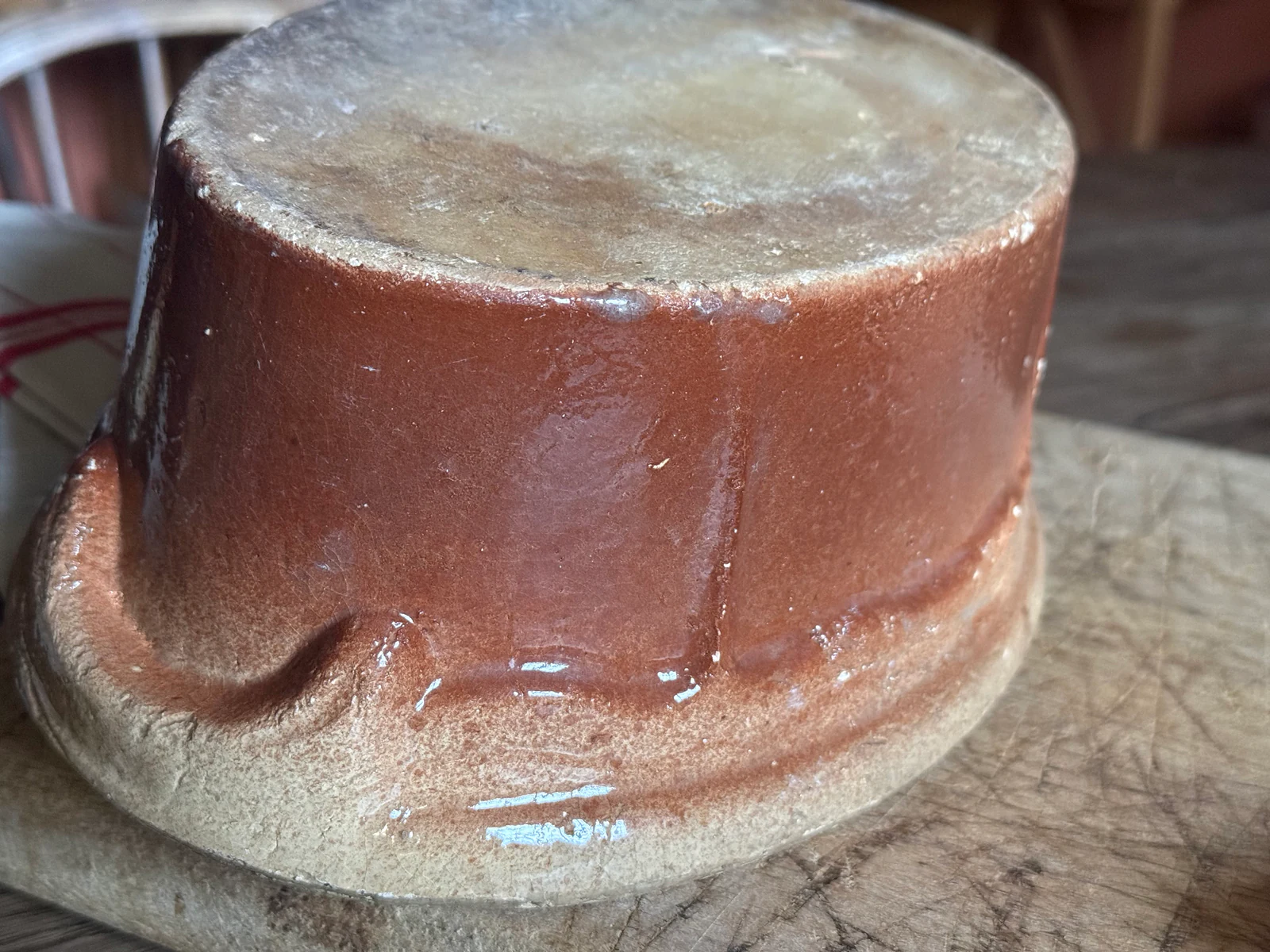
The lid is coated in a deep, glossy caramel-brown enamel that catches the light and reveals honeyed tones across the relief. The base plays on contrast: a reddish-brown stoneware, more matte, lifted by a cream and beige rim. This blend of warm, earthy tones is typical of tableware from the early 20th century.
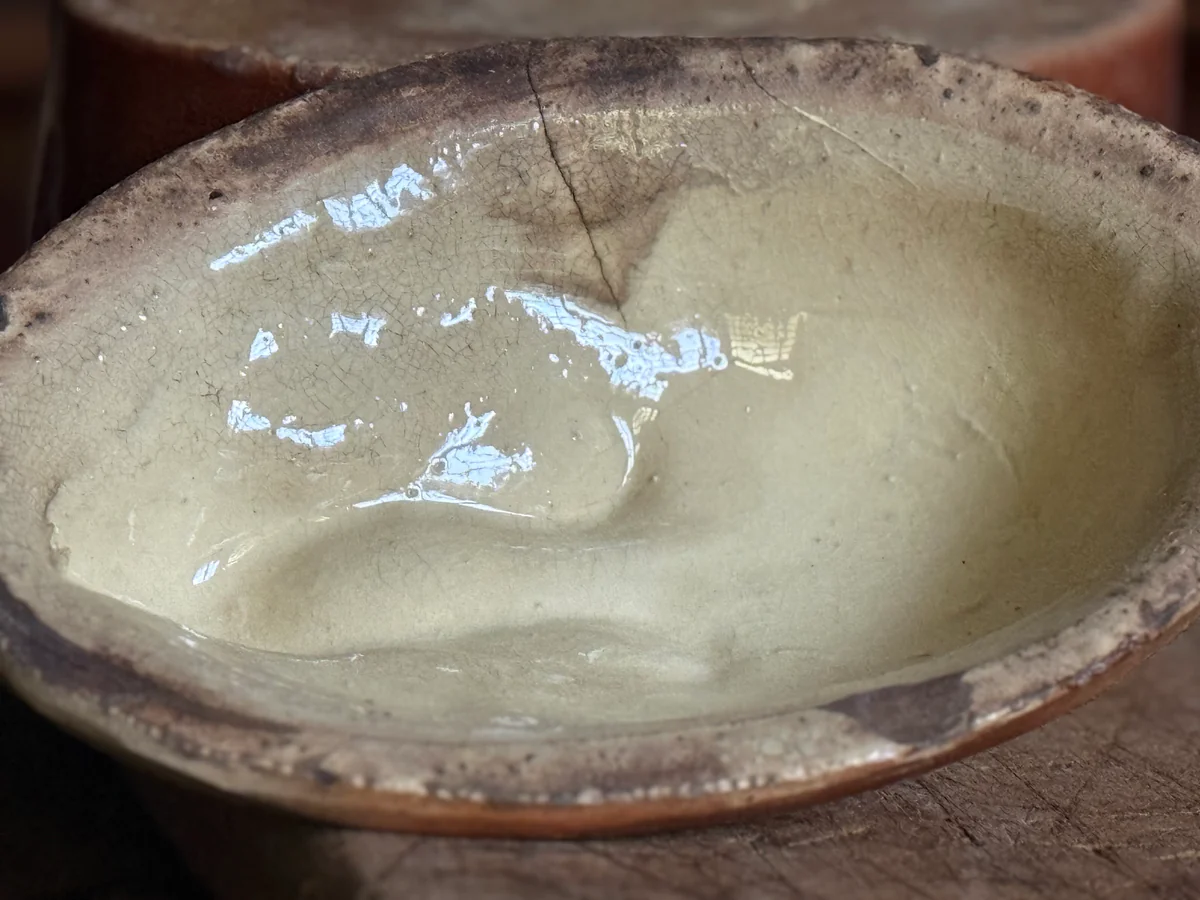
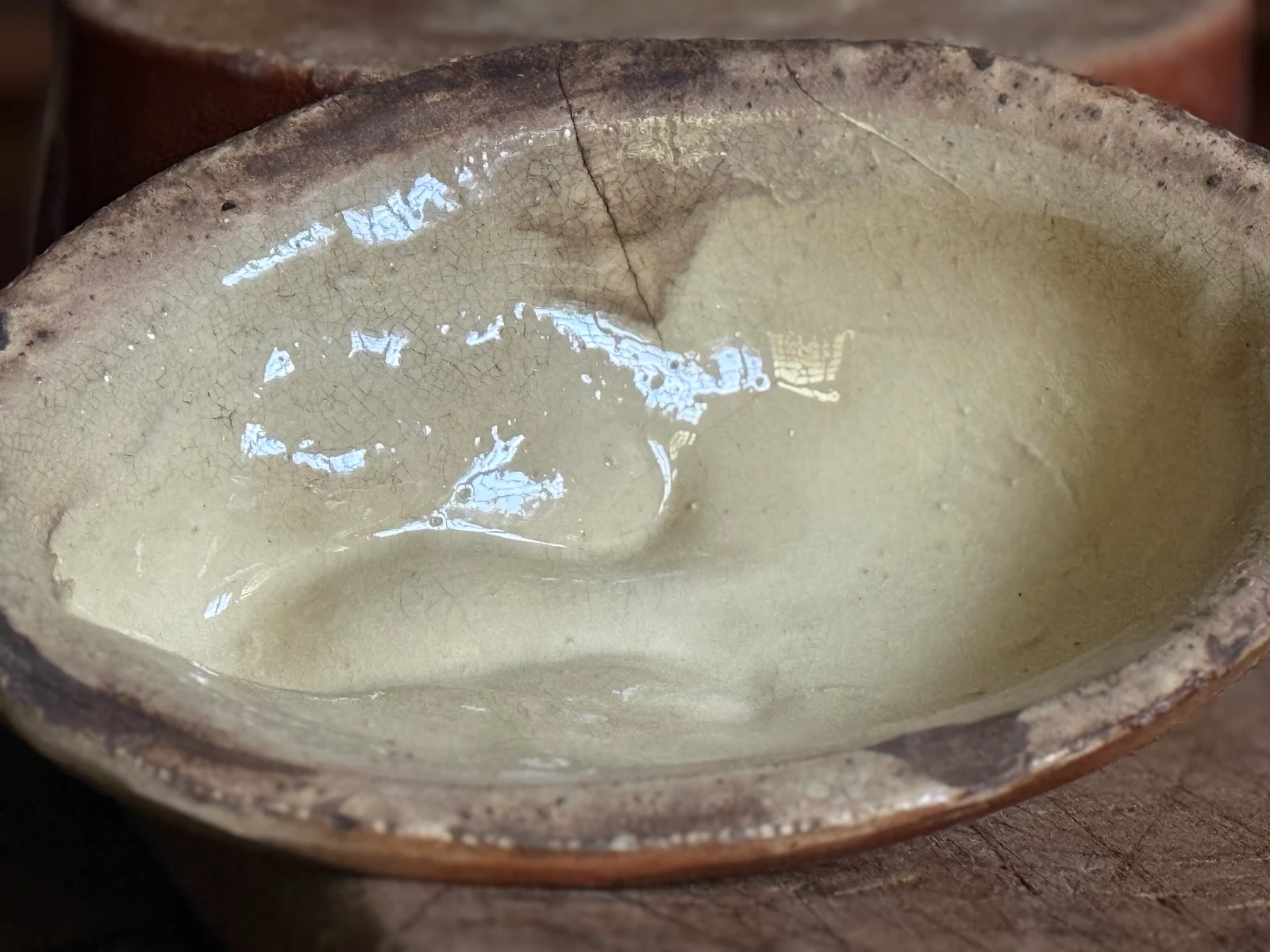
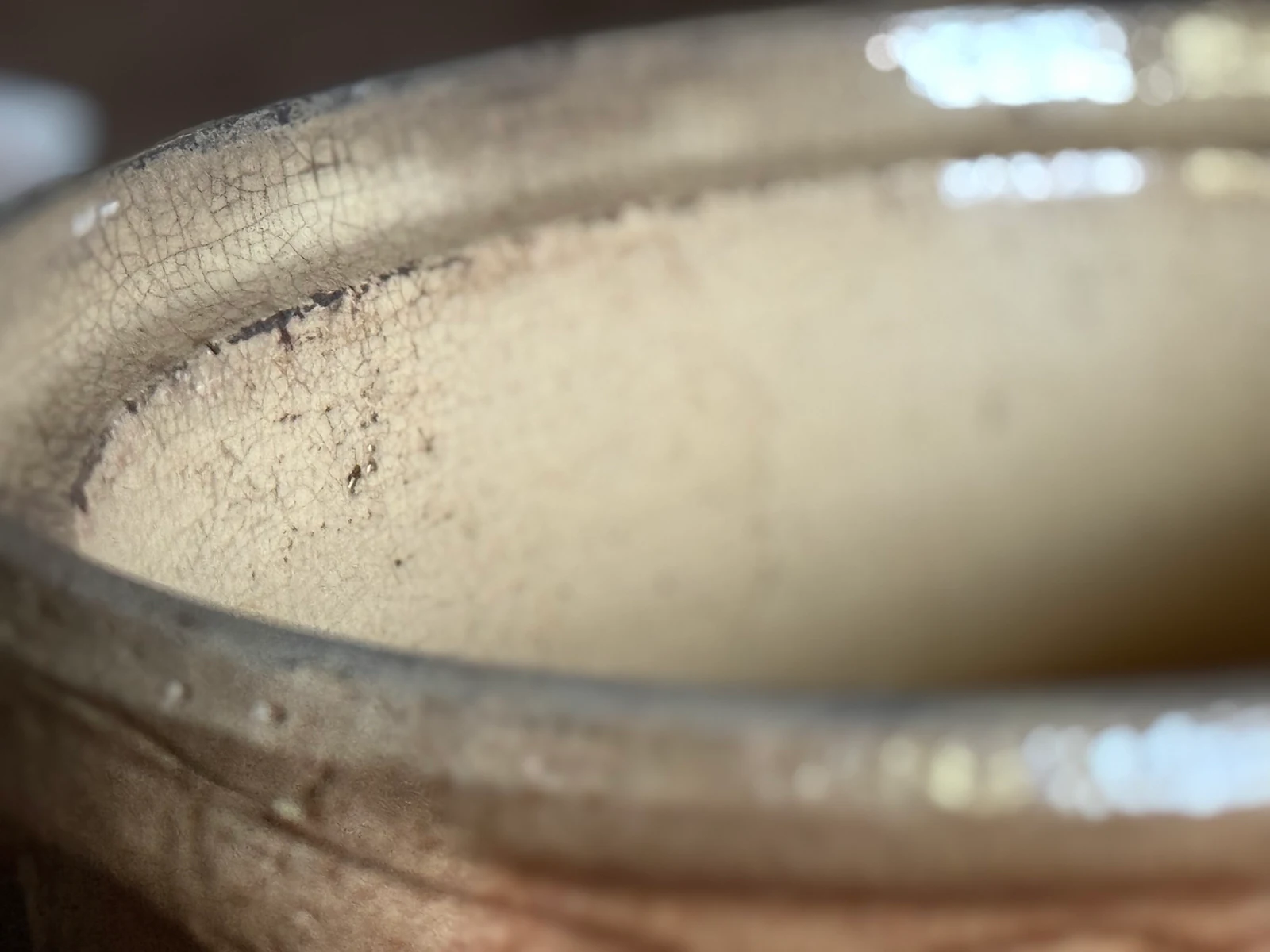
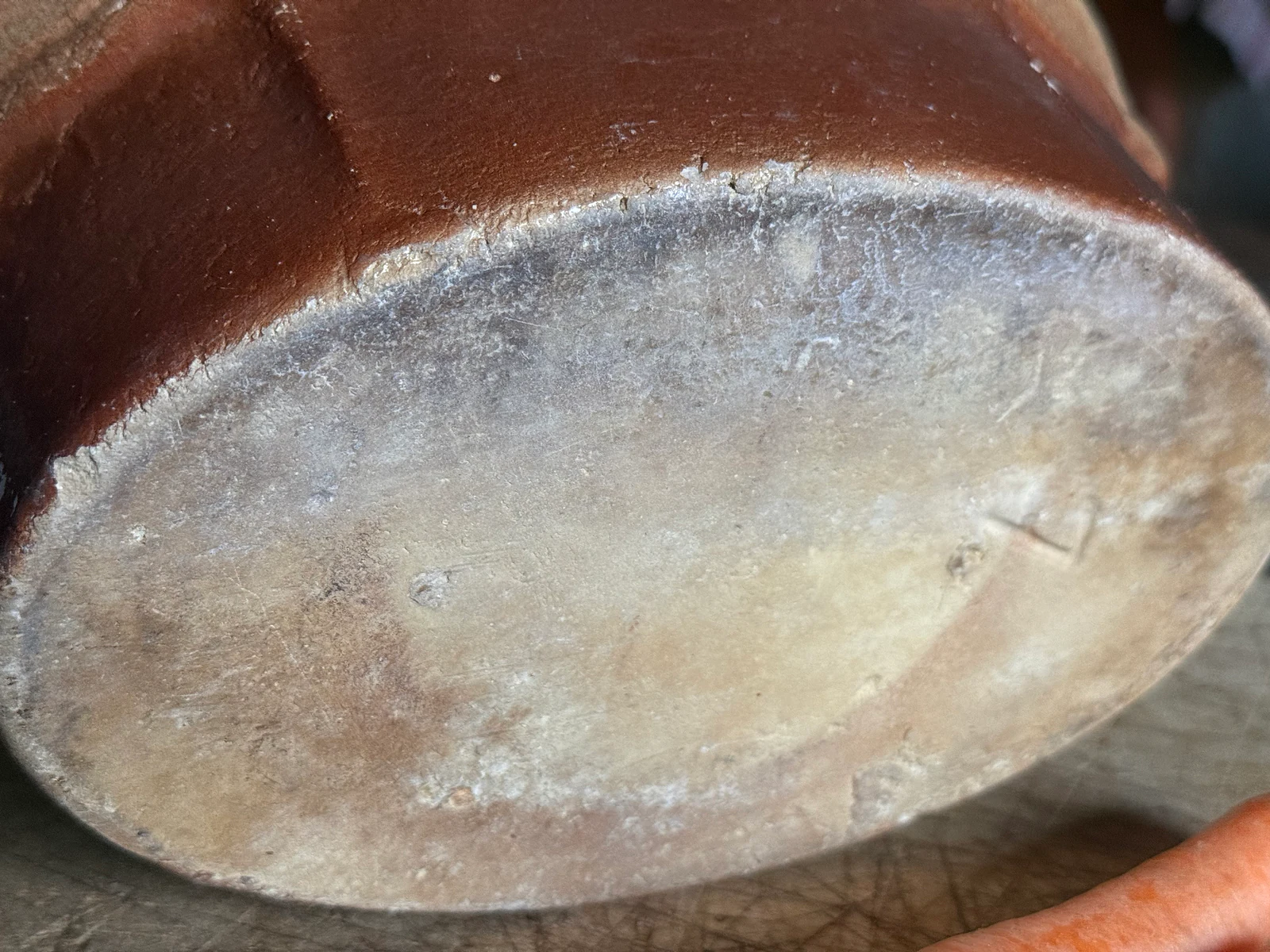
Close-up photos show a fine web of crazing across the lighter areas, along with several small signs of use: chips, wear along the rim, hairline cracks in the glaze. Far from being a drawback, these marks are part of the piece's charm and testify to its age. It has lived, it has served, it has crossed the decades — and it shows, to our great delight.
You can of course use it for what it was made for: moulding a rabbit terrine, a country pâté, a preparation en croûte. But many will prefer it as a decorative object: on a sideboard, a kitchen shelf or a flea-market table, it instantly brings a rustic, animalier note. It is the kind of piece people notice and ask about.
To preserve the enamel, hand-washing in warm water with a mild detergent is best, avoiding thermal shocks and the dishwasher. Dry the piece carefully after use. If you cook with it, a generous greasing before baking will protect the most fragile areas.
Sourced from the flea market and antique kitchenware trade; exact provenance undocumented.
Why this terrine is impossible to resist
- A rare rabbit-shaped lid that instantly catches the eye
- A caramel-and-cream glaze that brings instant warmth to any kitchen
- The authentic charm of crazing and wear from an early 20th-century piece
- Both useful and decorative, perfect on a sideboard or a festive table
- A one-of-a-kind character piece, far from today's standardized production
Set it aside — it may be waiting for you