
2

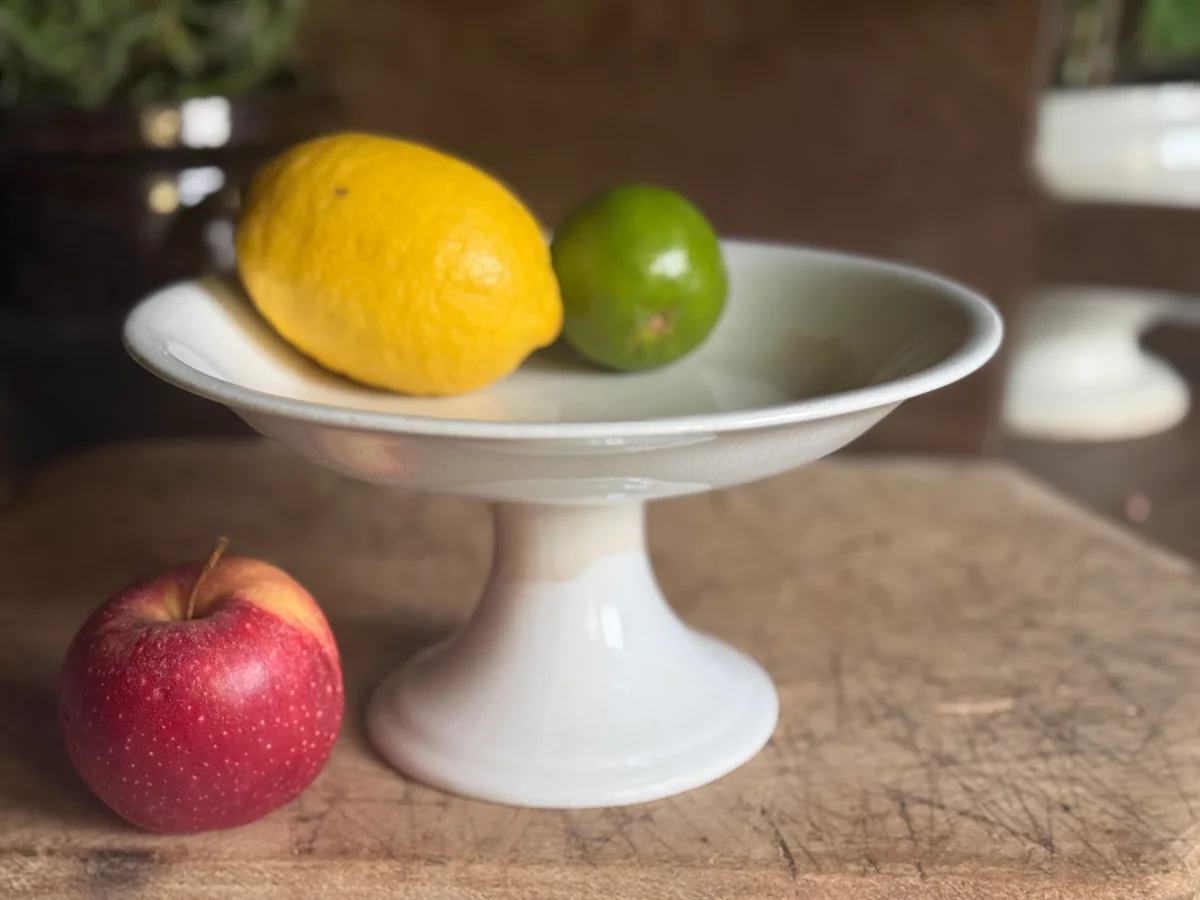
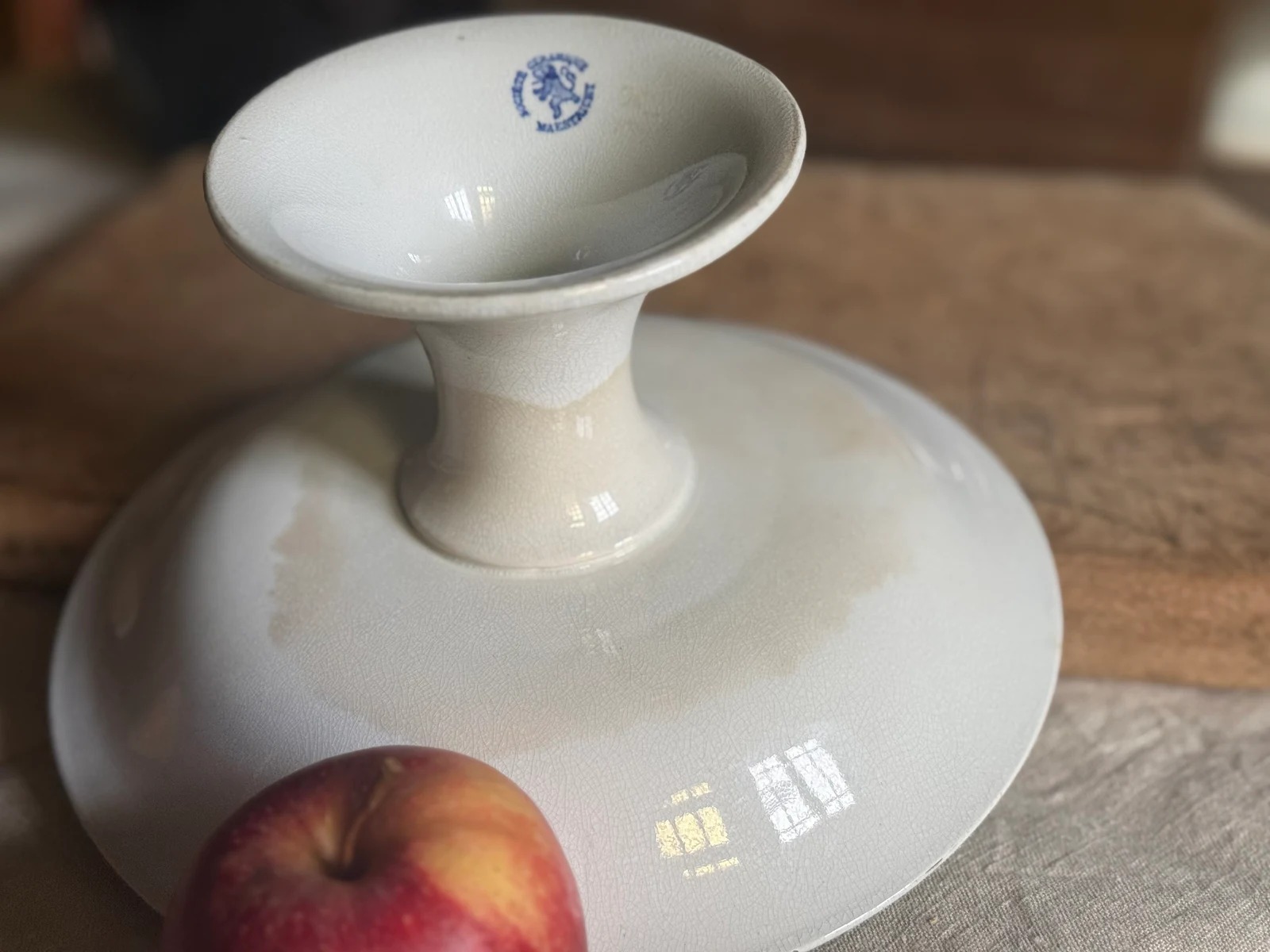
This footed compote dish in glazed white faience charms with its clean lines and gentle presence. Stamped with the blue mark of the Société Céramique de Maastricht, it evokes the bourgeois tables of the late 19th century. Its network of crazing is a testament to its authenticity...
☞ Read more
Set it aside — it may be waiting for you
♯footed-dish ♯table-arts ♯fruit-bowl ♯societe-ceramique-de-maastricht ♯maastricht ♯ceramic ♯faience-tin-glazed-earthenware ♯enamel
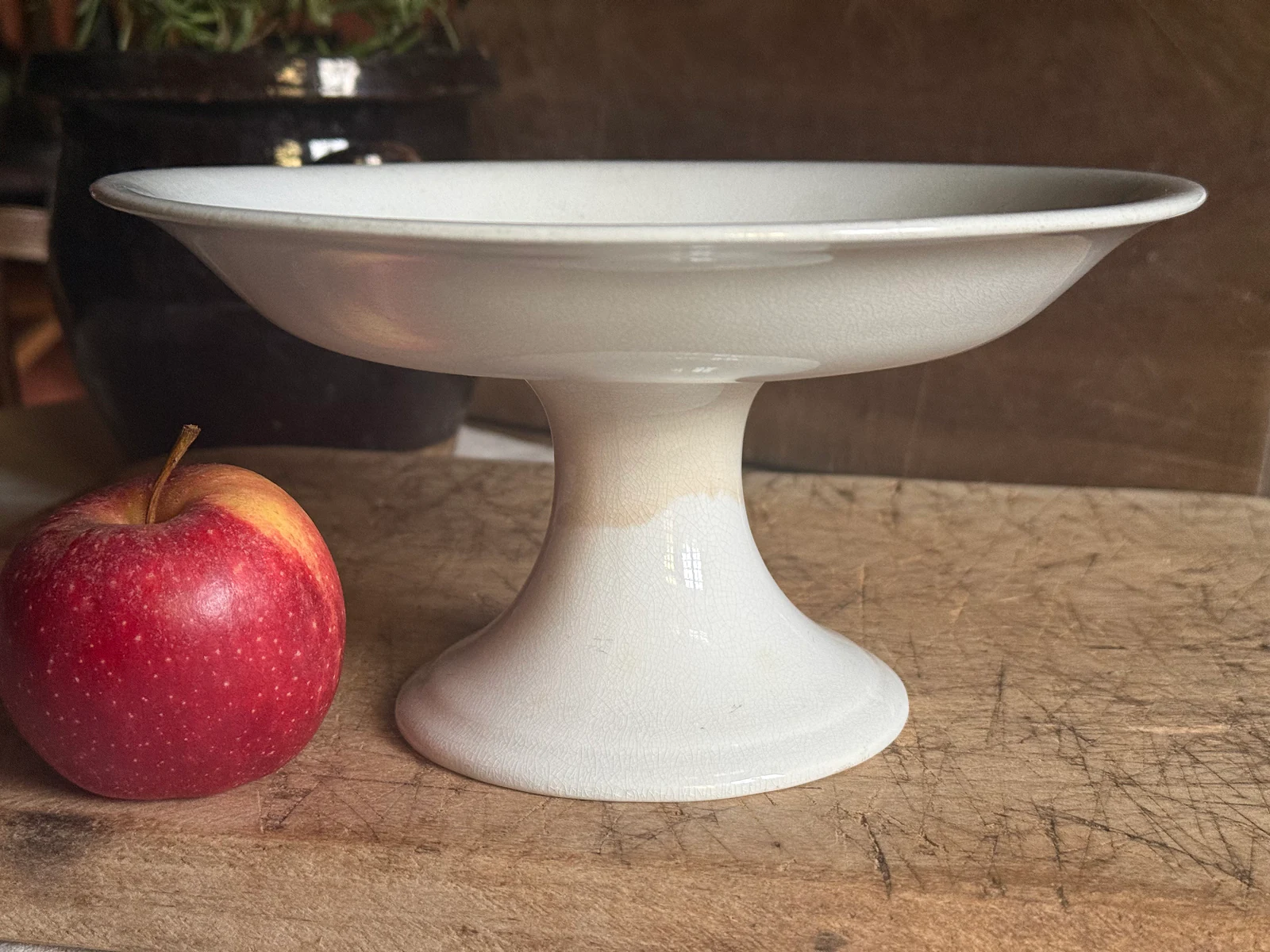
This footed compote dish in glazed white faience charms with its clean lines and gentle presence. Stamped with the blue mark of the Société Céramique de Maastricht, it evokes the bourgeois tables of the late 19th century. Its network of crazing is a testament to its authenticity and its history.
❝A delightfully old-fashioned silhouette for serving fruit, sweets and desserts with proper flea-market charm. ❞
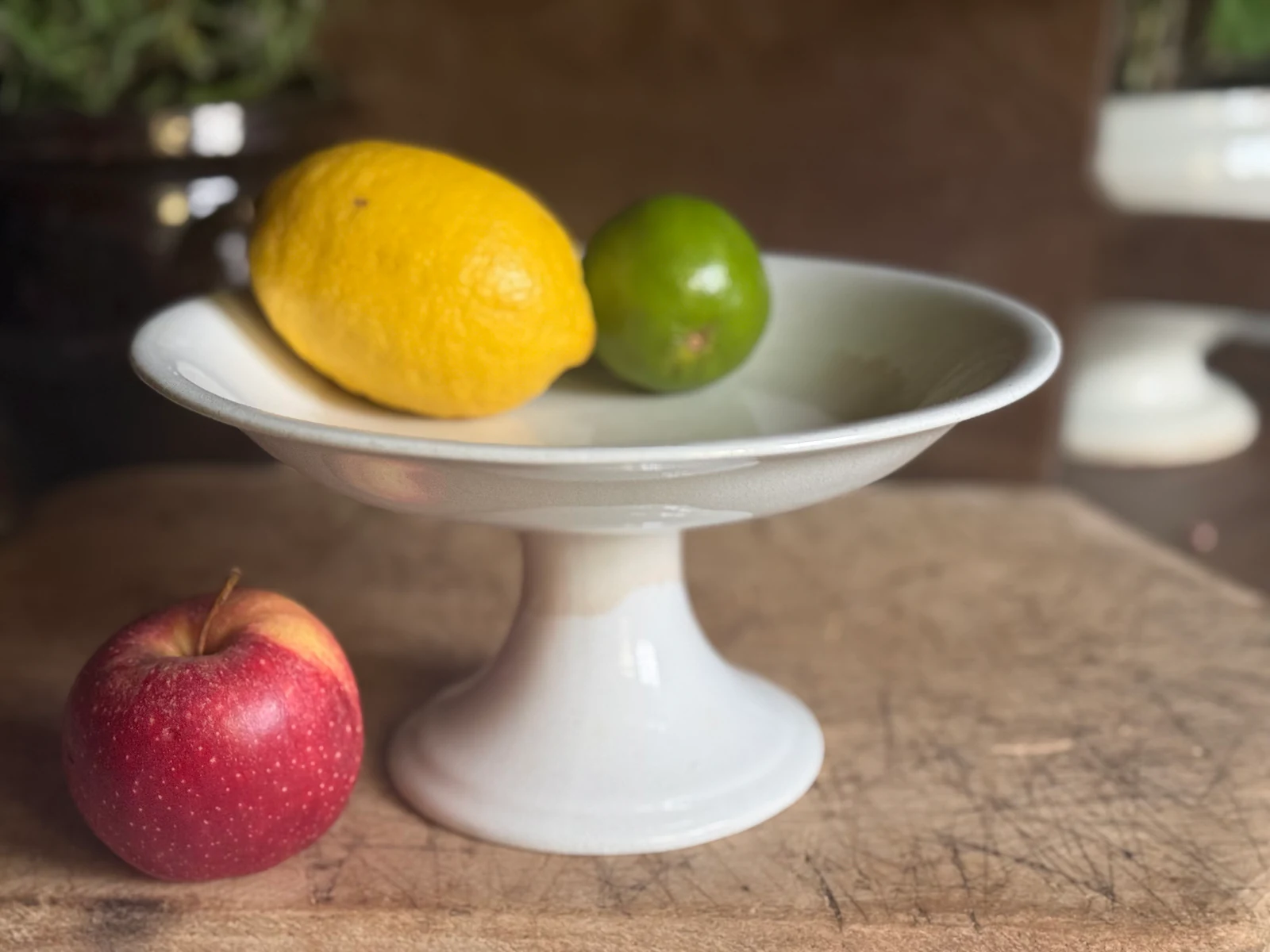
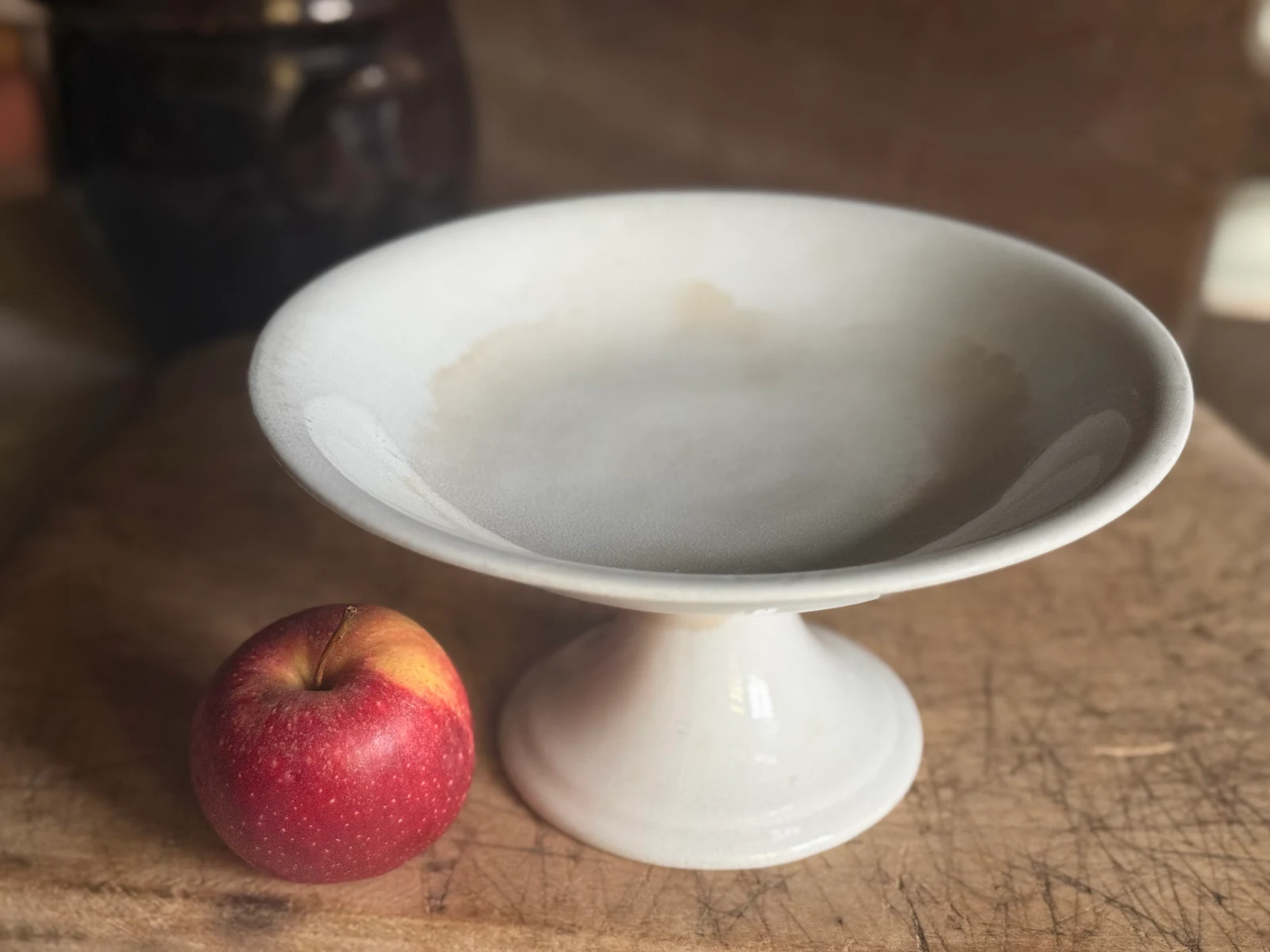
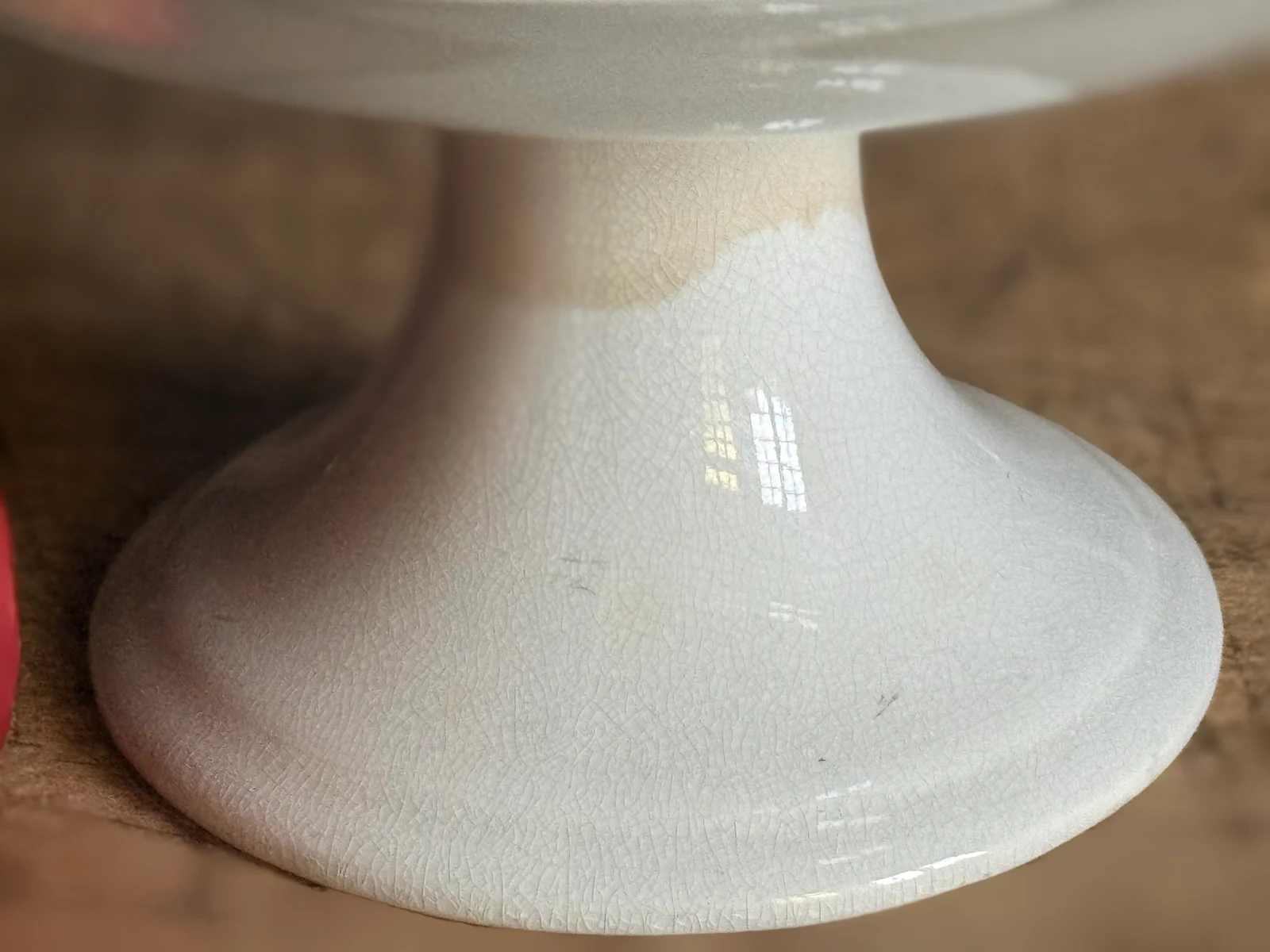
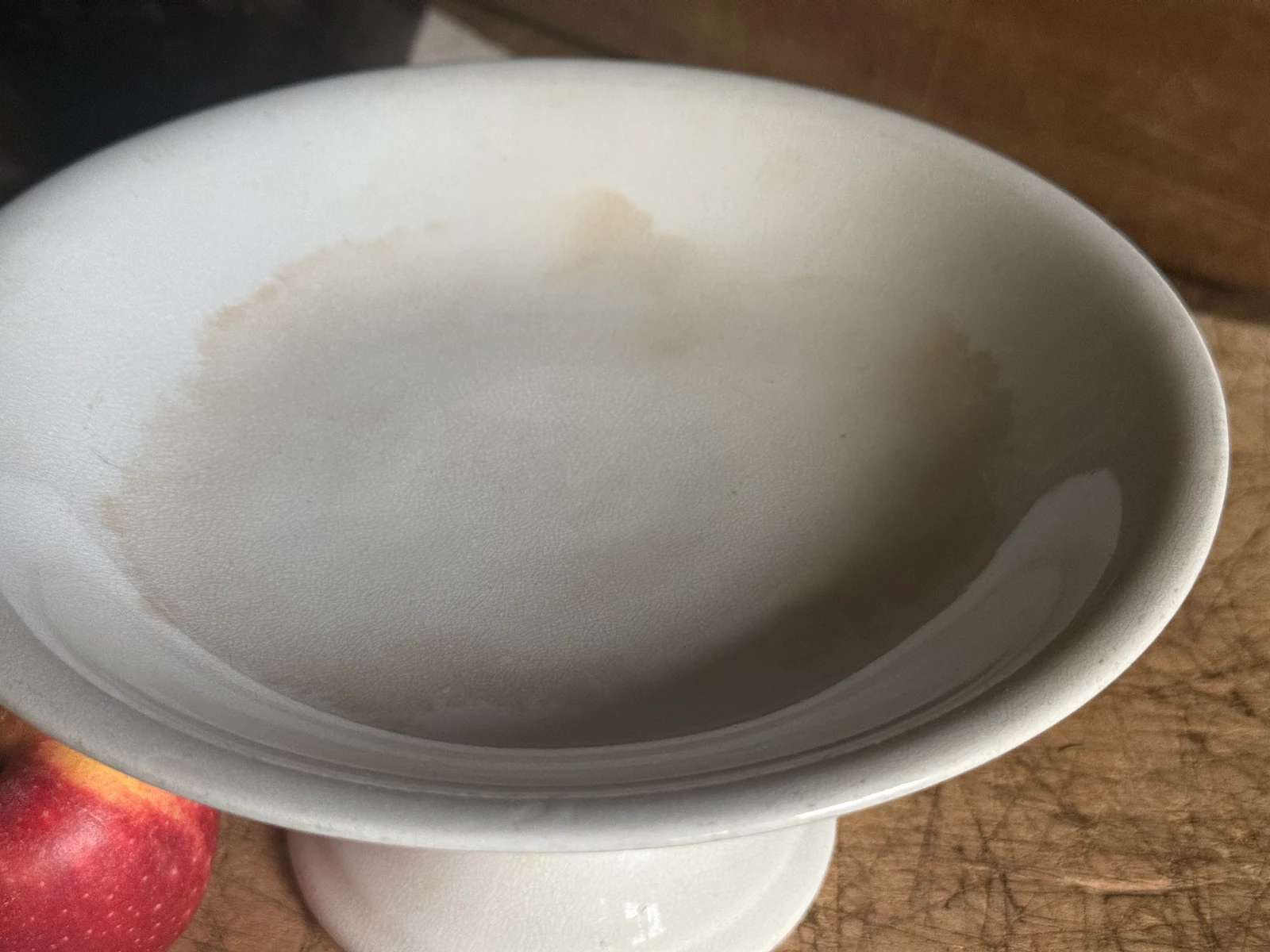
Here is a footed compote dish with a flared circular shape, resting on a moulded central stem. Its luminous whiteness and understated profile make it an easy piece to pair, whether on a festive table or in a flea-market display. It was traditionally intended for presenting fruit, sweets or small desserts.
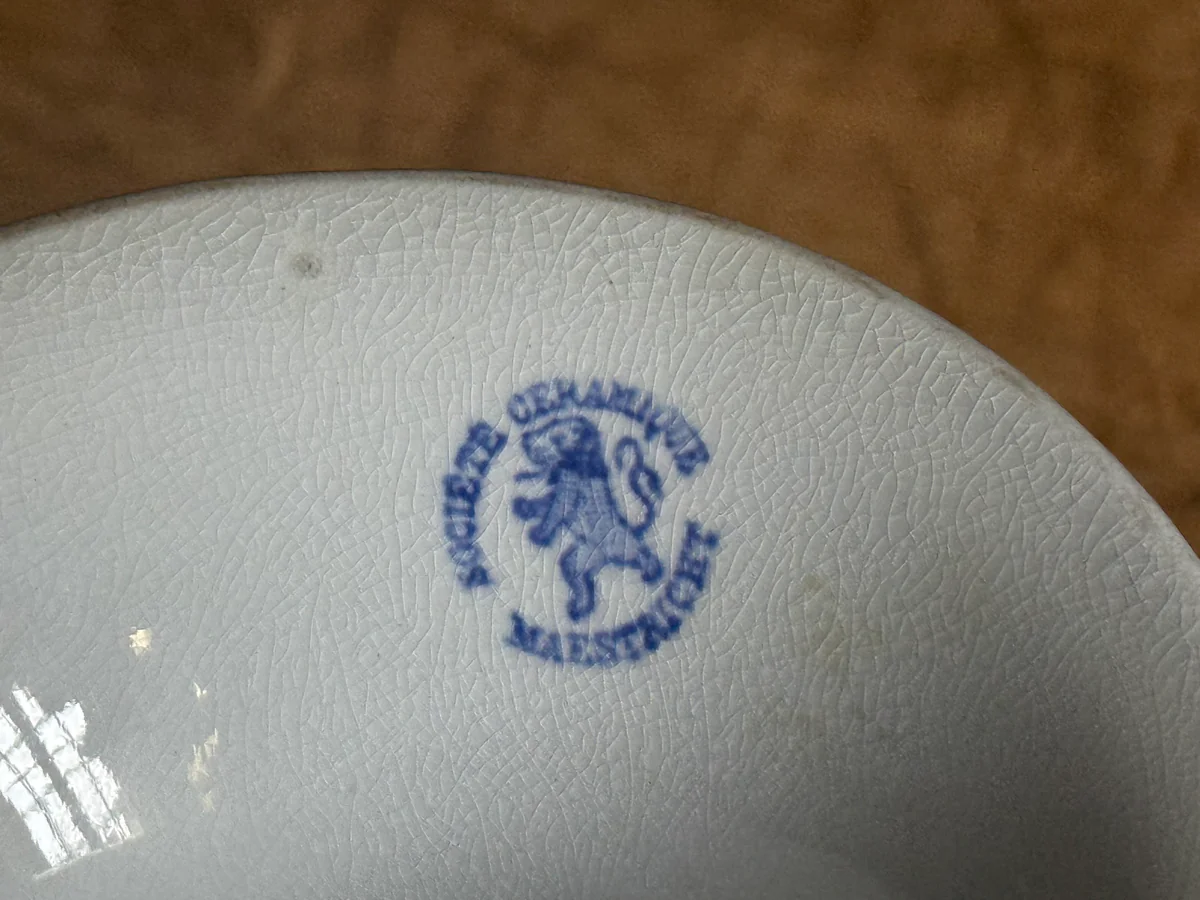
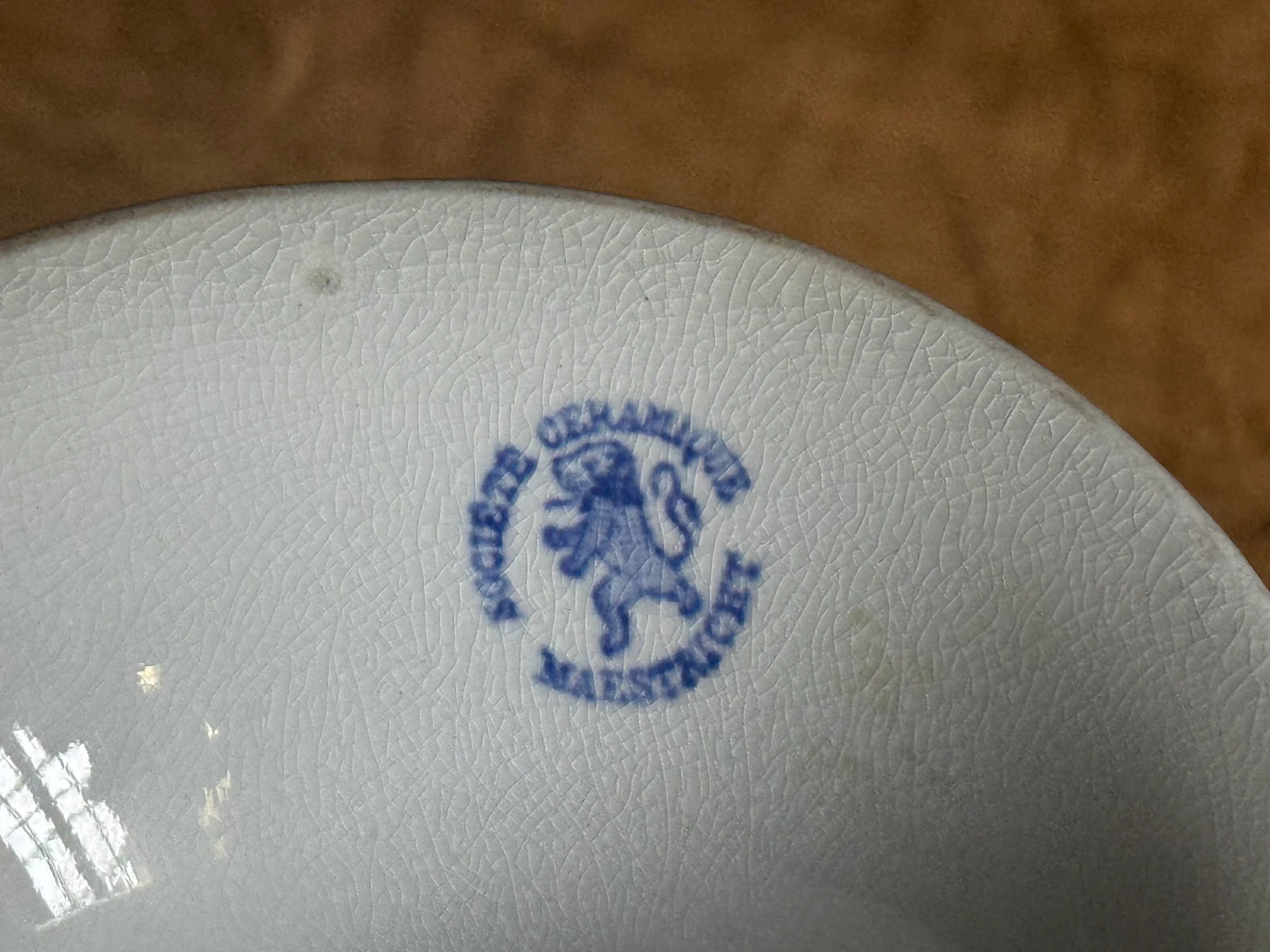
Under the bowl, a blue stamp printed under the glaze brings together the words "SOCIÉTÉ CÉRAMIQUE" and "MAESTRICHT" around a rampant lion. This mark belongs to the Dutch Maastricht factory, which operated independently between 1863 and 1958. The absence of "Made in Holland" or a specific model name points to a late 19th-century production, around 1880-1900.
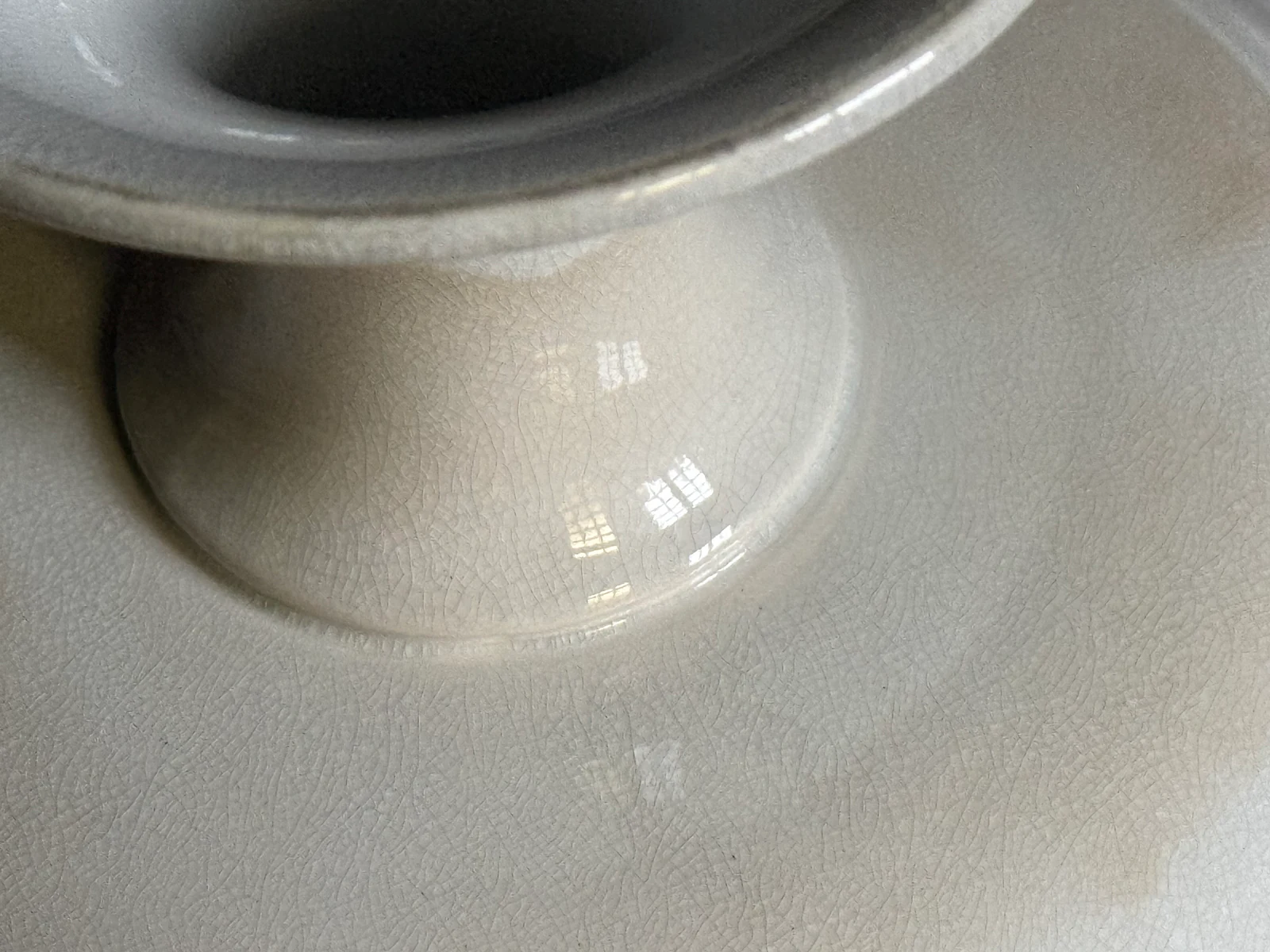
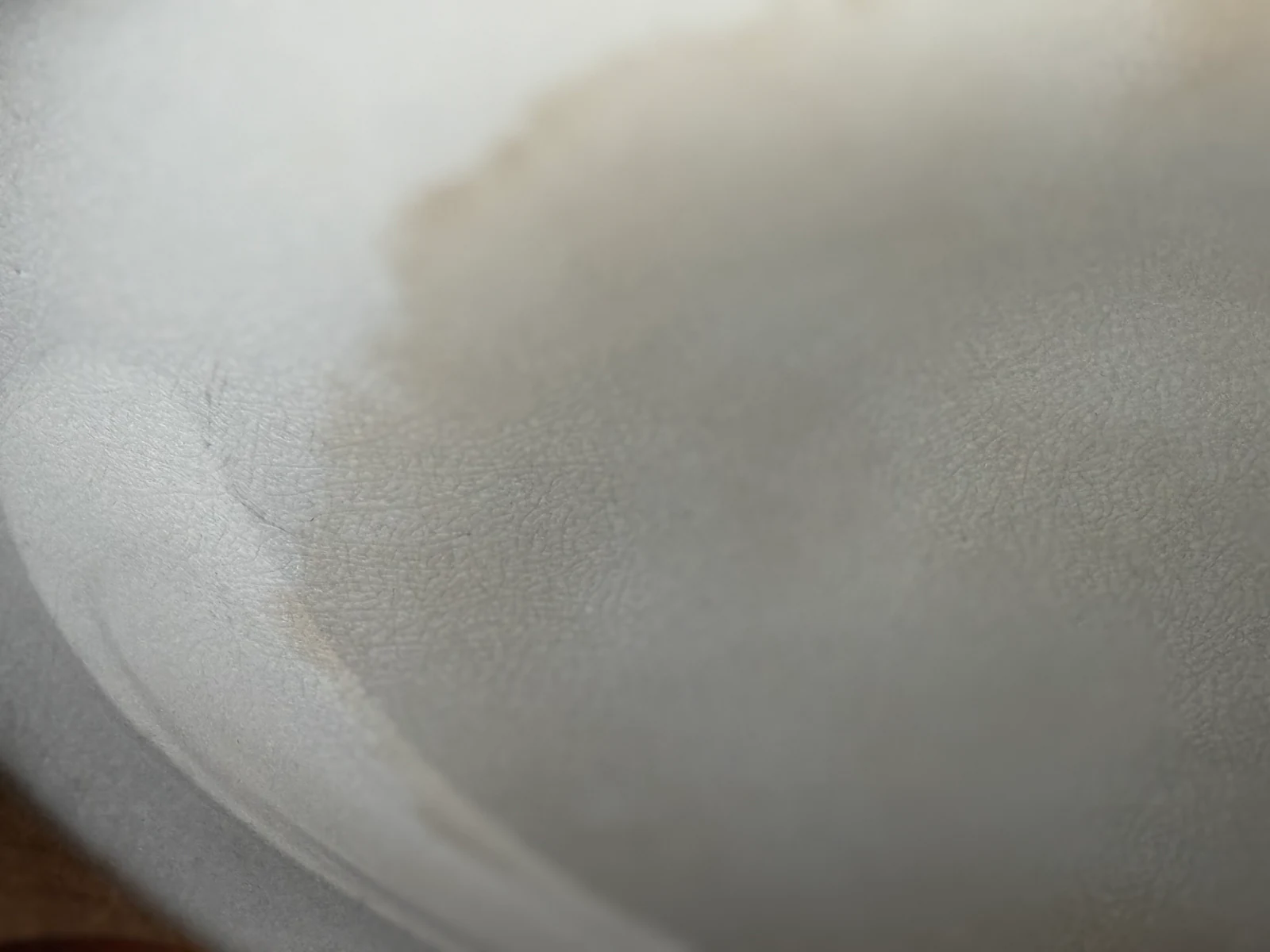
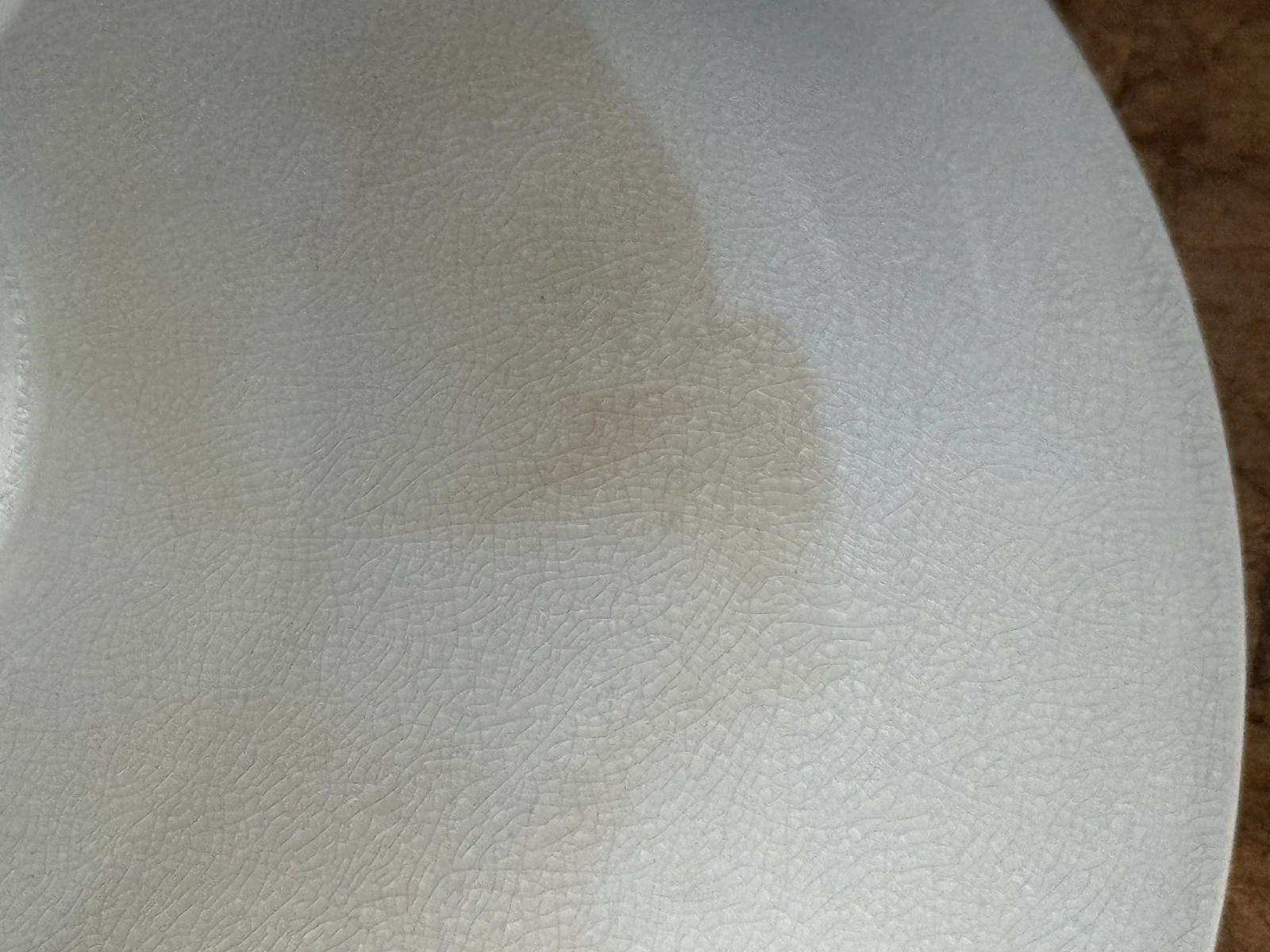
The piece shows an extensive network of glaze cracks, also known as crazing. Far from being a disqualifying flaw, this phenomenon is typical of old ceramics and adds to their charm. It confirms the age of the object and gives it that patina so sought after in vintage tableware.
On a sideboard, a serving table or in the centre of a table, this fruit bowl brings an immediate retro-chic note. It can hold fresh fruit, macarons, candied fruit or serve as a poetic catch-all. Its white hue pairs well with old crockery, vintage table linen and bouquets of dried flowers.
This is an old, authentic and marked piece, not to be confused with a reproduction. Its condition of use is consistent with its age: pronounced crazing and a few marks in the bowl. It will appeal to lovers of Dutch ceramics, flea-market finds and retro decoration.
Netherlands — Maastricht, Société Céramique manufactory, production estimated between 1880 and 1900.
Why choose this Maastricht compote dish?
- An antique piece stamped by the Société Céramique of Maastricht
- An elegant, timeless pedestal silhouette
- A glazed white that pairs easily with any table setting
- An authentic crazing that tells its own story
- A flea-market find made for the art of the table
Set it aside — it may be waiting for you