2
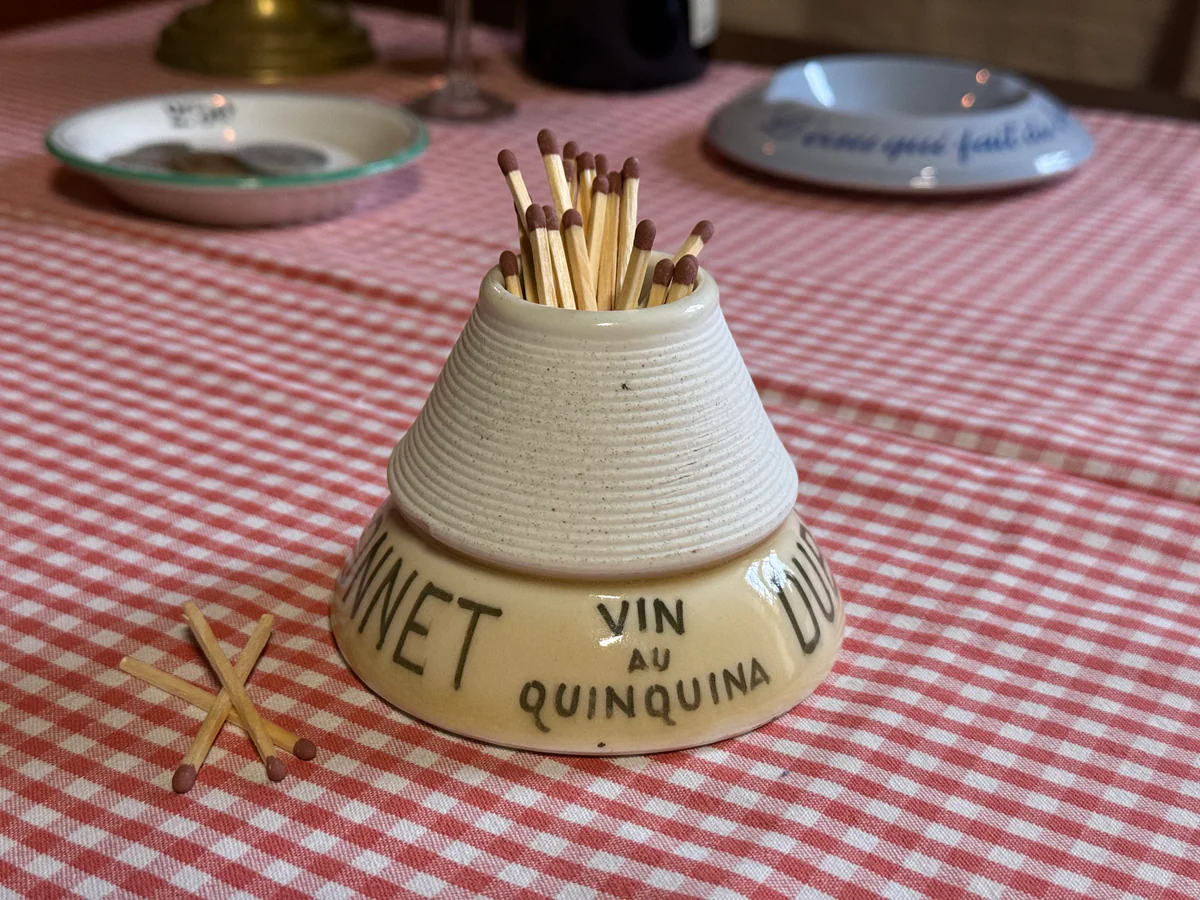
A cult advertising piece from the early 20th century, this faience match striker celebrates Dubonnet and its famous quinquina wine. Sitting on a bistro table, it already blended the art of the table with the art of the advert. A charming collector's piece that is both useful and...
☞ Read more
Set it aside — it may be waiting for you
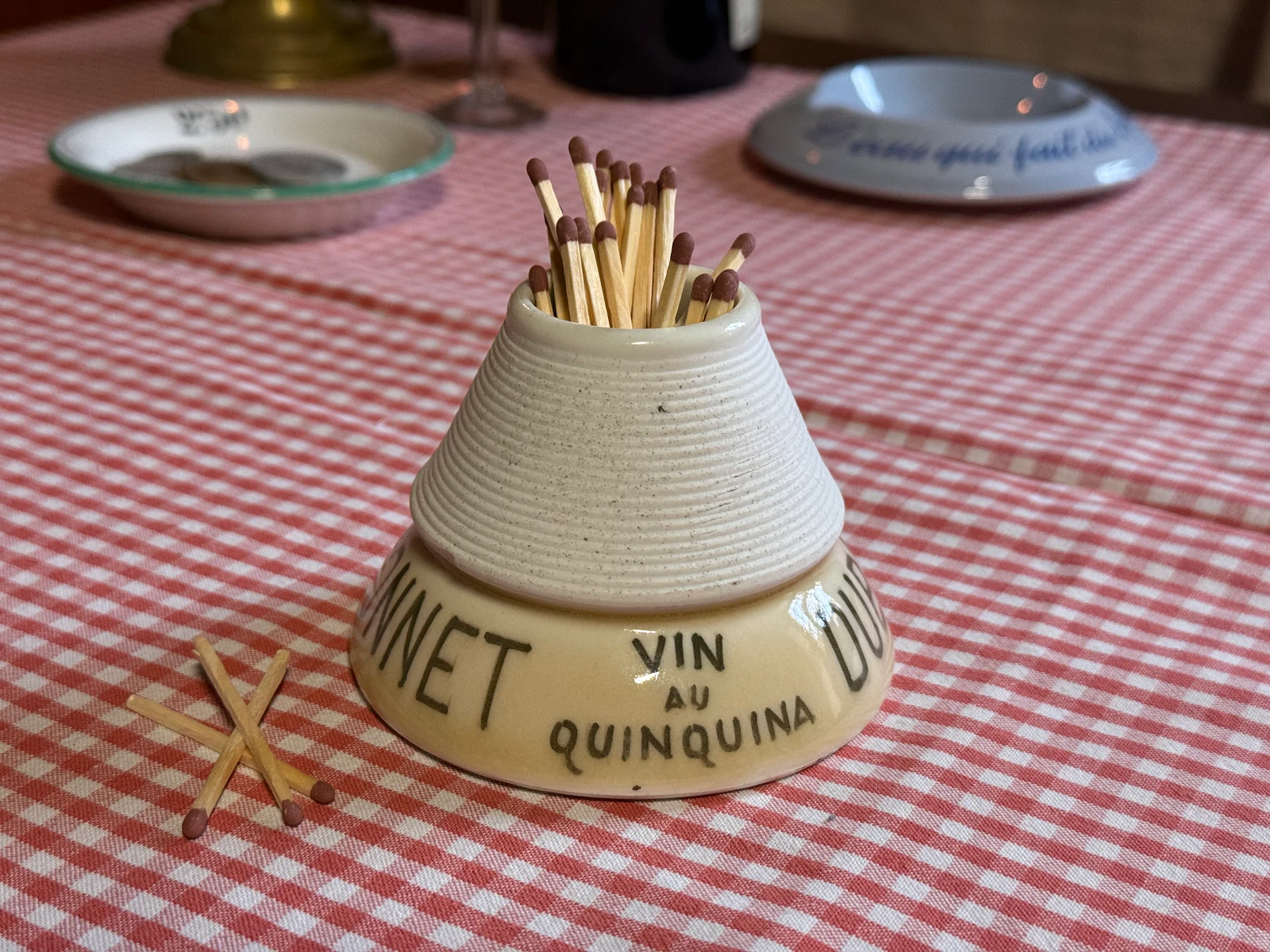
A cult advertising piece from the early 20th century, this faience match striker celebrates Dubonnet and its famous quinquina wine. Sitting on a bistro table, it already blended the art of the table with the art of the advert. A charming collector's piece that is both useful and decorative.
❝On the counter of a bygone café, this little faience cone offered its matches to the quinquina drinkers. ❞
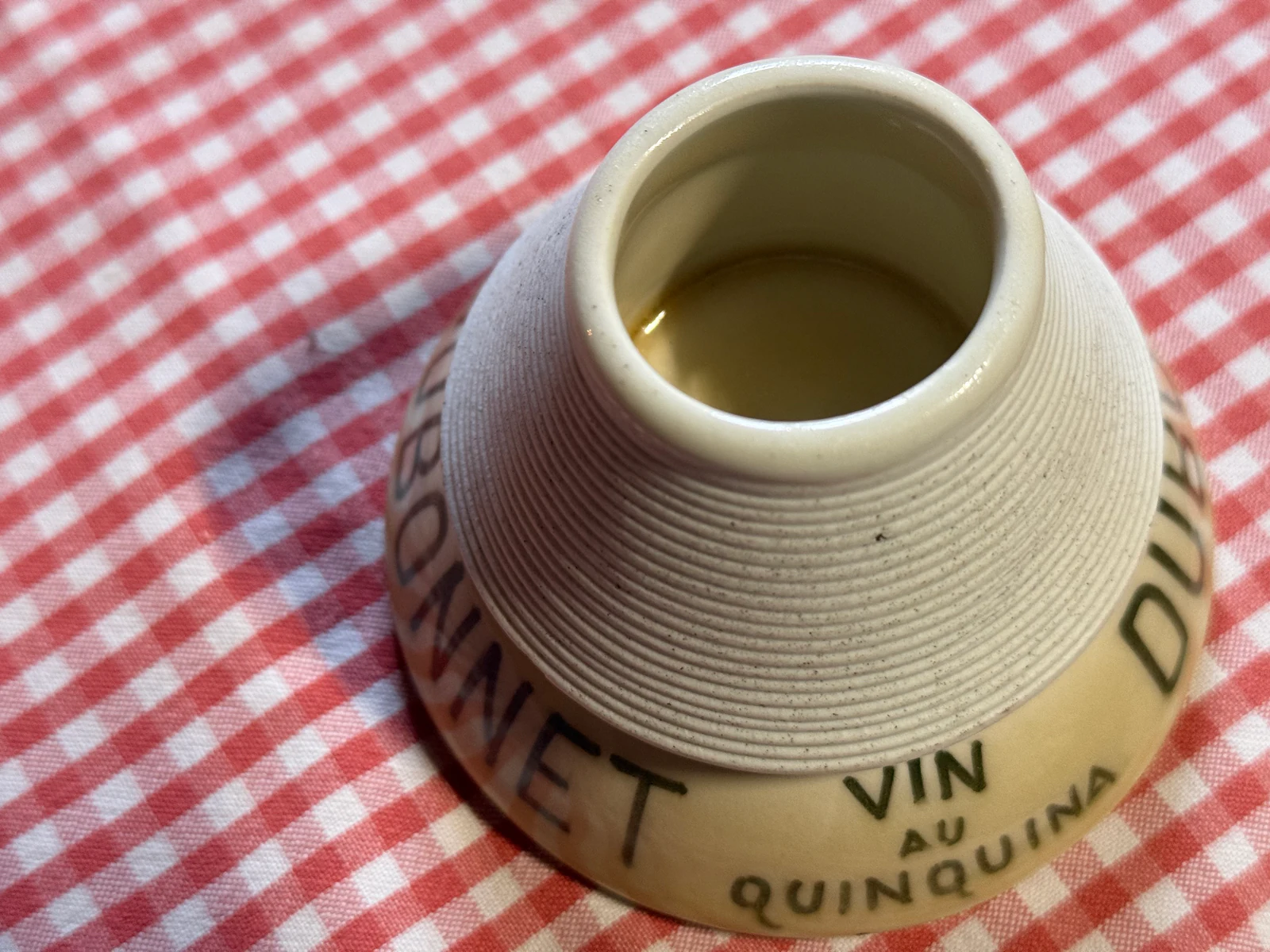
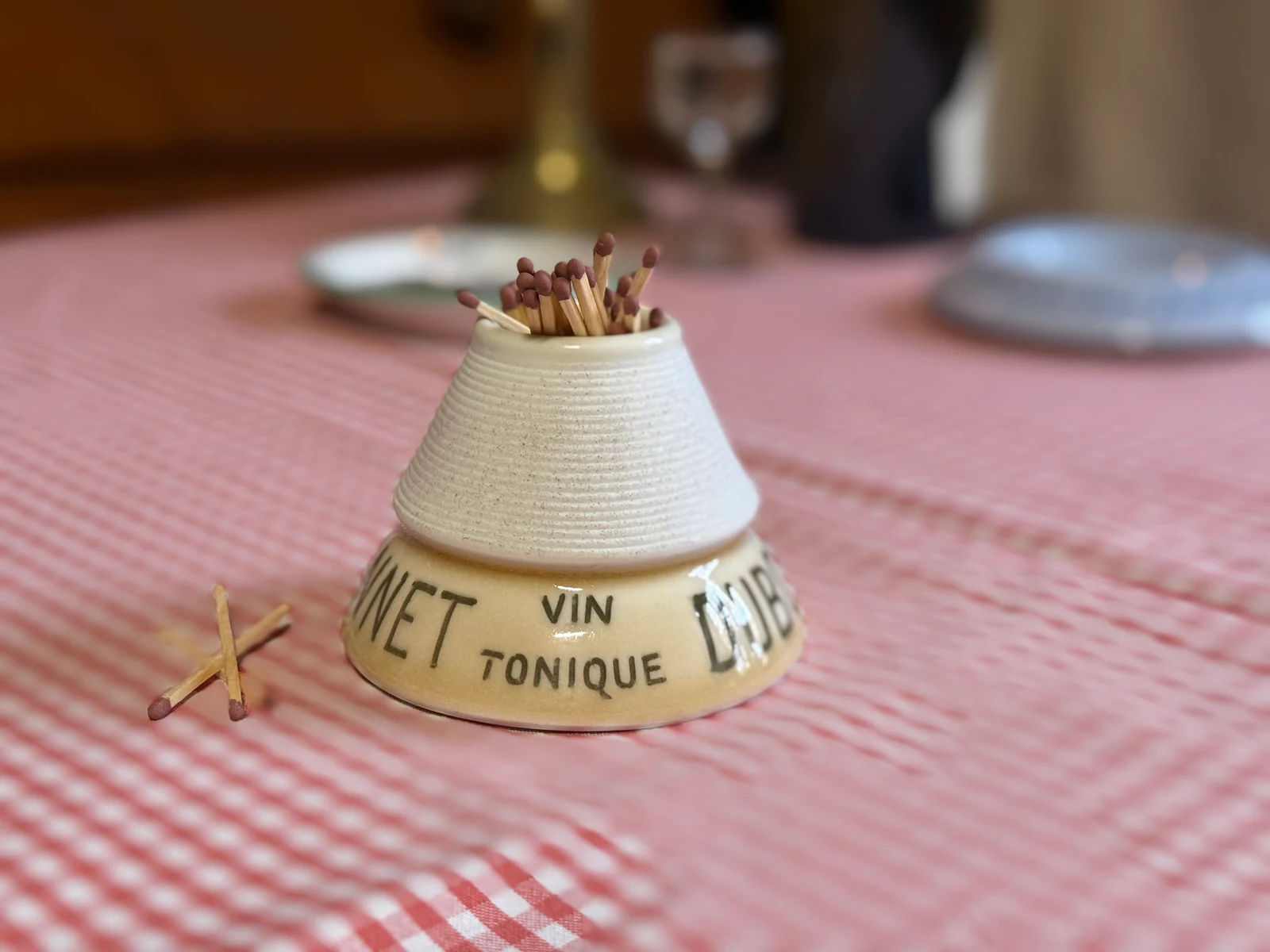
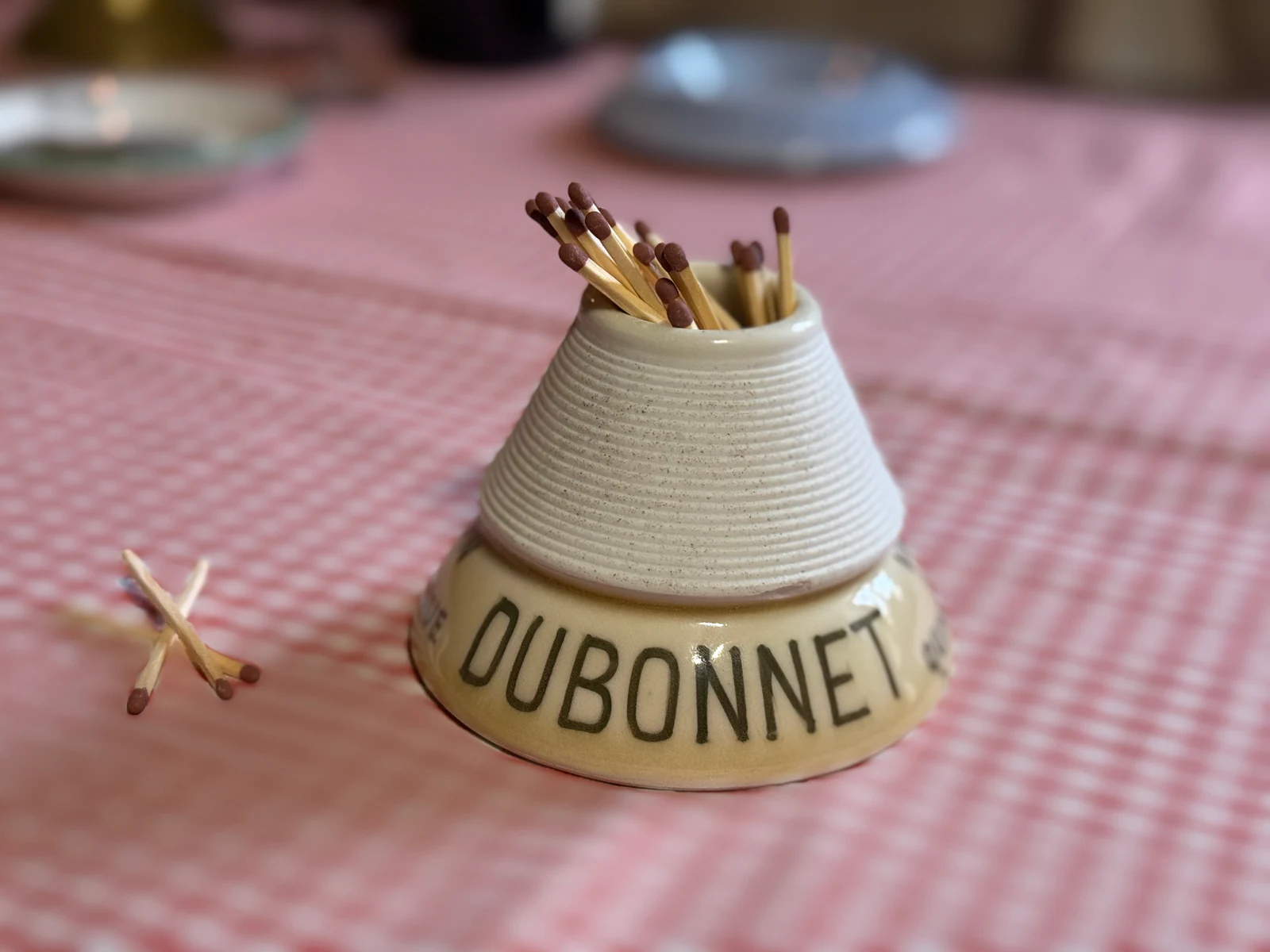
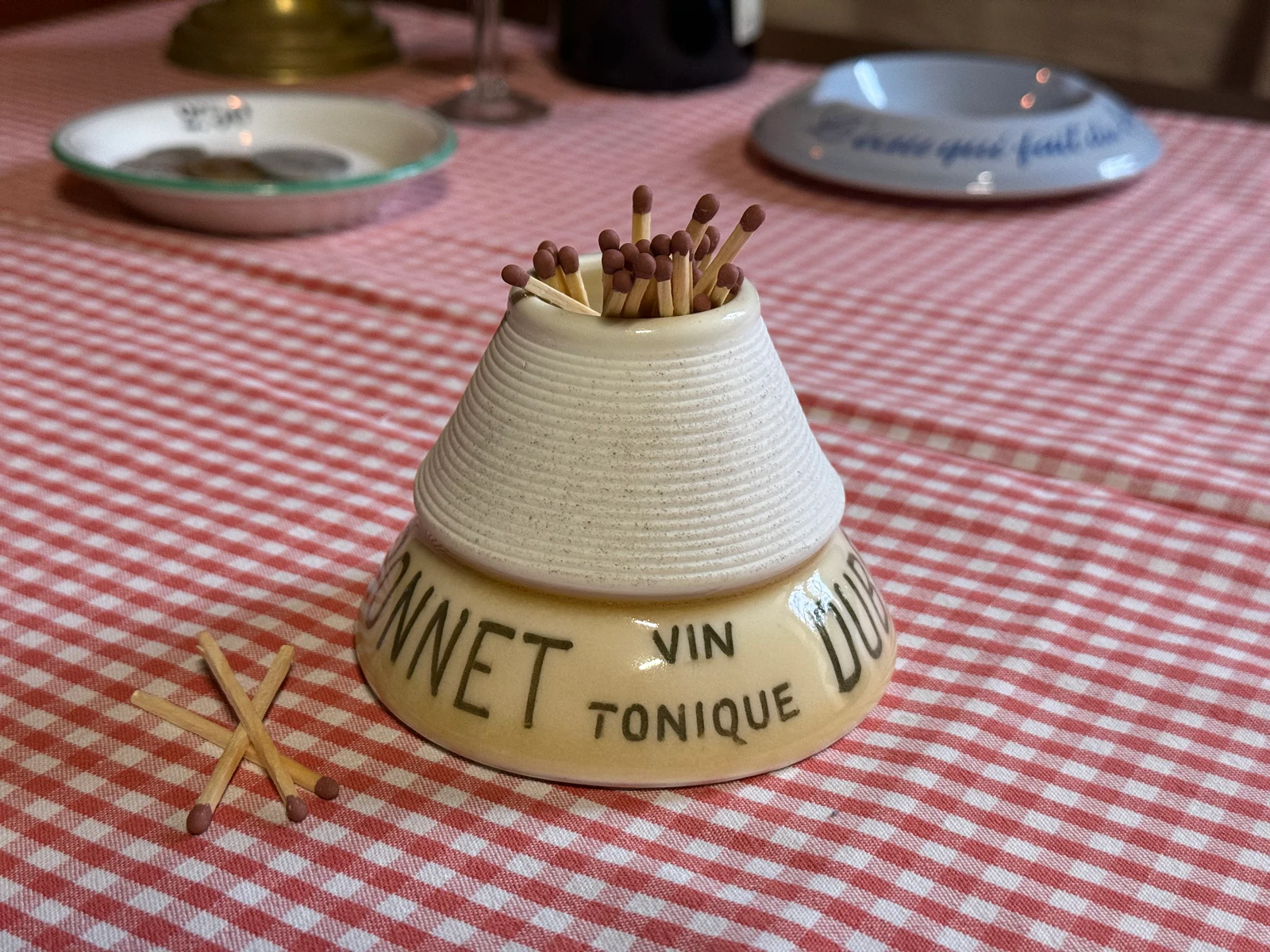
Back when people happily lit up after coffee, every bistro table and every salon side table had its match striker: a small faience receptacle where matches were kept, with a ribbed groove to strike them alight. This conical example has a fluted upper cone with horizontal bands, sitting on a flared base that holds the matches and carries the advertising.
Around the base, raised letters stand out in brown ink on the cream glaze: "DUBONNET" and "VIN AU QUINQUINA" on one side, "DUB…" and "VIN TONIQUE" on the other. In the early 1900s–1920s, the brand behind the famous quinine drink was everywhere — on trays, ashtrays, blotting paper — and these advertising objects are now among the most sought-after by collectors of publicity art.
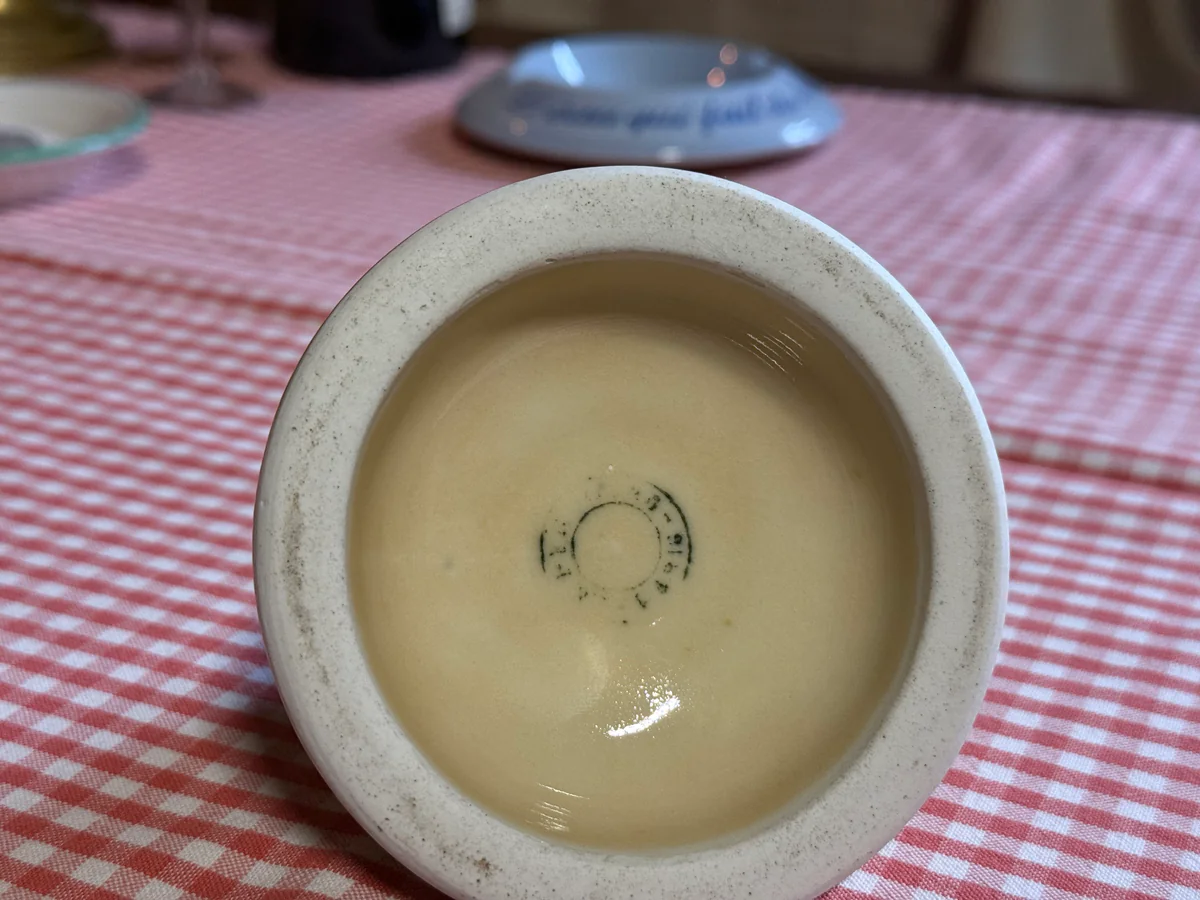
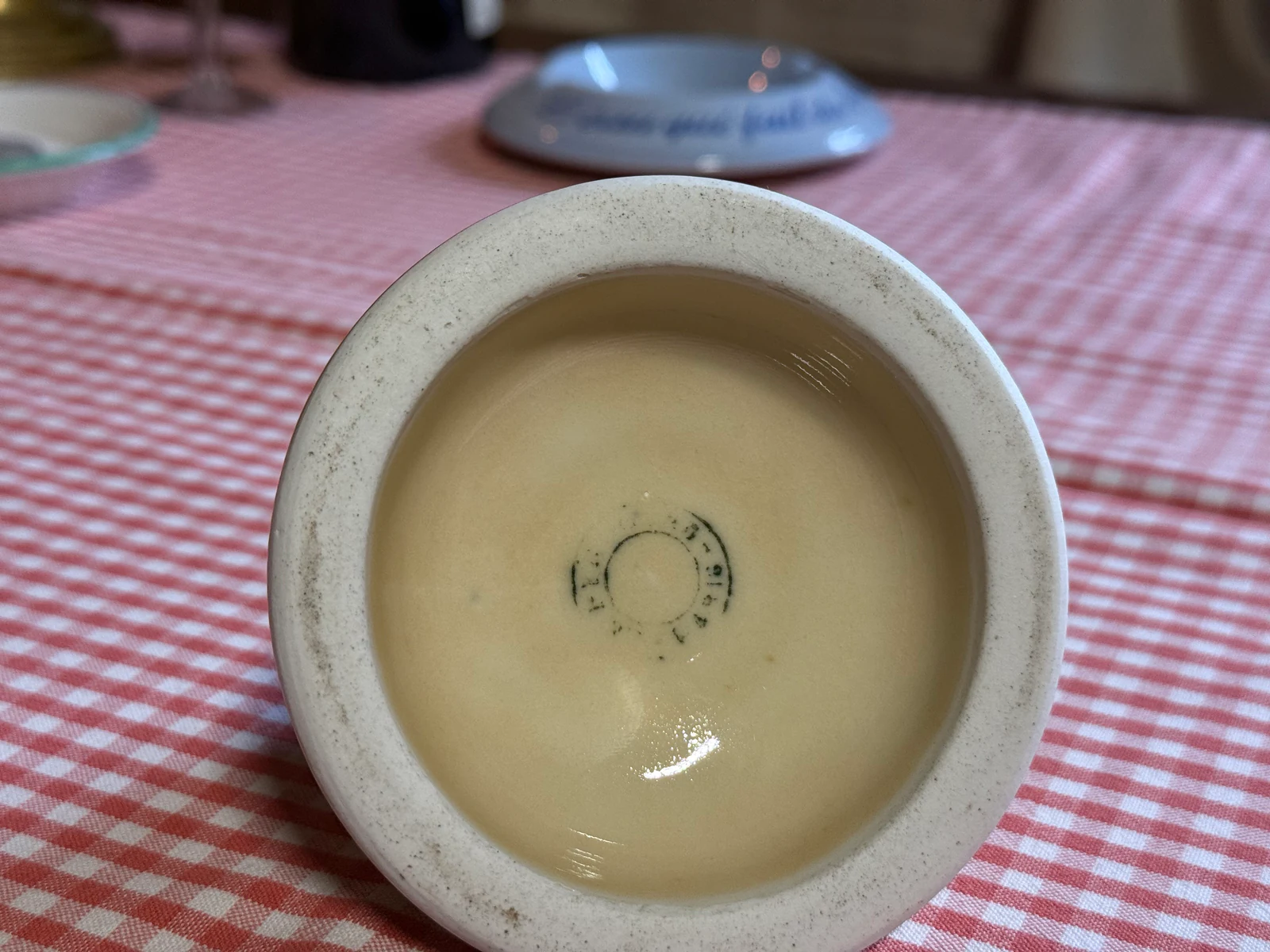
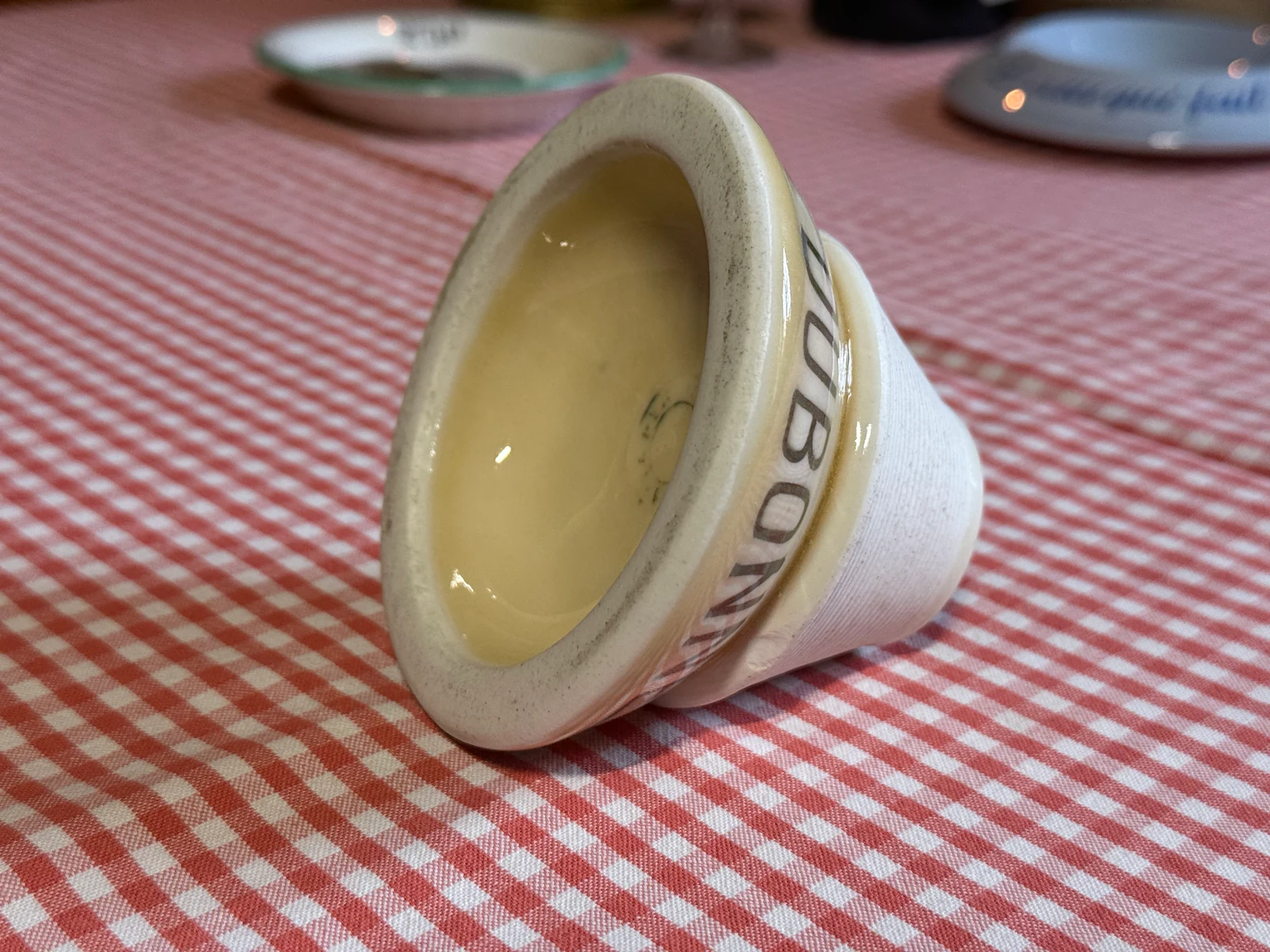
The piece is moulded in faience, with its slightly grainy ivory glaze and a honey tone on the base. Underneath, a stamped circular mark, partly worn by time, shows it passed through the workshop — a detail that will delight collectors used to deciphering French ceramic signatures.
Set on a sideboard, a kitchen shelf, a flea-market buffet or in a collection cabinet, it brings an instantly recognisable retro touch. You can of course use it to hold fireplace or barbecue matches — as long as you keep it away from damp — or simply enjoy it as a decorative object steeped in history.
Pair it with a gingham tablecloth, an advertising ashtray, a few stemmed glasses or a bistro tray, and it creates a lively 1900-inspired scene. It is the kind of object that catches the eye of retro-decor lovers and offers, for a reasonable budget, a genuine little museum piece of advertising.
Origin undocumented to date. The advertising inscriptions "Dubonnet – Vin au quinquina – Vin tonique" place the piece within French production of the 1900s–1920s; no specific factory could be identified with certainty given the partially legible base mark.
Why this Dubonnet match striker is a must-have
- A genuine piece of French advertising, a witness to the golden age of the bistro
- Raised advertising lettering, highly legible and instantly evocative
- An elegant conical shape and cream faience with honeyed reflections that patinate beautifully over time
- A utilitarian object to repurpose as decoration, perfect on a shelf or kitchen sideboard
- An accessible collector's piece to start a collection of vintage advertising items
Set it aside — it may be waiting for you