2

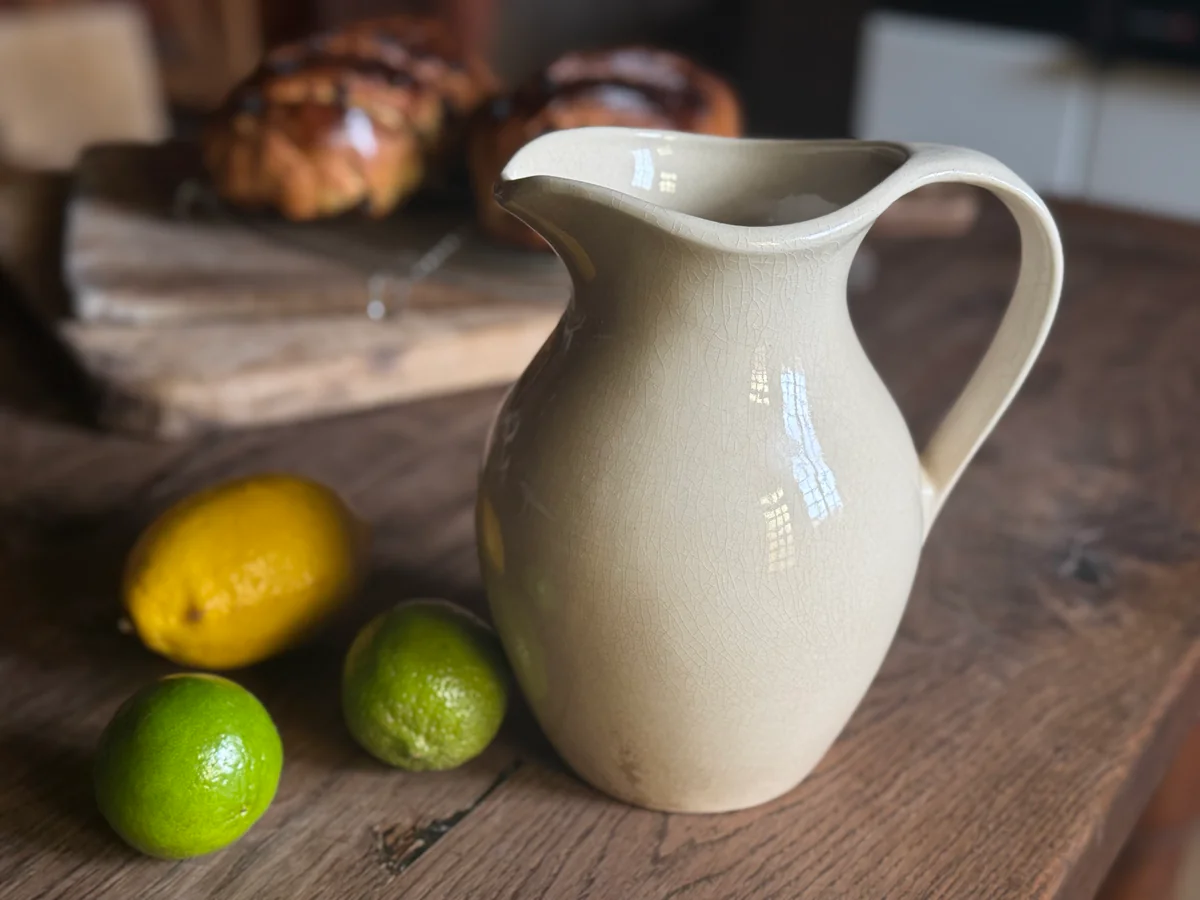
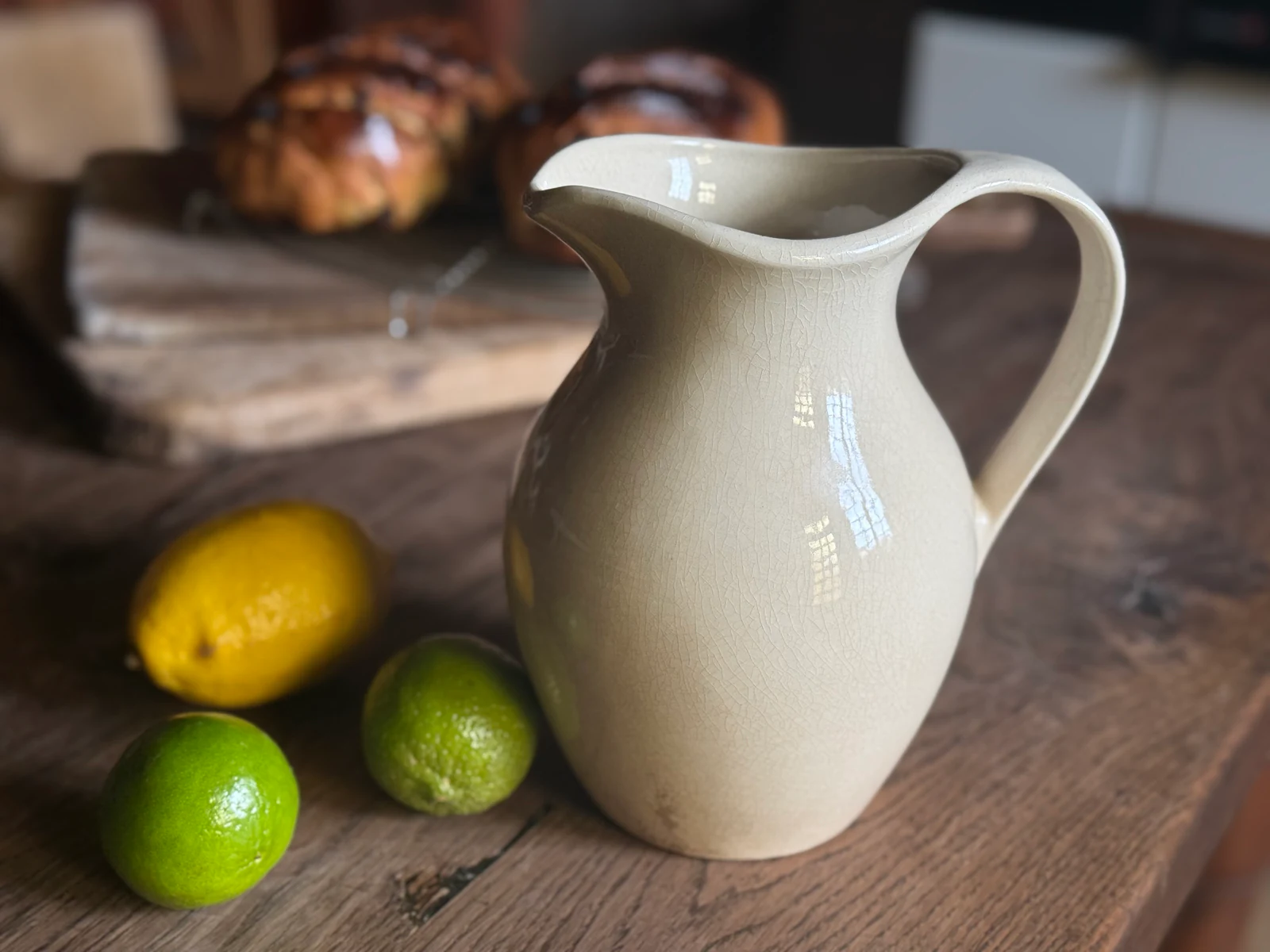
A cream-glazed ceramic water carafe, hand-thrown somewhere between the late 19th and early 20th century. Its full-bodied shape, rolled pouring lip and generous handle make it a table jug with instant appeal. The all-over crazing across its surface is no flaw — it is precisely...
☞ Read more
Set it aside — it may be waiting for you
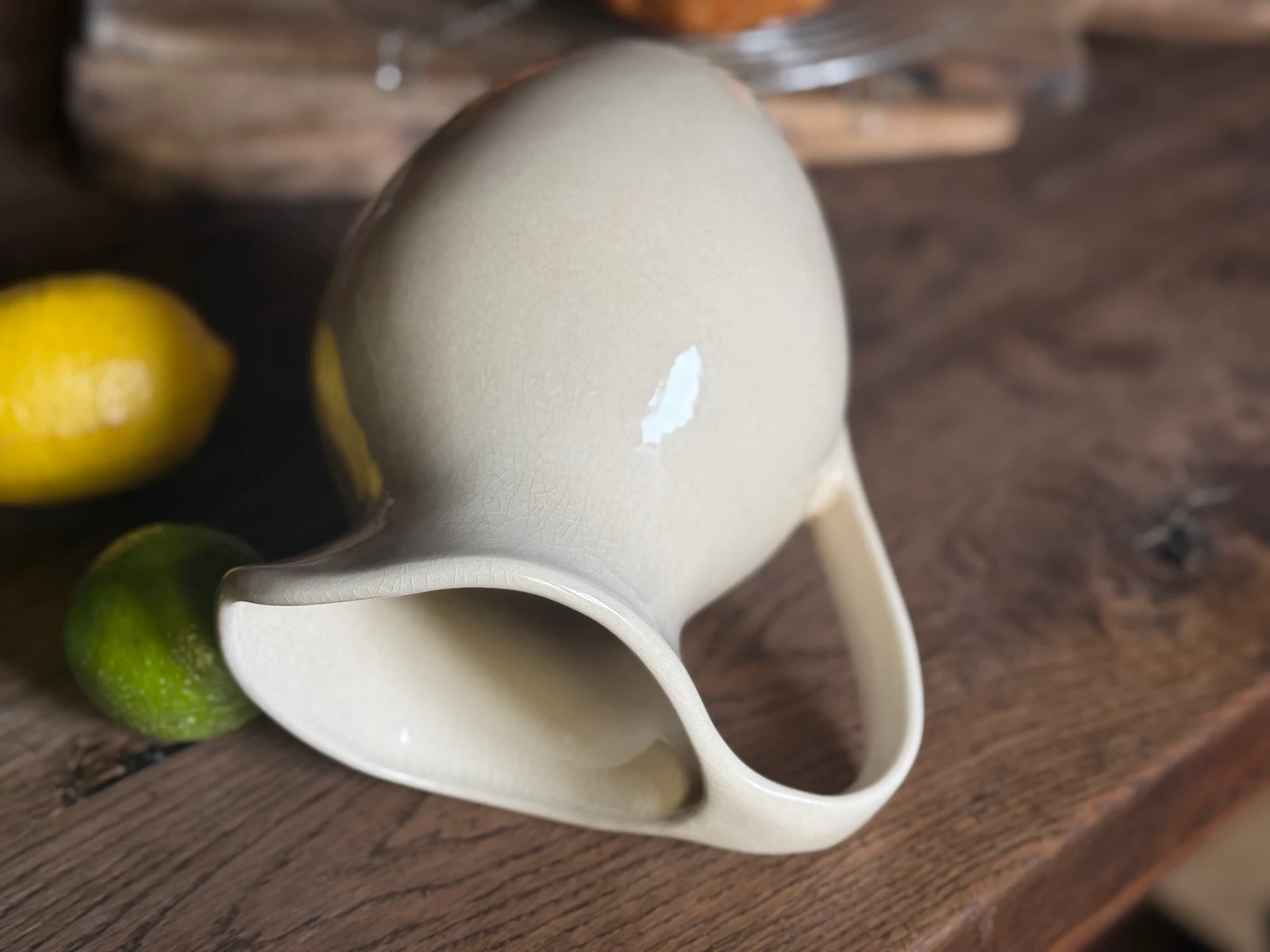
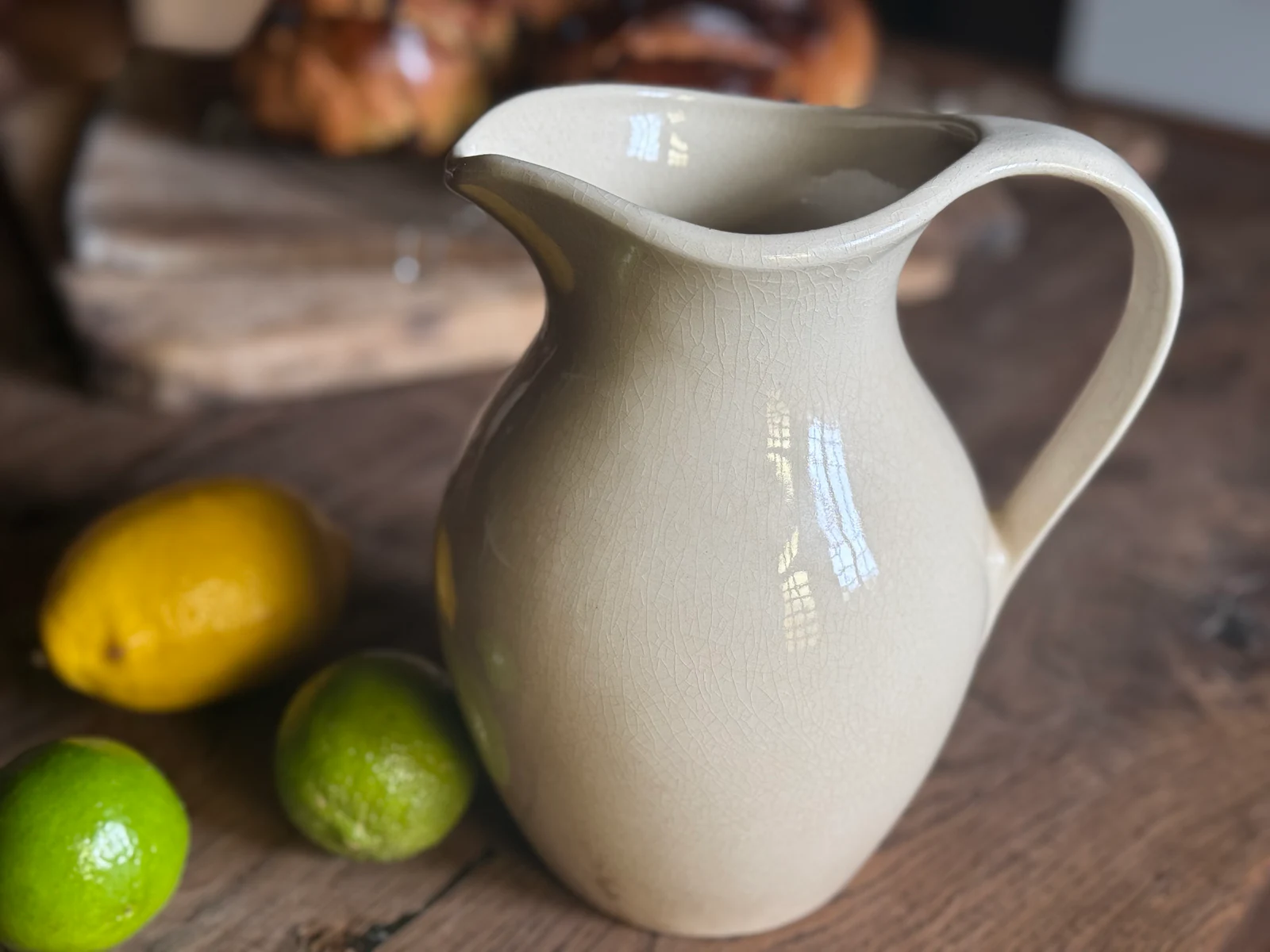
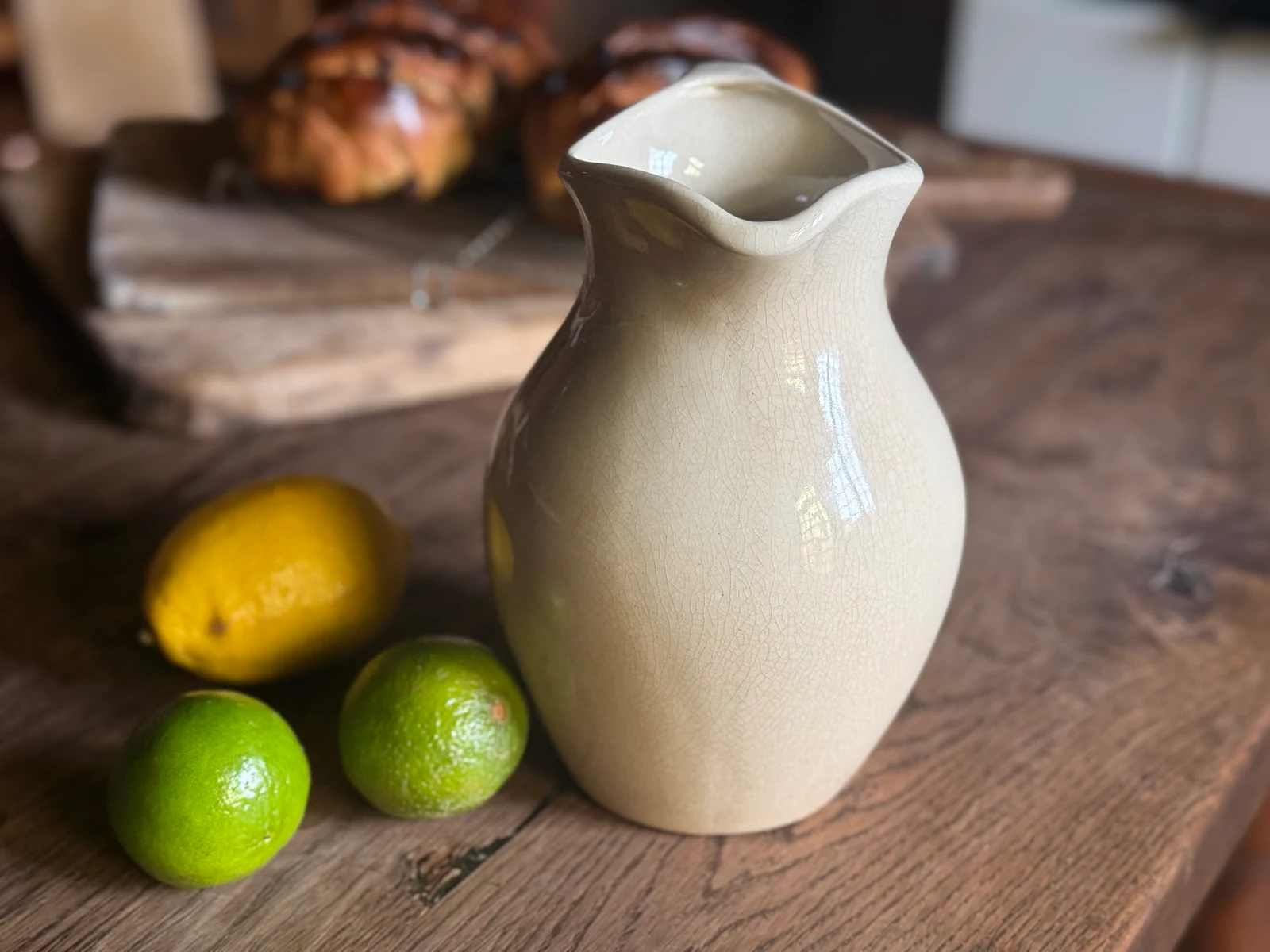
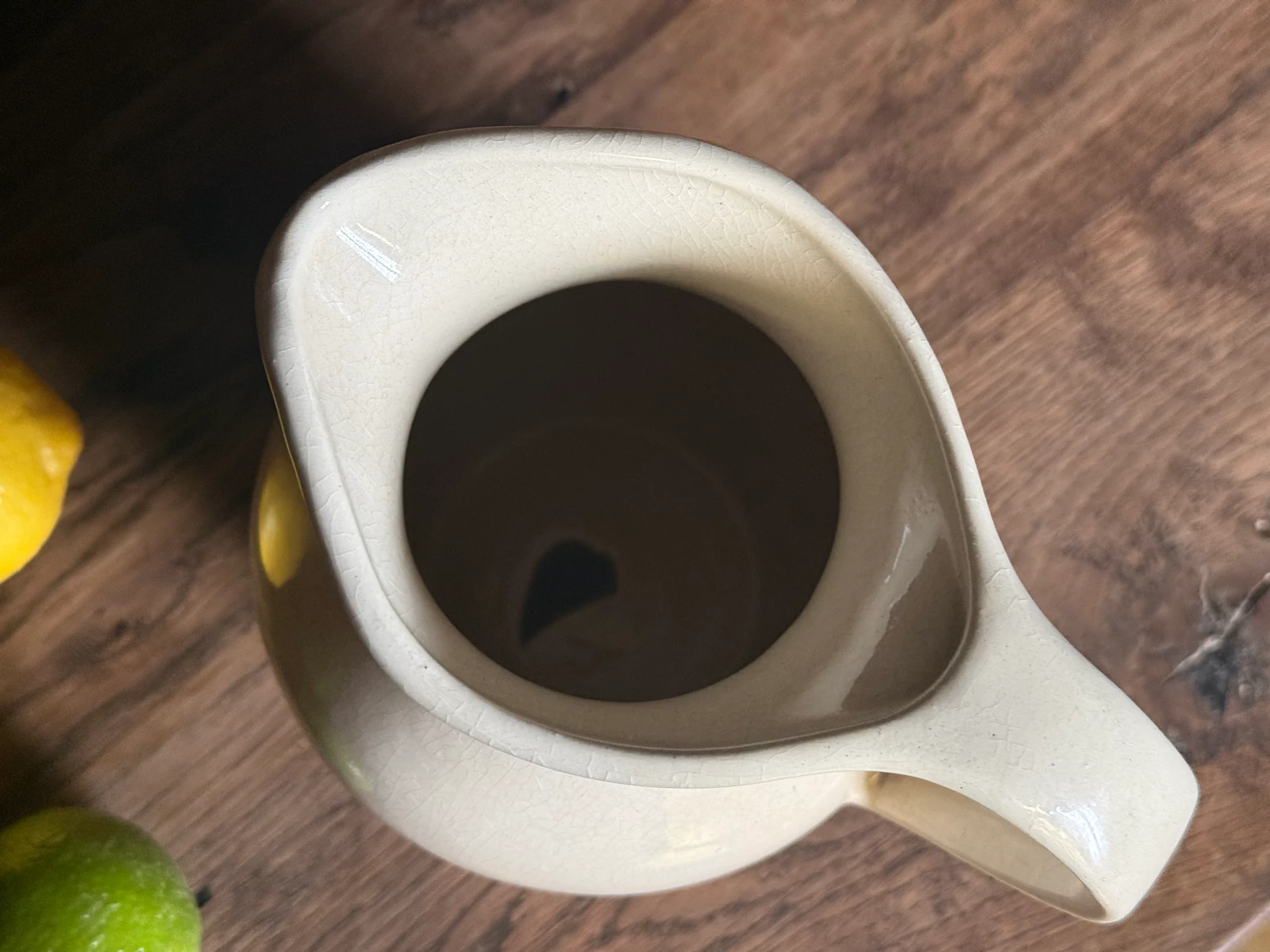
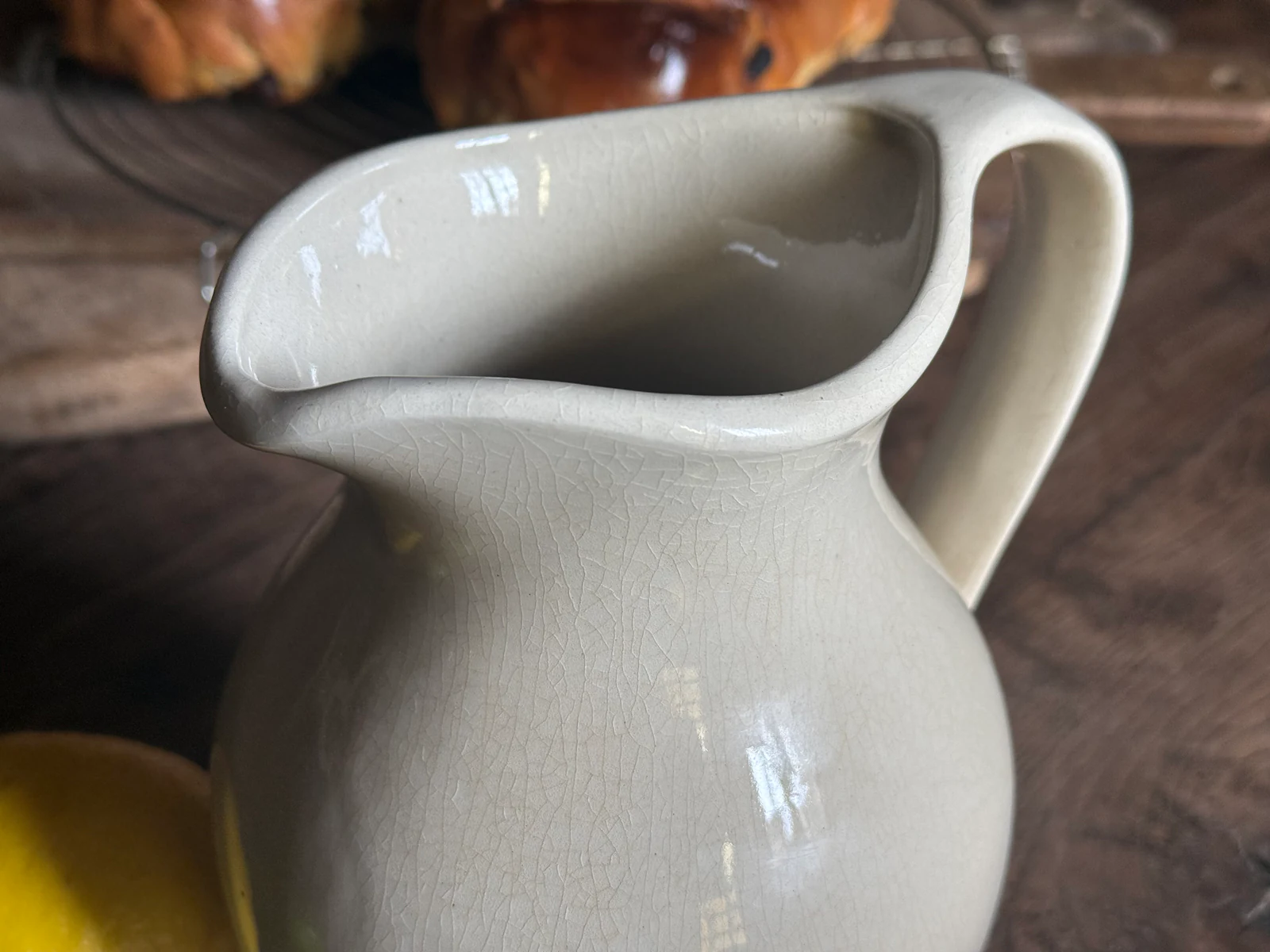
A cream-glazed ceramic water carafe, hand-thrown somewhere between the late 19th and early 20th century. Its full-bodied shape, rolled pouring lip and generous handle make it a table jug with instant appeal. The all-over crazing across its surface is no flaw — it is precisely the character collectors look for in old pieces.
❝A water carafe with a living patina, its crazing telling the story of a century of family tables. ❞
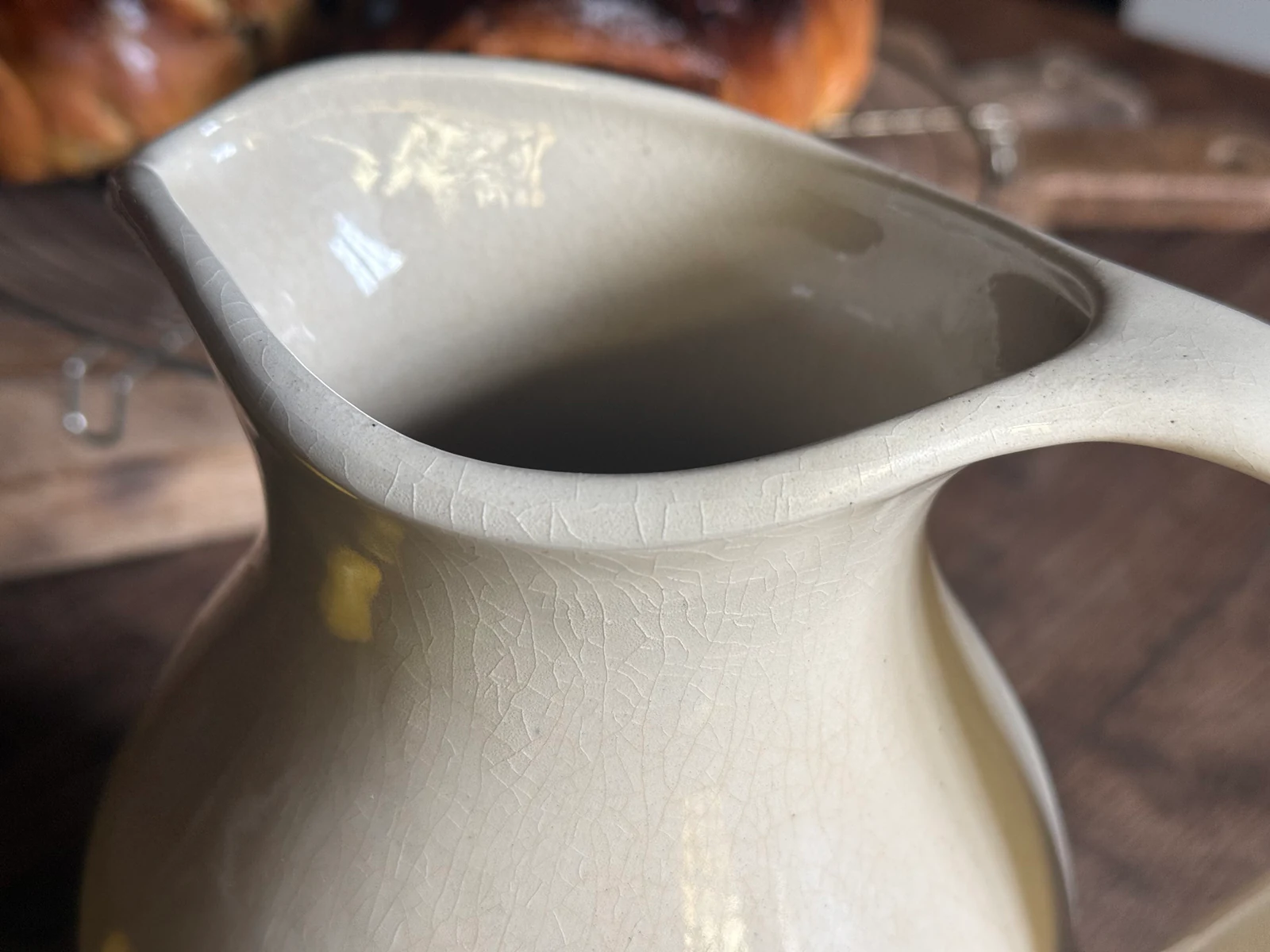
This water carafe — or table jug — carries the classic form of late 19th and early 20th century serving ware: a generous rounded belly, a flared neck finished with a rolled pouring lip, and a wide open handle that sits comfortably in the hand. It is the kind of piece that stood at the centre of the table, within reach, pouring water for the big country gatherings.
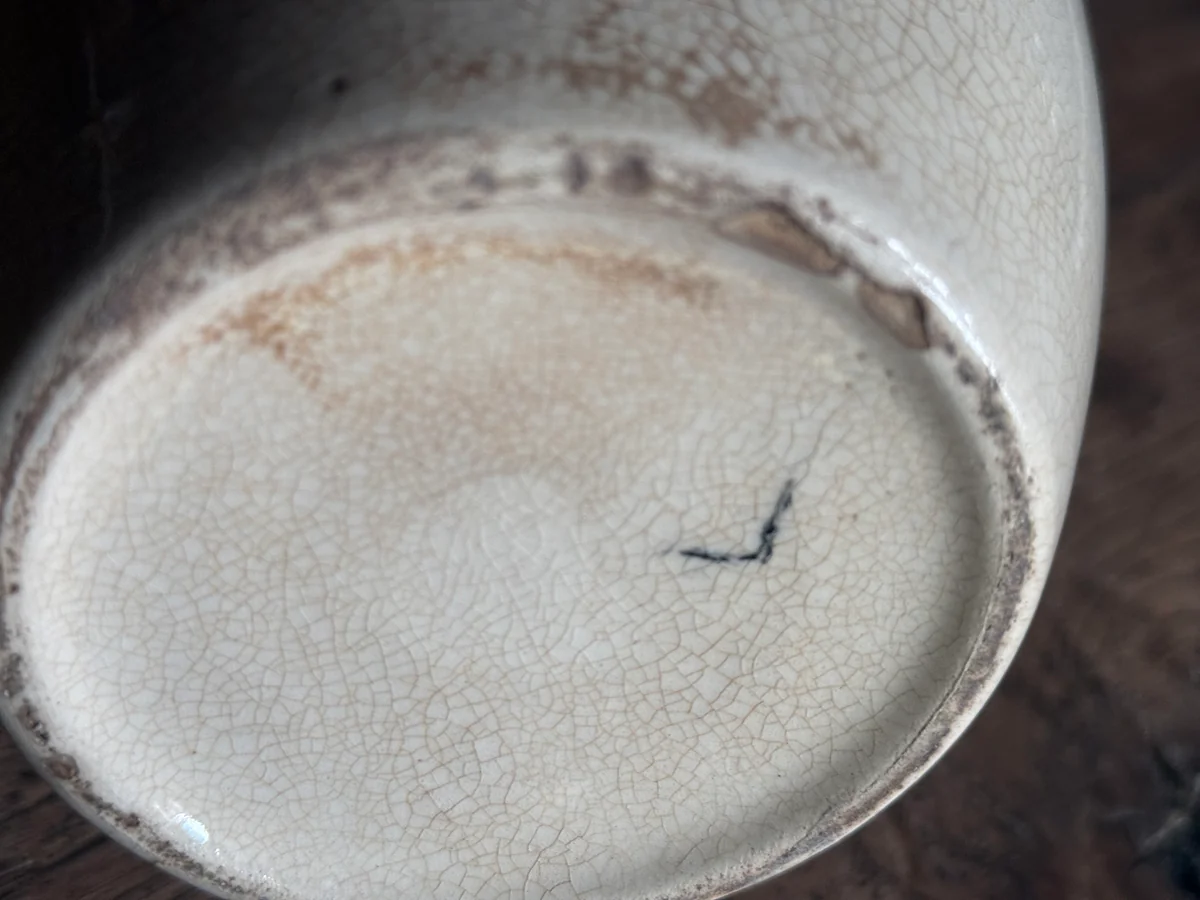
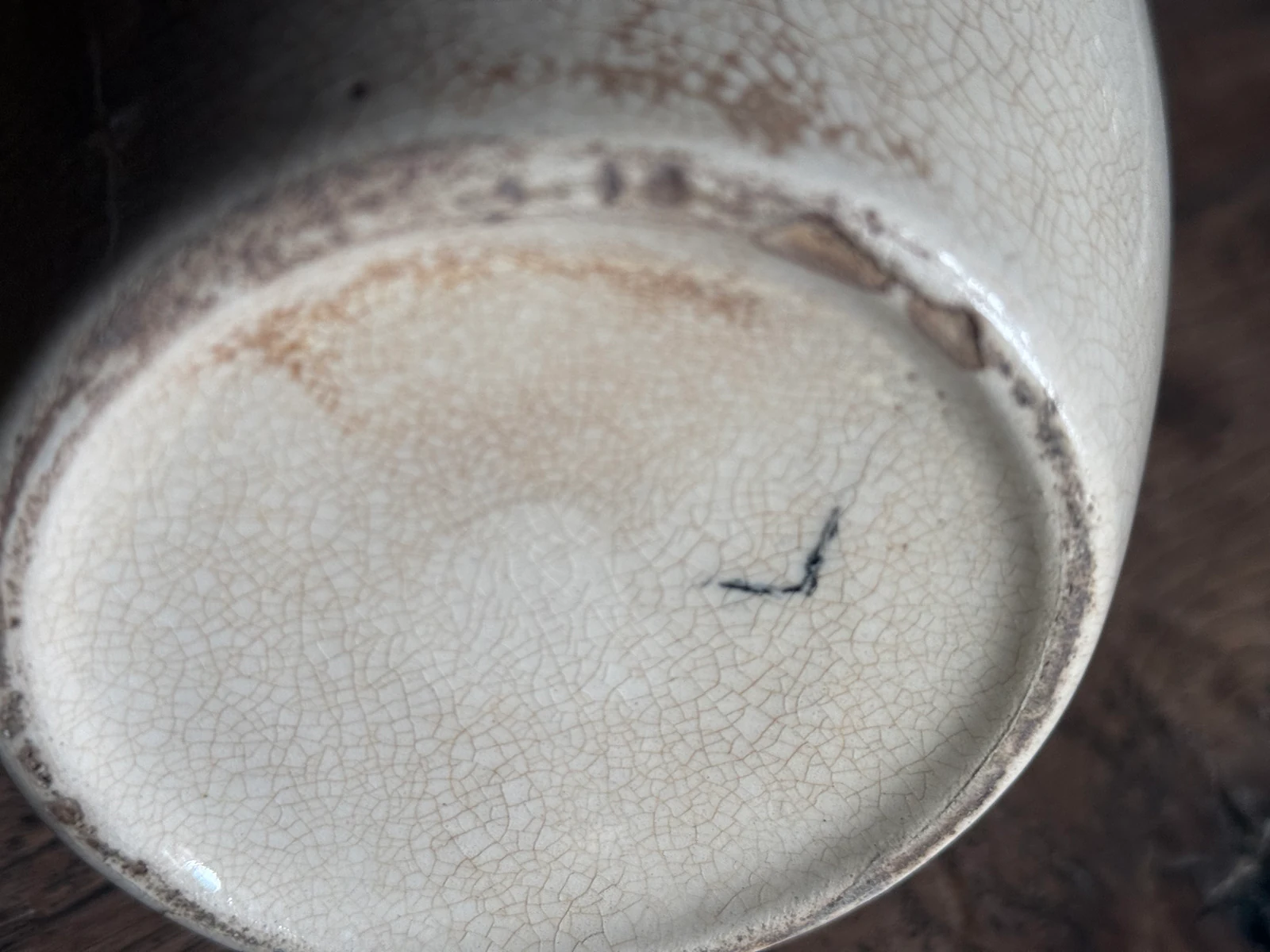
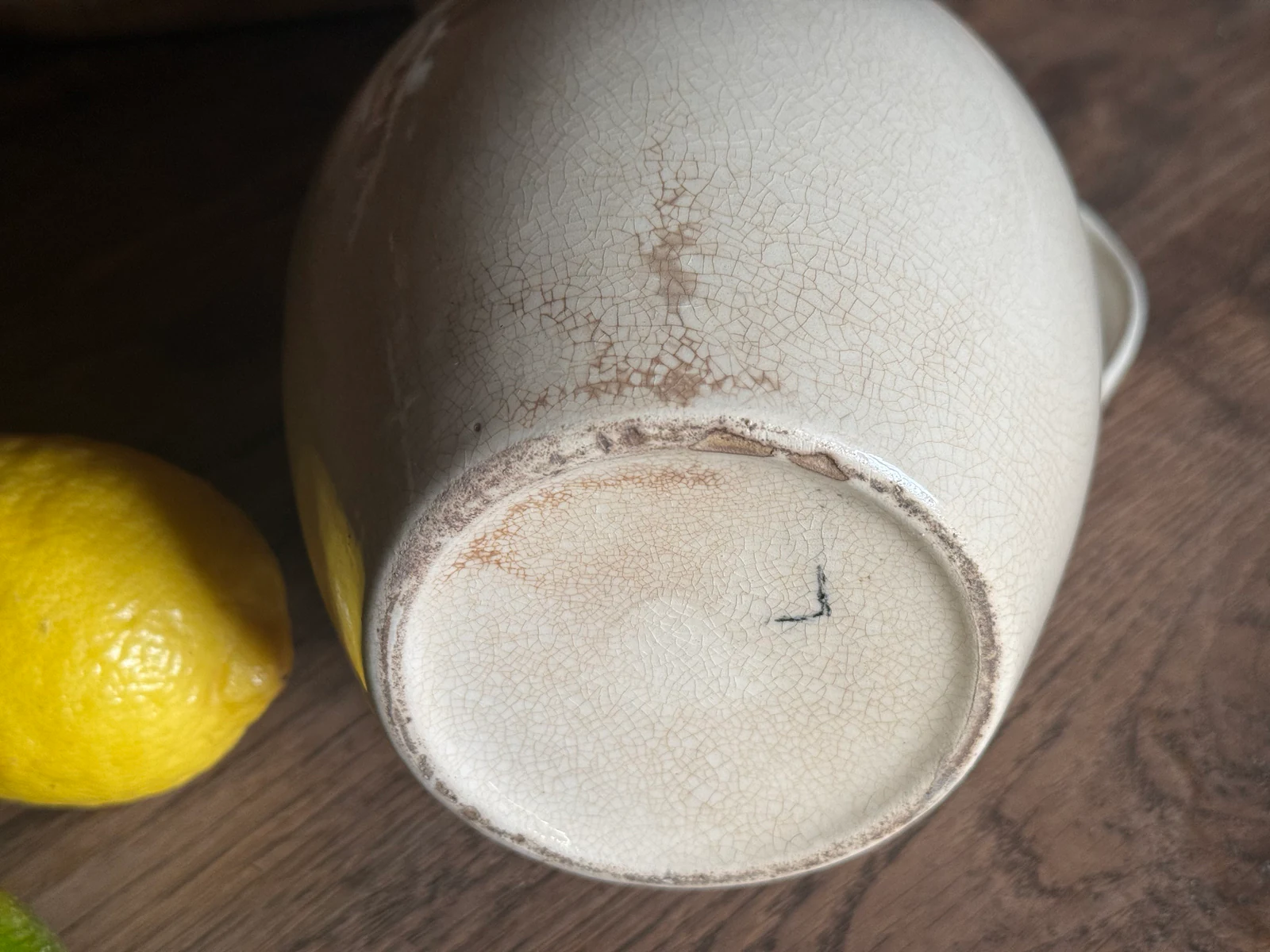
The eye is drawn at once to the tight web of crazing running across the whole body and continuing under the foot. This fine, even, almost graphic network is the signature of old glazes that have lived: it speaks of time passed and gives the carafe a depth no new piece can have. This is exactly what one comes looking for in a brocante find.
Under the foot there is no signature or workshop stamp: the piece remains anonymous, as many regional productions of the period do. There is a small black mark, a few brown stains from use and light glaze chips on the edge of the foot, all consistent with a century-old piece that has genuinely served. These marks of life are part of its story.
On a raw wooden table, surrounded by fruit, it takes centre stage in a vintage kitchen setting. On a shelf of stoneware and brocante faïence, it sits happily with cream, linen and pale wood tones. It can also be turned into a vase for a few dried stems, or a carafe for chilled water at a summer aperitif — keeping in mind that an old piece prefers gentle use to prolonged contact with water.
Glazed ceramic, natural tones, unapologetic crazing: this carafe ticks every box for an accessible, immediately decorative collectible. It brings to a contemporary table that grain of age which cannot be manufactured, and to a collection of French ceramics a complementary piece full of personality.
Sourced from the flea market; no documented history, no workshop stamp that would allow attribution.
Why this carafe will win you over
- A spectacular enamel crazing that makes every inch unique
- An old pitcher silhouette, with pouring spout and full handle, instantly recognisable
- The softness of cream tones, easy to pair with a contemporary or vintage interior
- A Belle Époque piece, steeped in history, at a discovery price
- Versatile use: table carafe, dried flower vase or simply a decorative object
Set it aside — it may be waiting for you