2
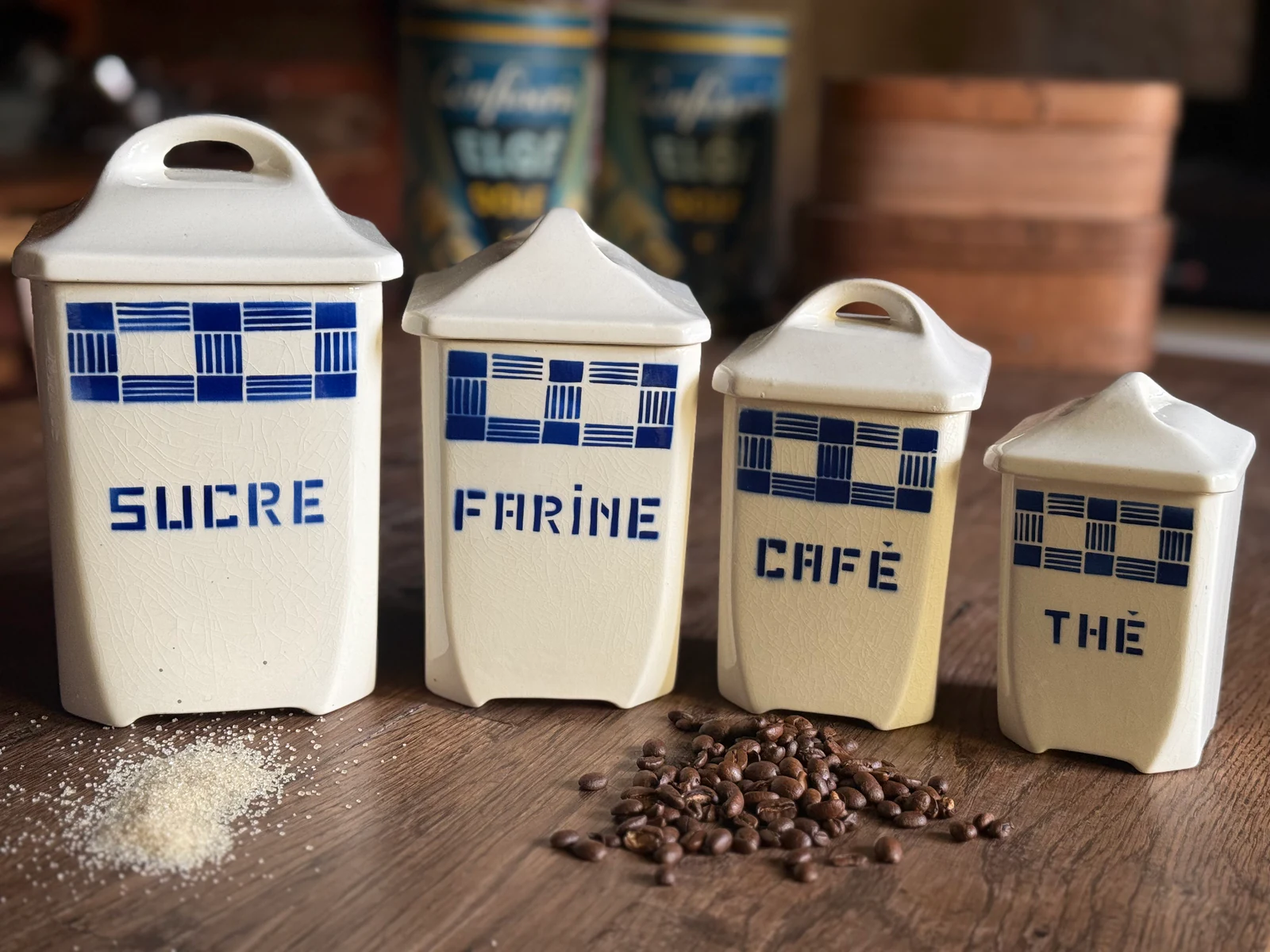
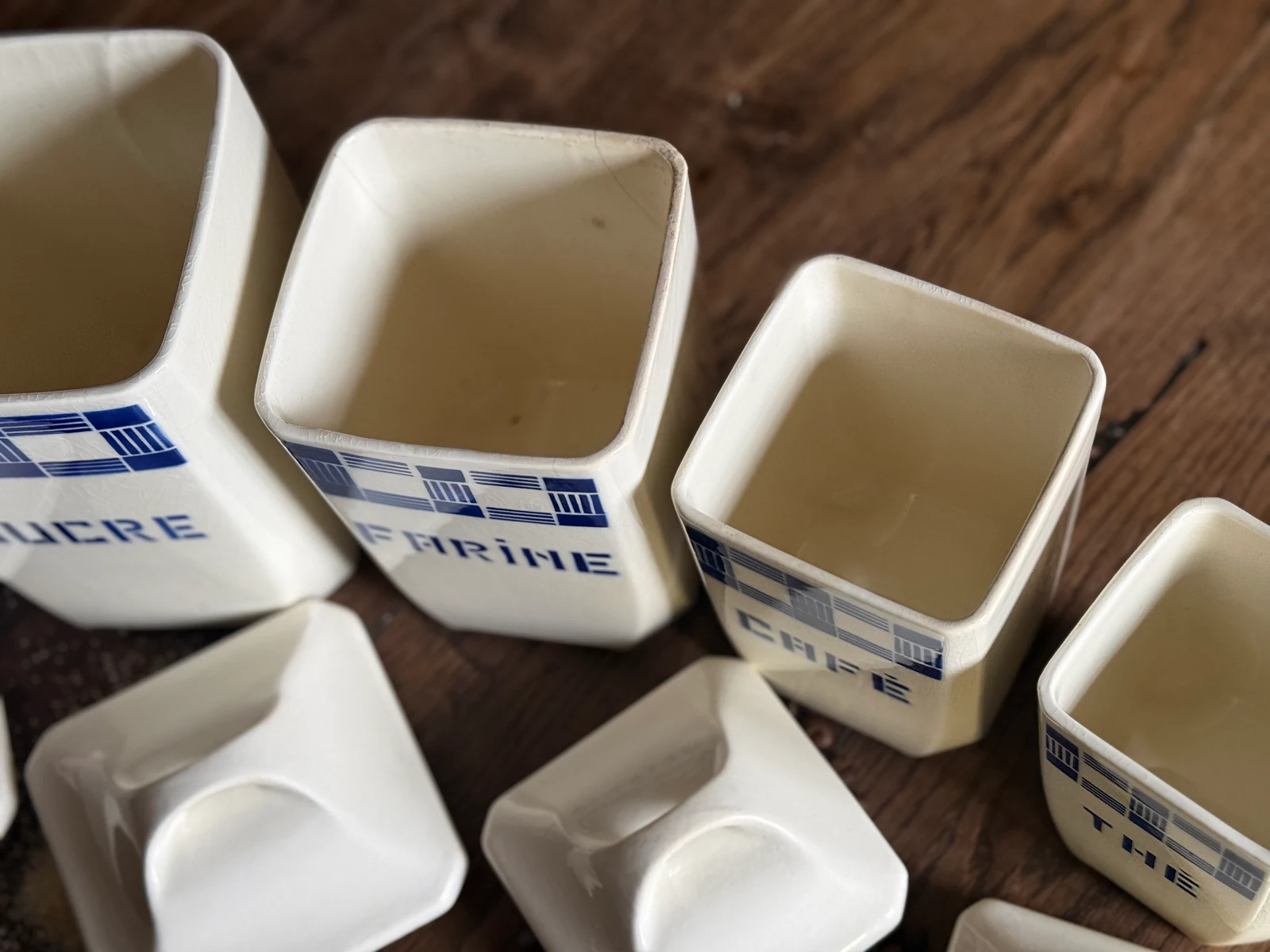
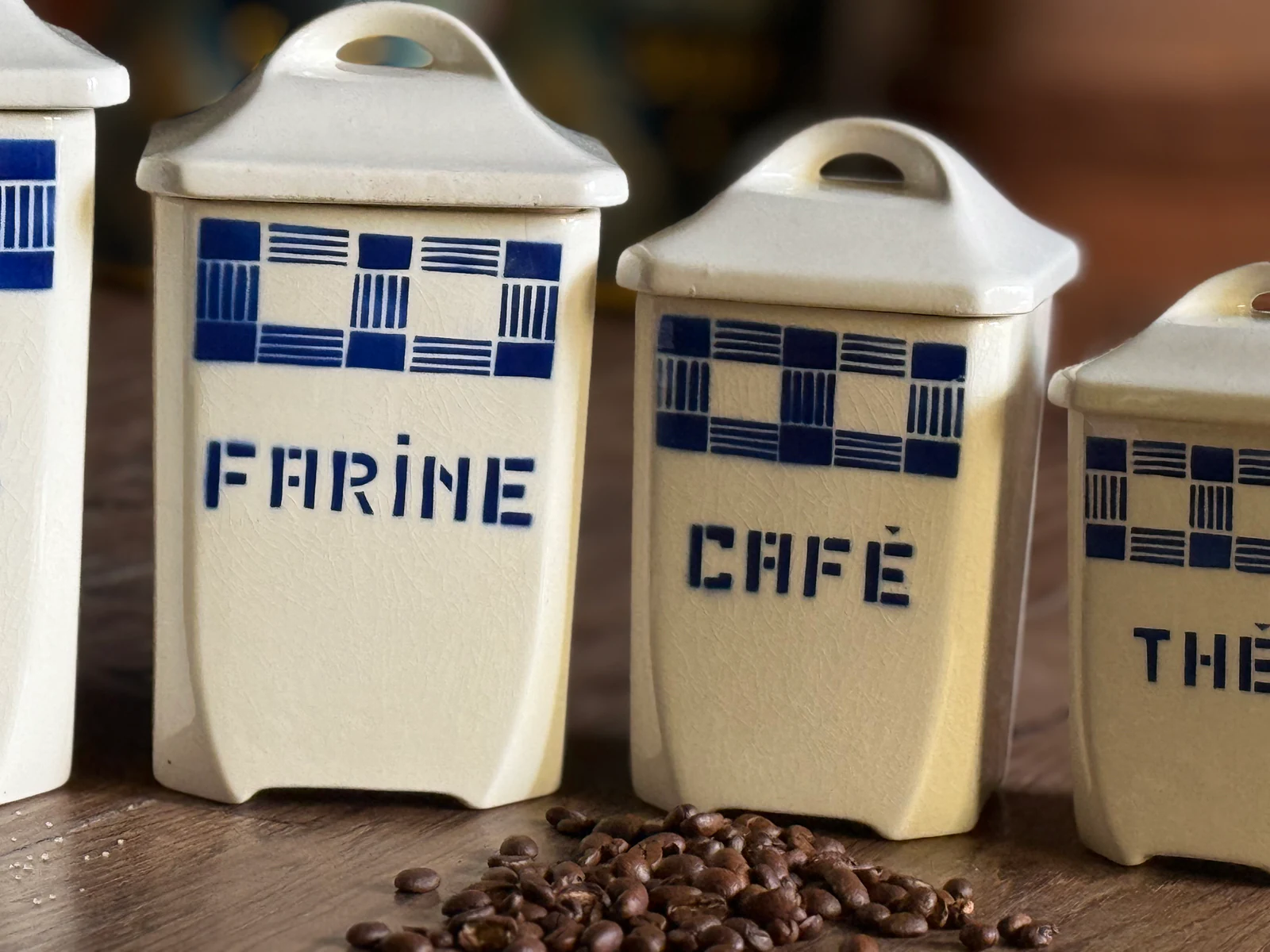
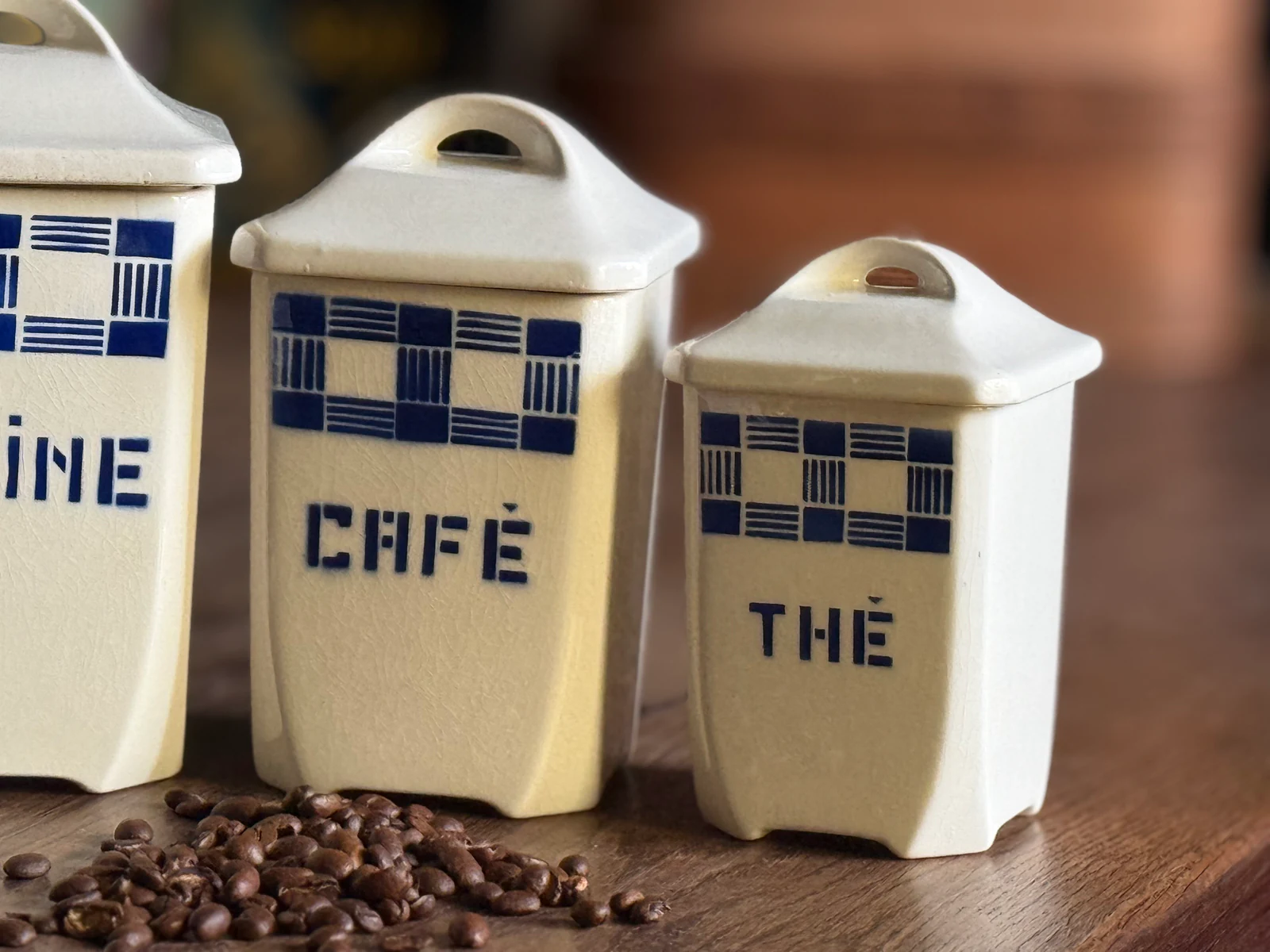
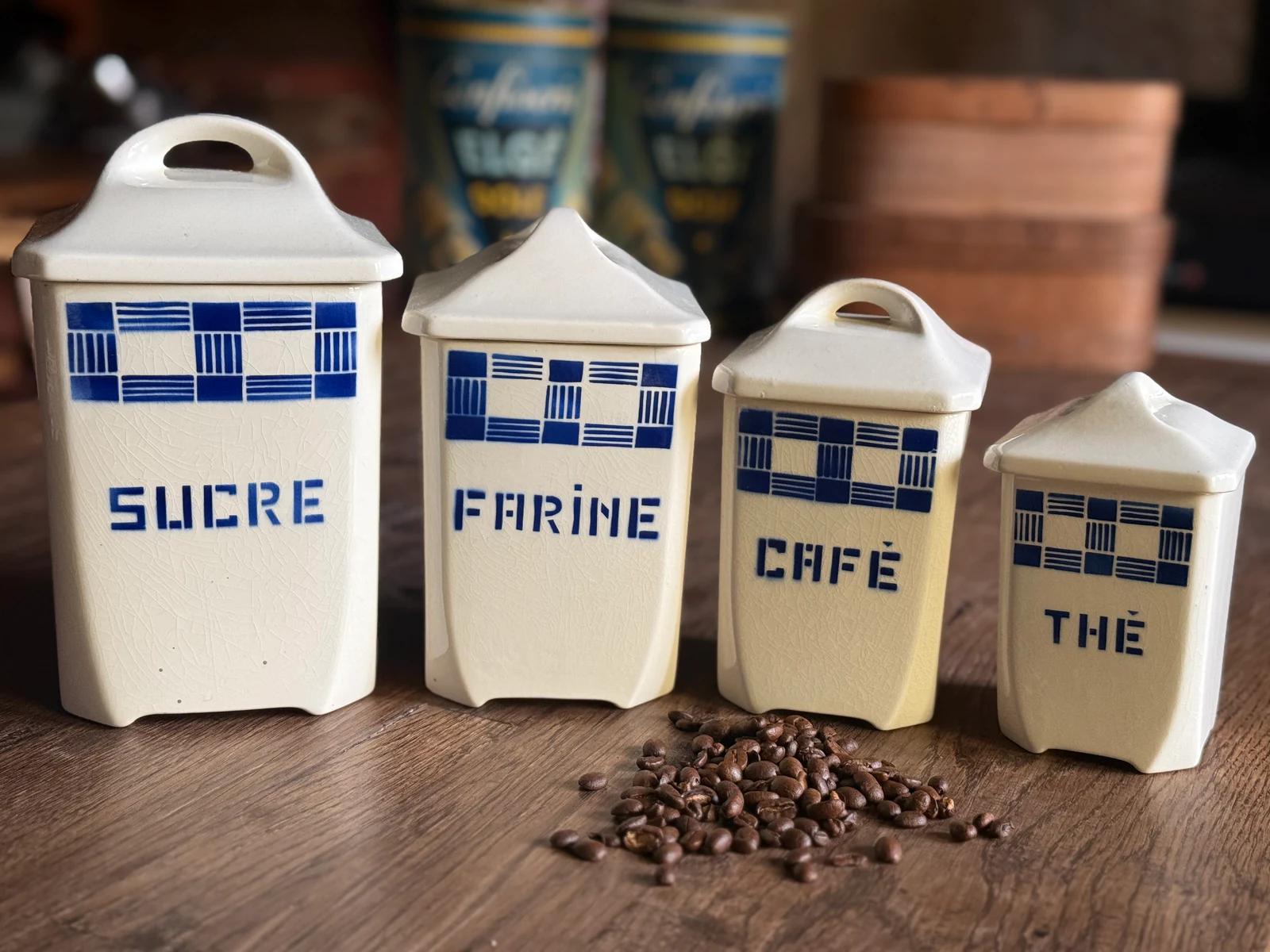
Here is a set of four earthenware storage jars stamped "Badonviller France", familiar figures from interwar kitchens. Their geometric cobalt-blue decoration on a cream ground is a true Art Deco statement: clean lines, interlocking squares, angular lettering. Sugar, Flour,...
☞ Read more
Set it aside — it may be waiting for you
♯storagejars ♯faiencerie-de-badonviller ♯badonviller ♯ceramic ♯faience-tin-glazed-earthenware
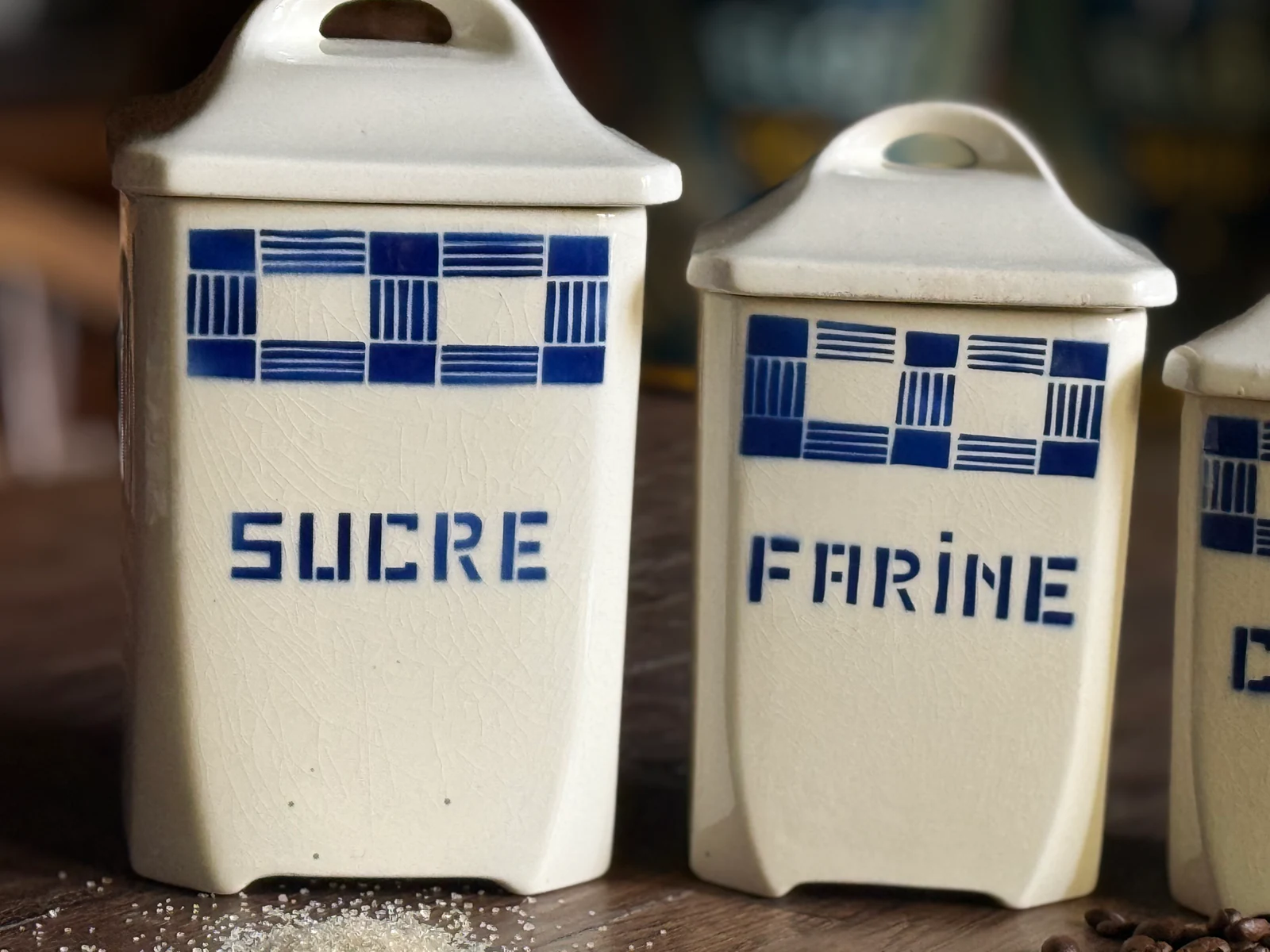
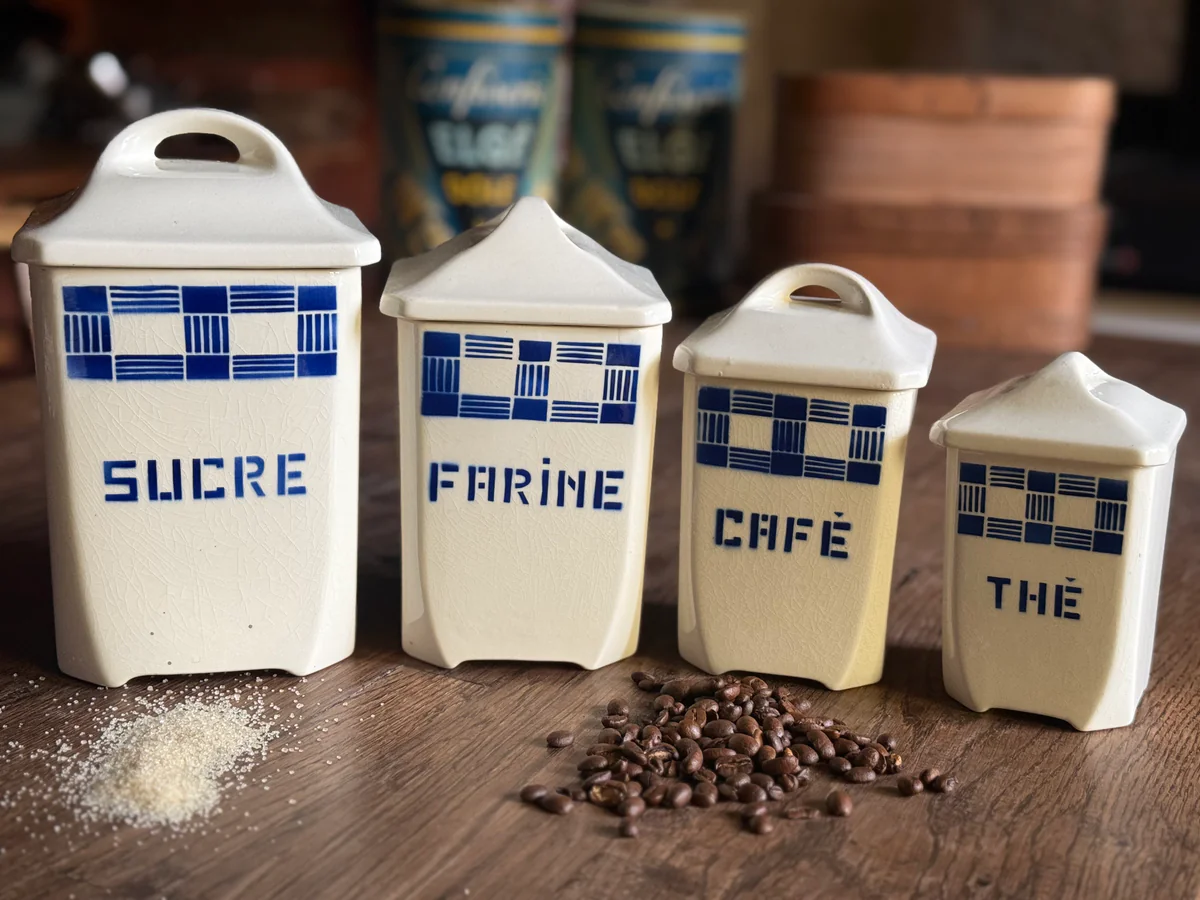
Here is a set of four earthenware storage jars stamped "Badonviller France", familiar figures from interwar kitchens. Their geometric cobalt-blue decoration on a cream ground is a true Art Deco statement: clean lines, interlocking squares, angular lettering. Sugar, Flour, Coffee, Tea: an entire pantry organised into a single graphic frieze, as decorative as it is useful.
❝Four Badonviller faience canisters whose Art Deco cobalt blue brings order to the daily rituals of sugar, flour, coffee and tea. ❞
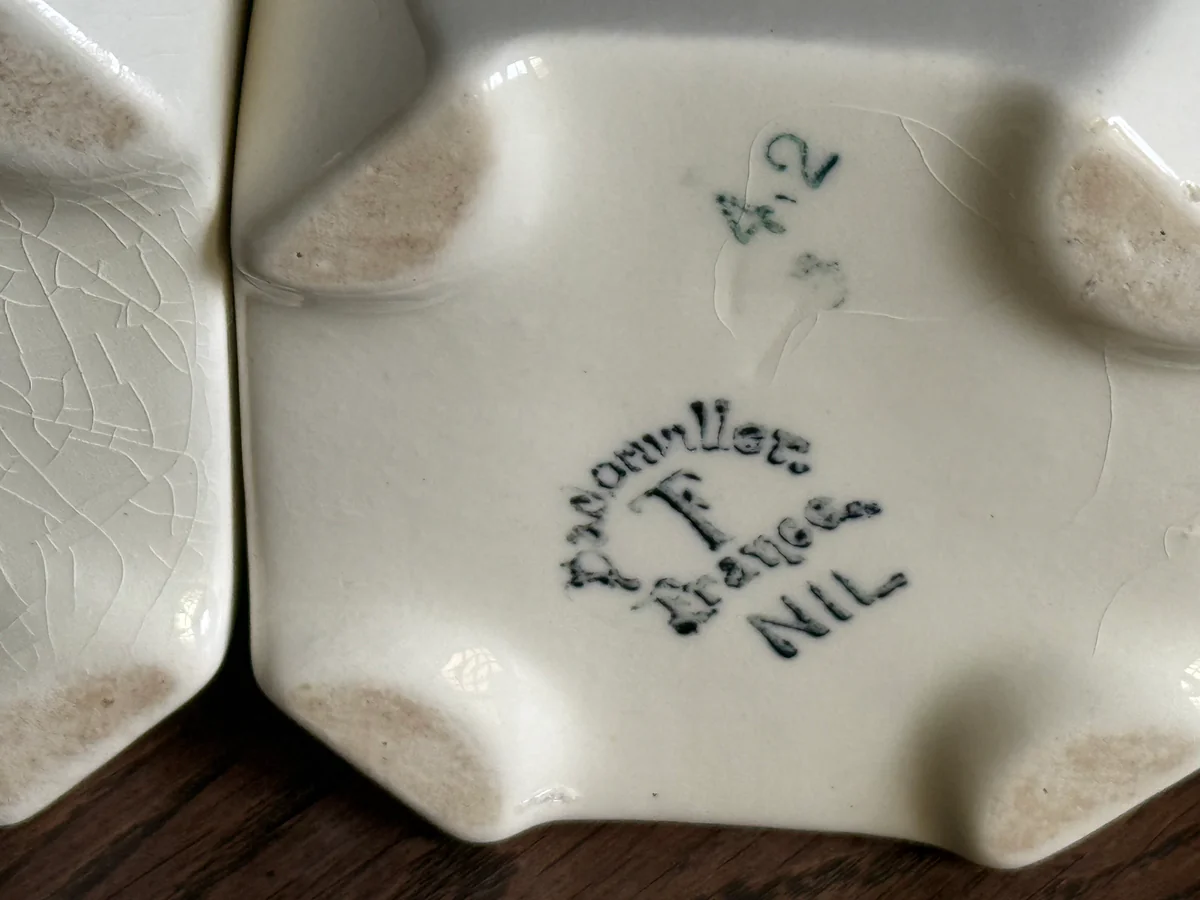
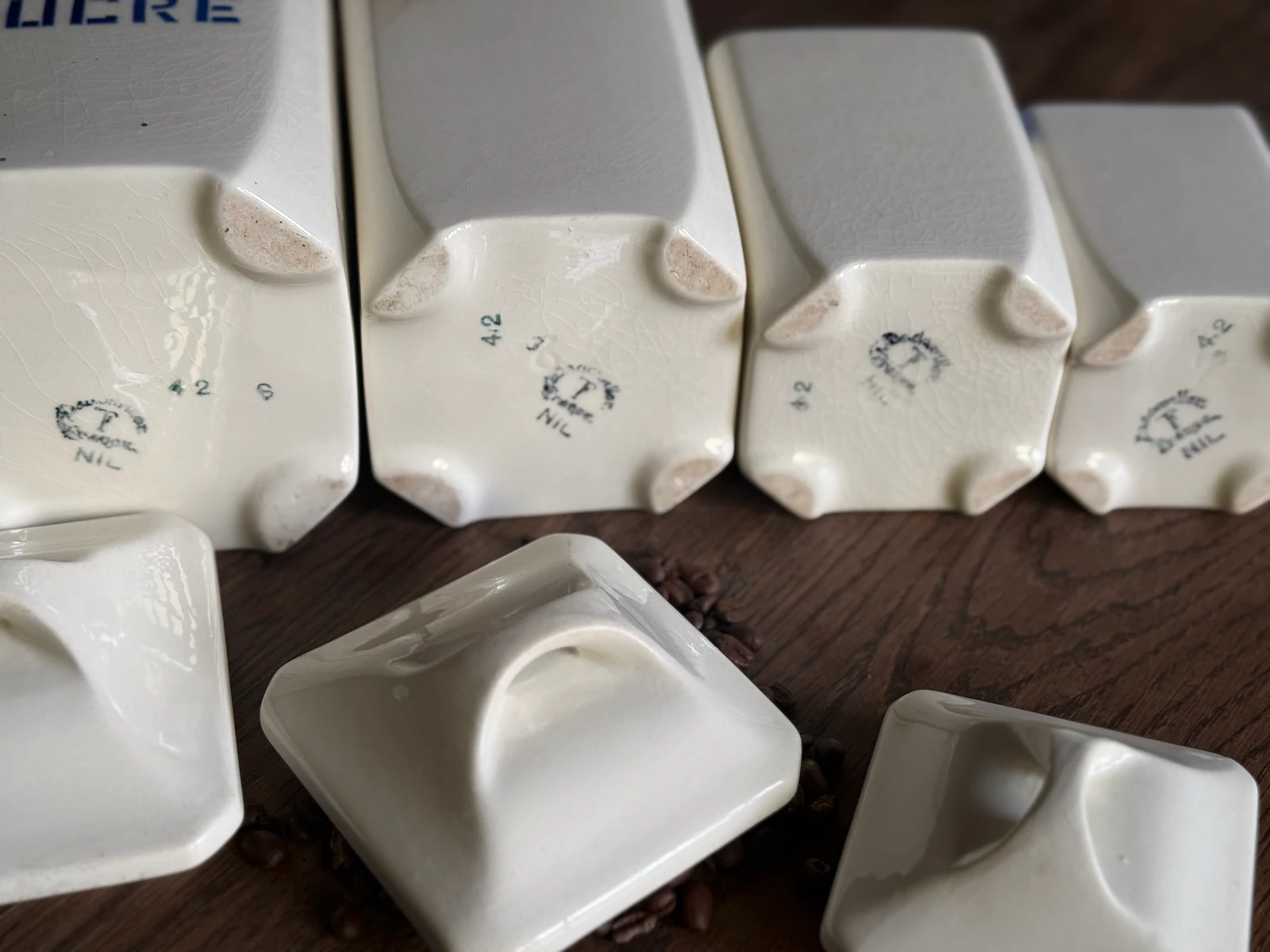
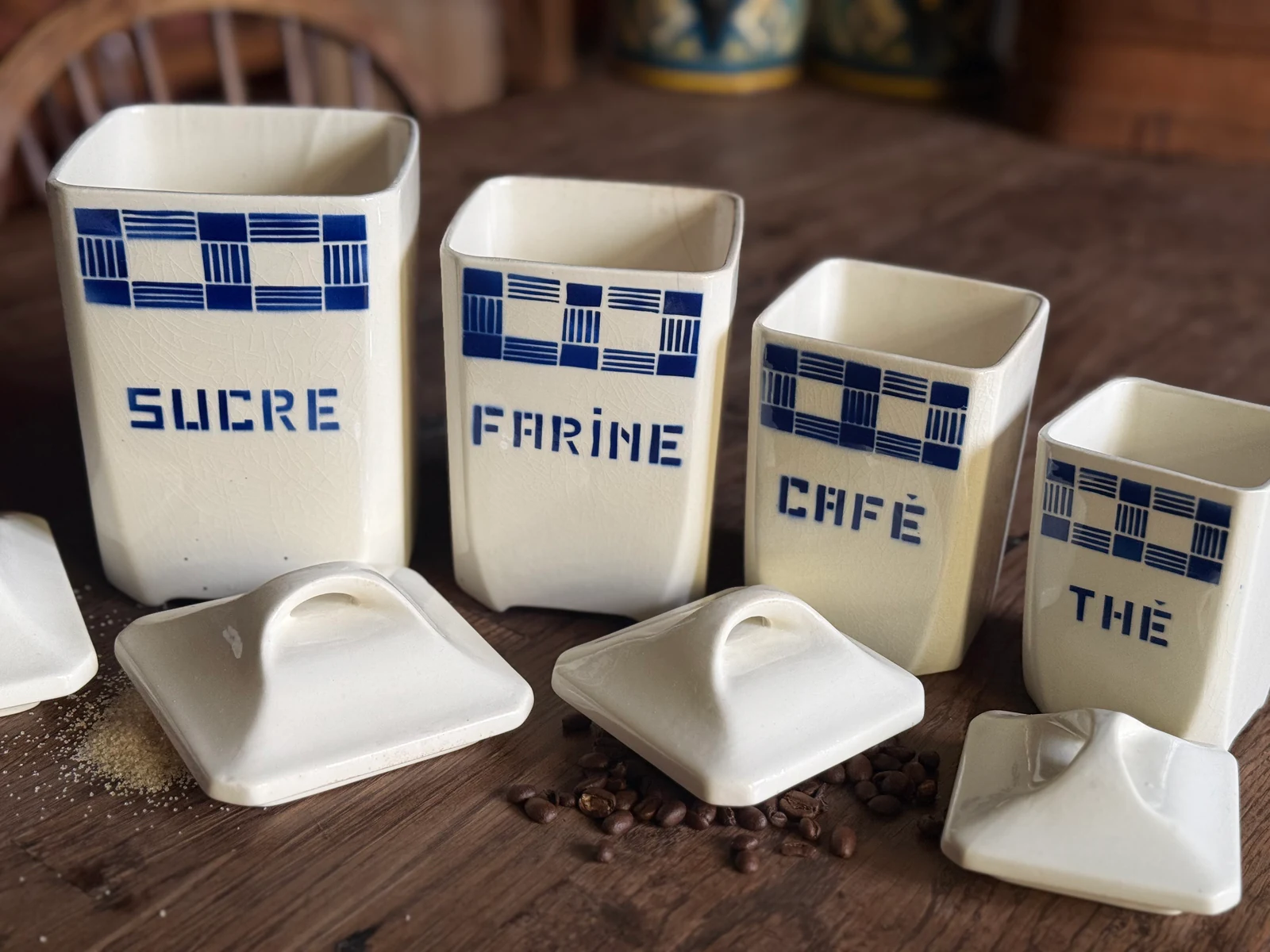
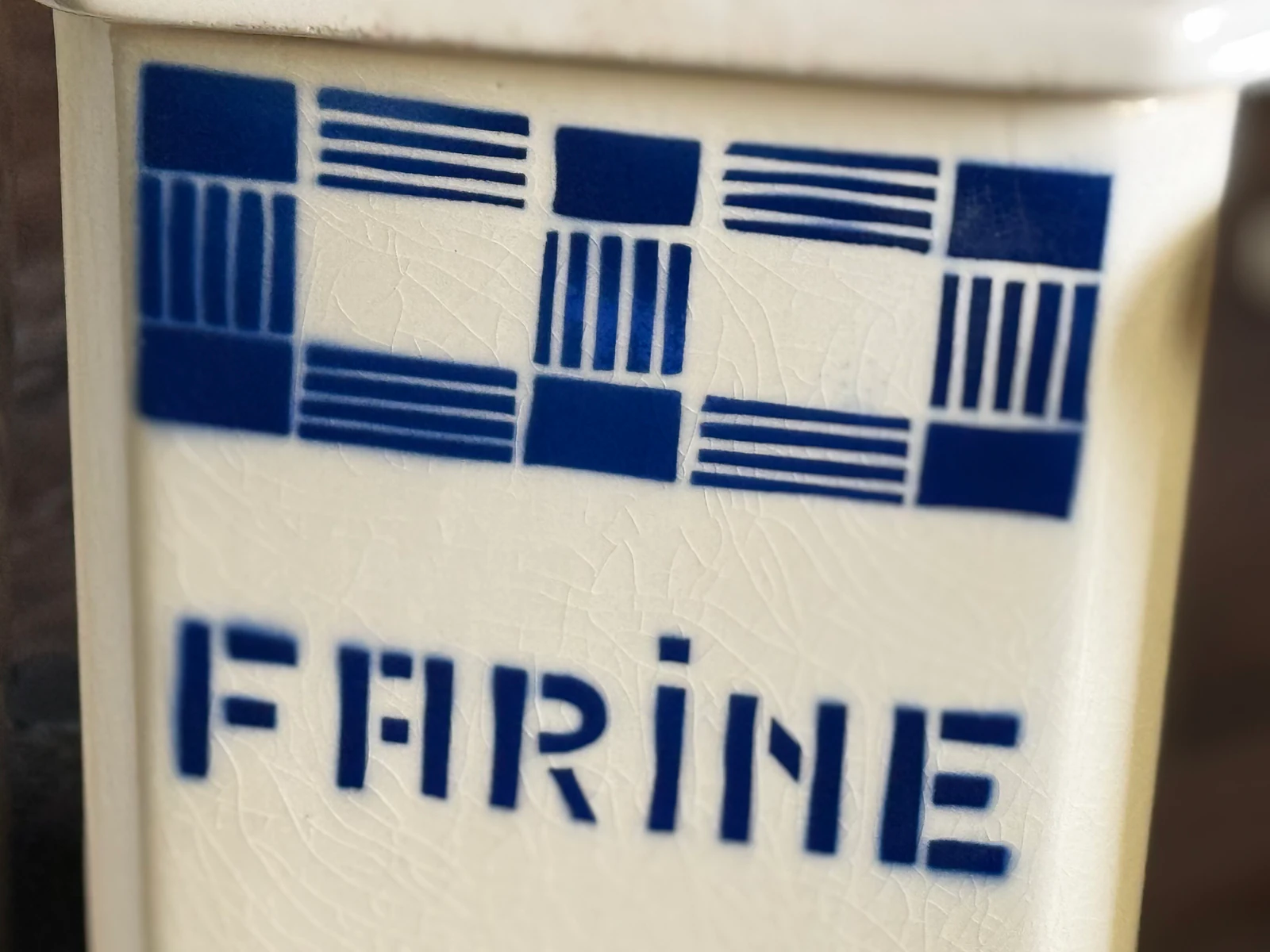
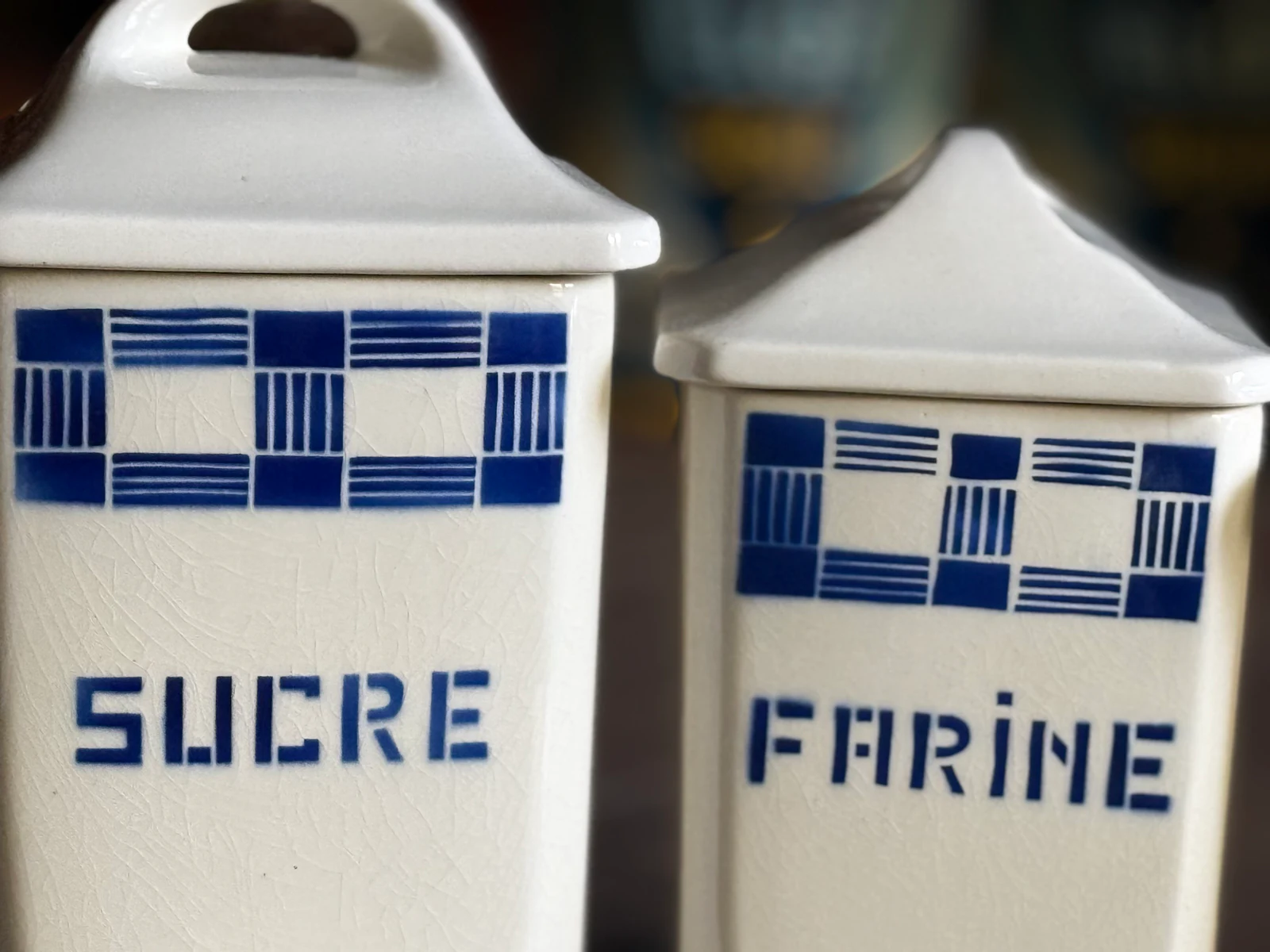
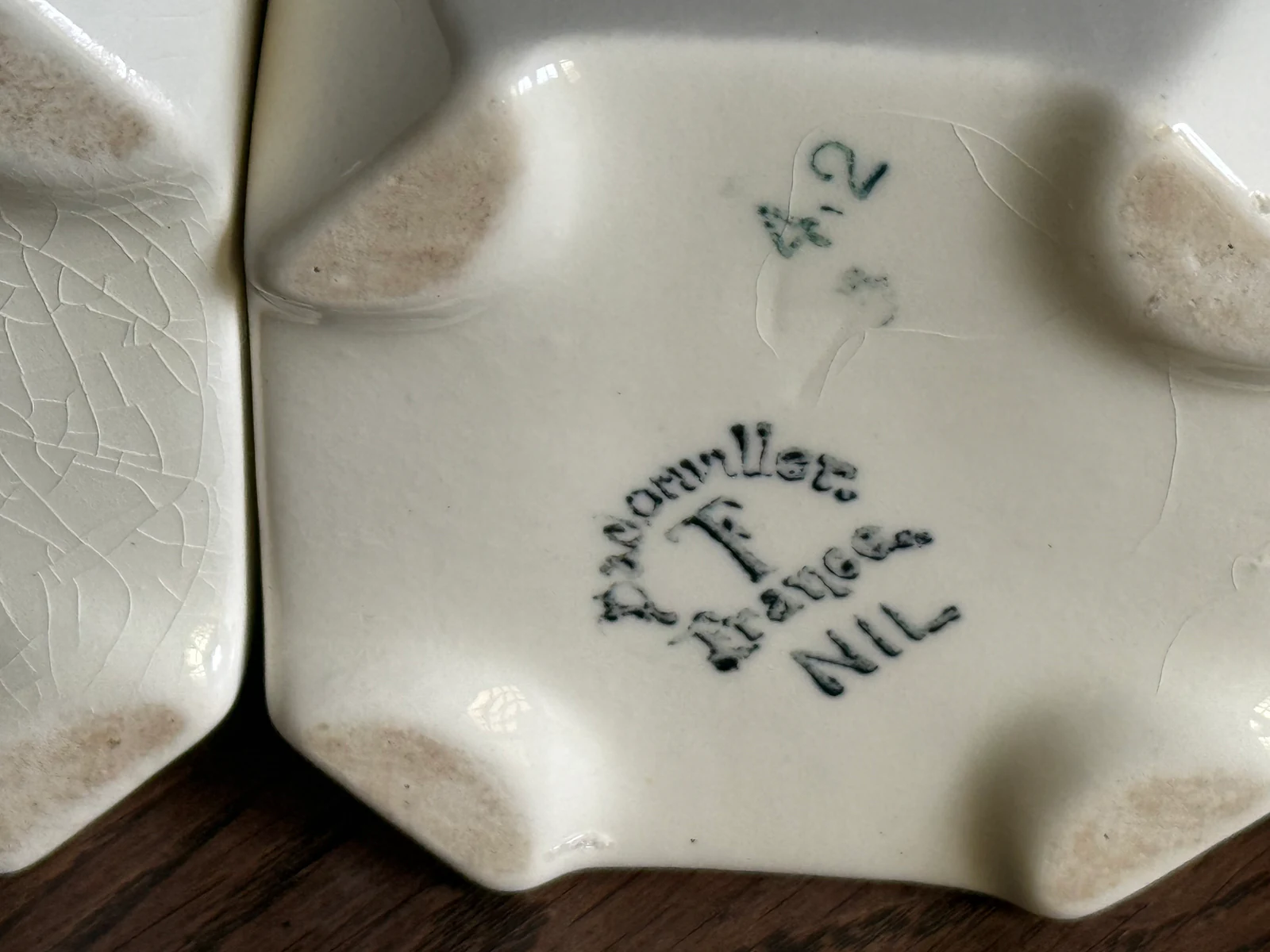
These four square canisters with chamfered corners and ring-knob lids come from the Badonviller pottery works in Meurthe-et-Moselle. The blue stamp on the base — "Badonviller France / NIL" with a large "F" — confirms this Lorraine origin, a land of earthenware since the 18th century. Each piece bears its purpose in blue capital letters: SUGAR, FLOUR, COFFEE, TEA.
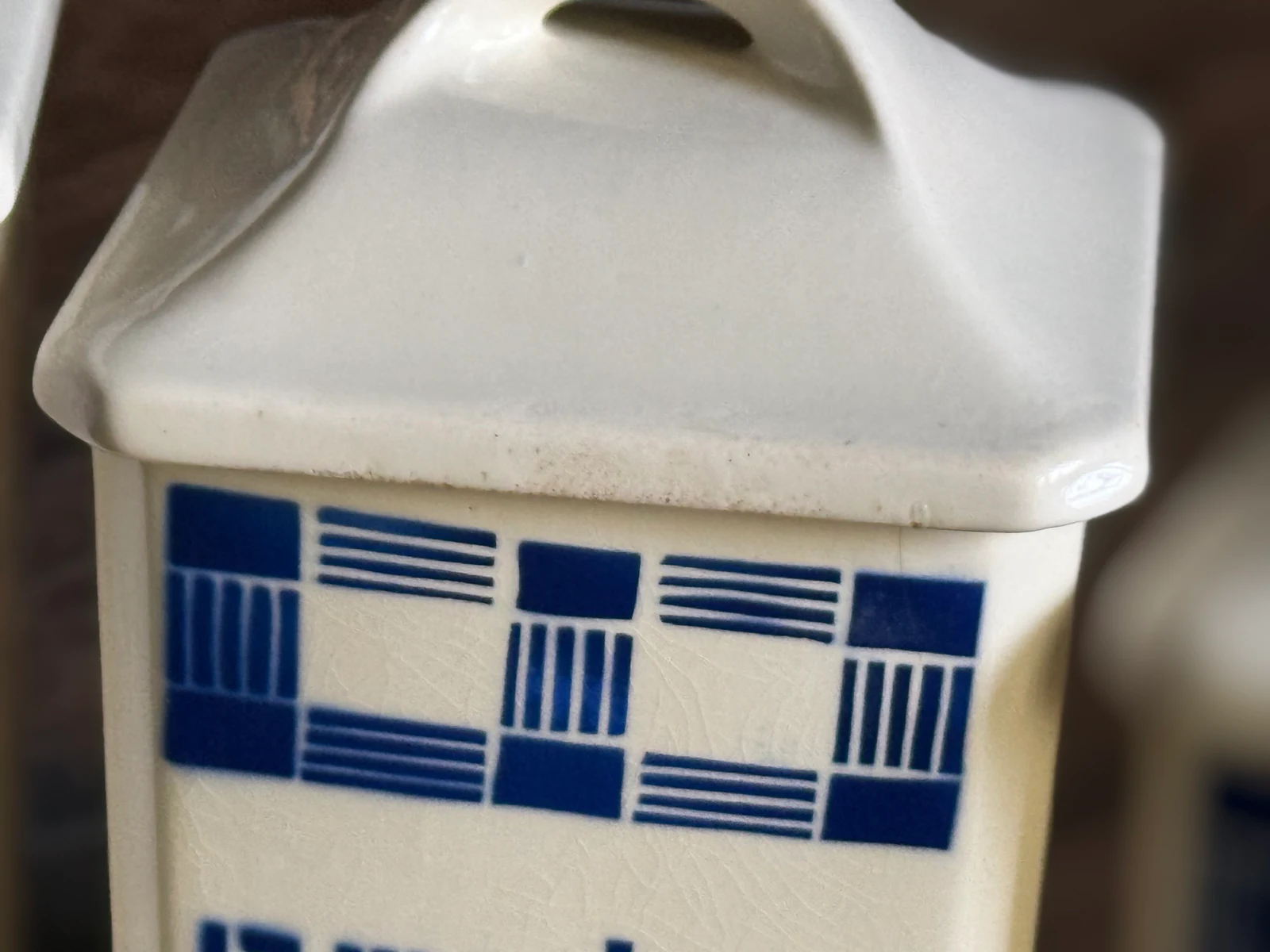
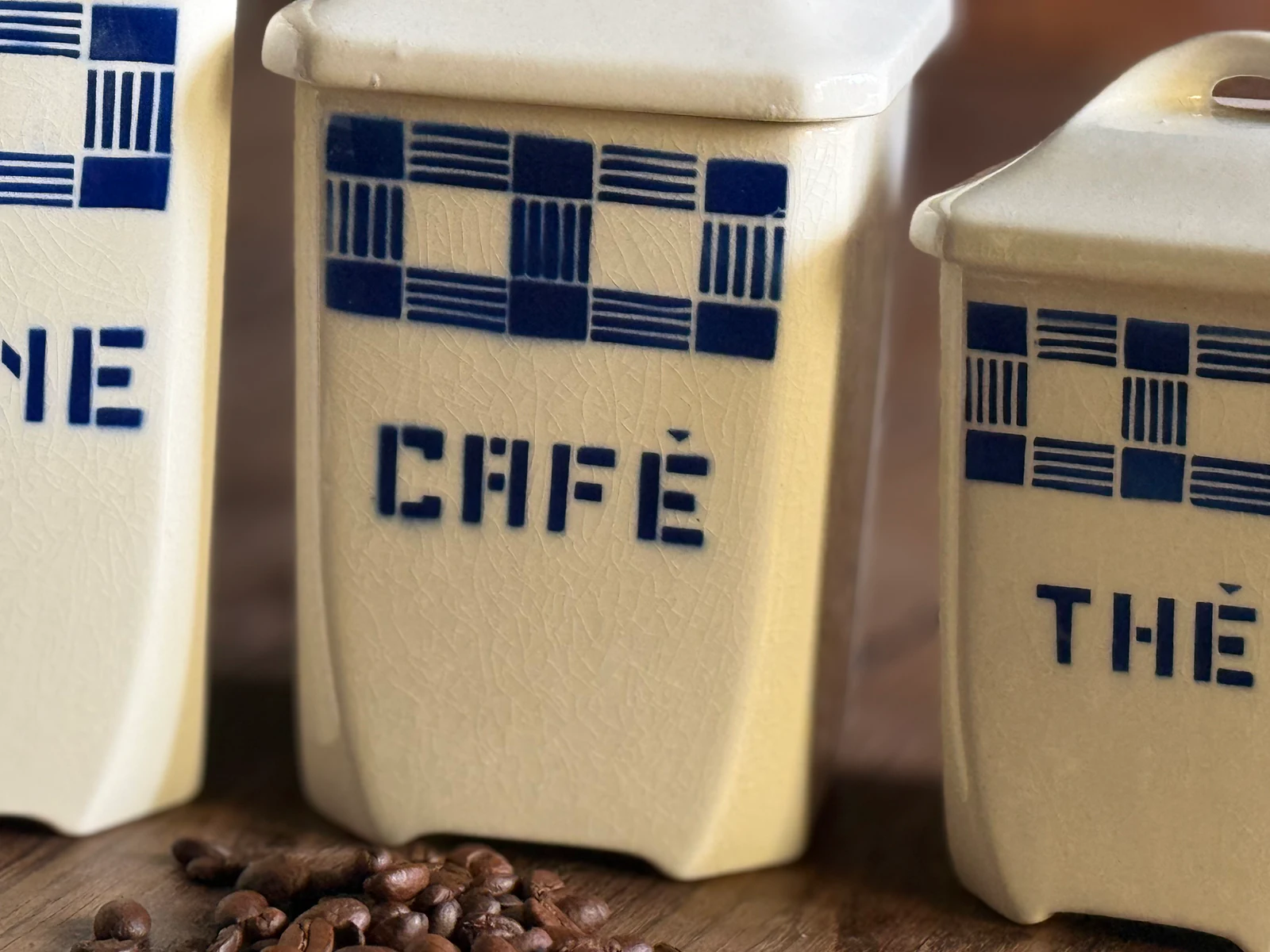
The decoration is a frieze of interlocking squares and rectangles, alternating solid blue and white reserves, accented with regular hatching. This geometric repertoire, readable at a glance, is the signature of the 1920s–1930s: the influence of the decorative arts from the 1925 Exposition is transposed into utilitarian ceramics. The angular lettering extends this graphic language.
The four jars are not identical: size decreases from sugar to flour, then coffee and tea, each suited to the density and consumption of its contents. Placed side by side, they form an ascending or descending frieze, a visual rhythm much sought after in interiors of the period — and still just as right today on a countertop or open shelf.
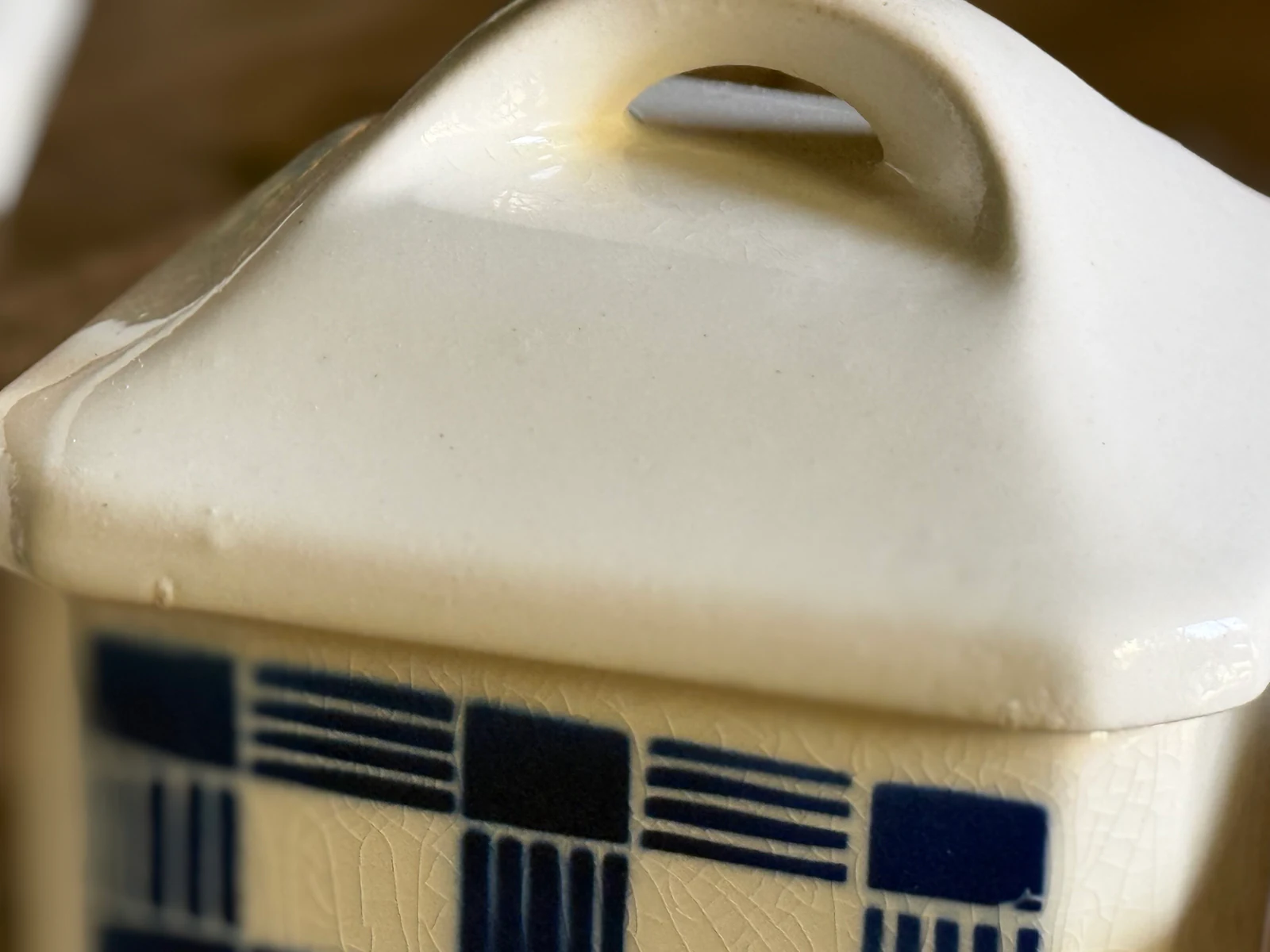
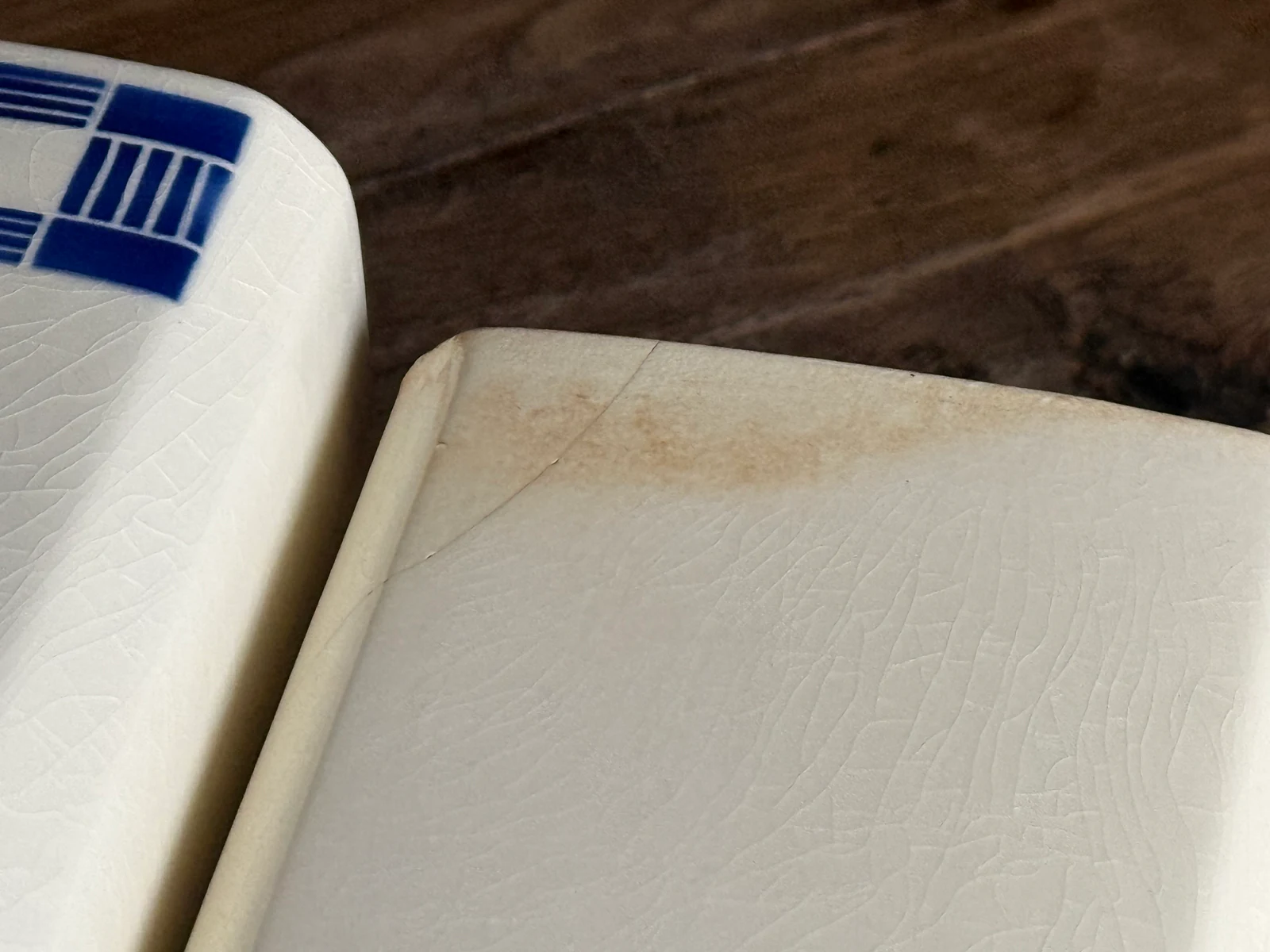
The earthenware, covered with a slightly ivory-cream glaze, shows the soft patina of pieces that have lived. A fine crazing runs across the glaze of some pieces, an authentic sign of age and the object's life, without affecting its apparent sturdiness or the crispness of the painted decoration.
In the kitchen, of course, for sugar, flour, coffee beans and loose tea — their lids protect from moisture and odours. But also as decorative pieces: on a raw-wood sideboard, a retro kitchen shelf, a collector's buffet, or even as small plant pots. The cobalt blue dialogues beautifully with dark wood, brass and the white of old earthenwares.
Because they bring together everything we love in quality vintage: an identifiable manufacturer, a strong graphic period, a daily function and a complete set of four. This is the kind of ensemble that instantly gives character to a kitchen or a collection of French ceramics.
Faïencerie de Badonviller, Meurthe-et-Moselle (Grand Est, France). French-made, identifiable by the stamp on the base.
Why this set is irresistible
- A complete set of four canisters in matching sizes and labels
- The "Badonviller France" stamp guarantees authentic Lorraine faience
- The blue-and-white geometric pattern is pure Art Deco vocabulary
- Pieces that are both genuinely useful day to day and highly decorative
- Period patina and crazing that tell their own story
Set it aside — it may be waiting for you