2
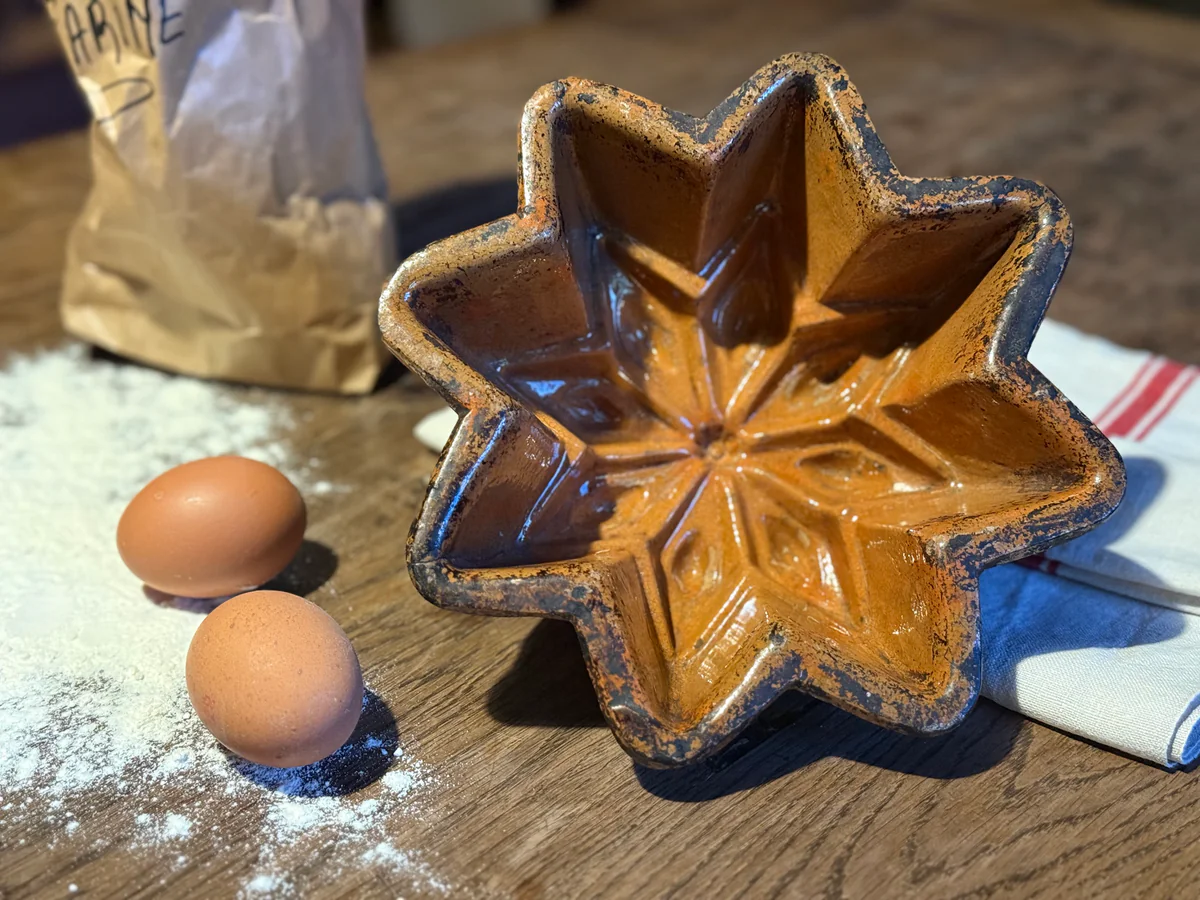
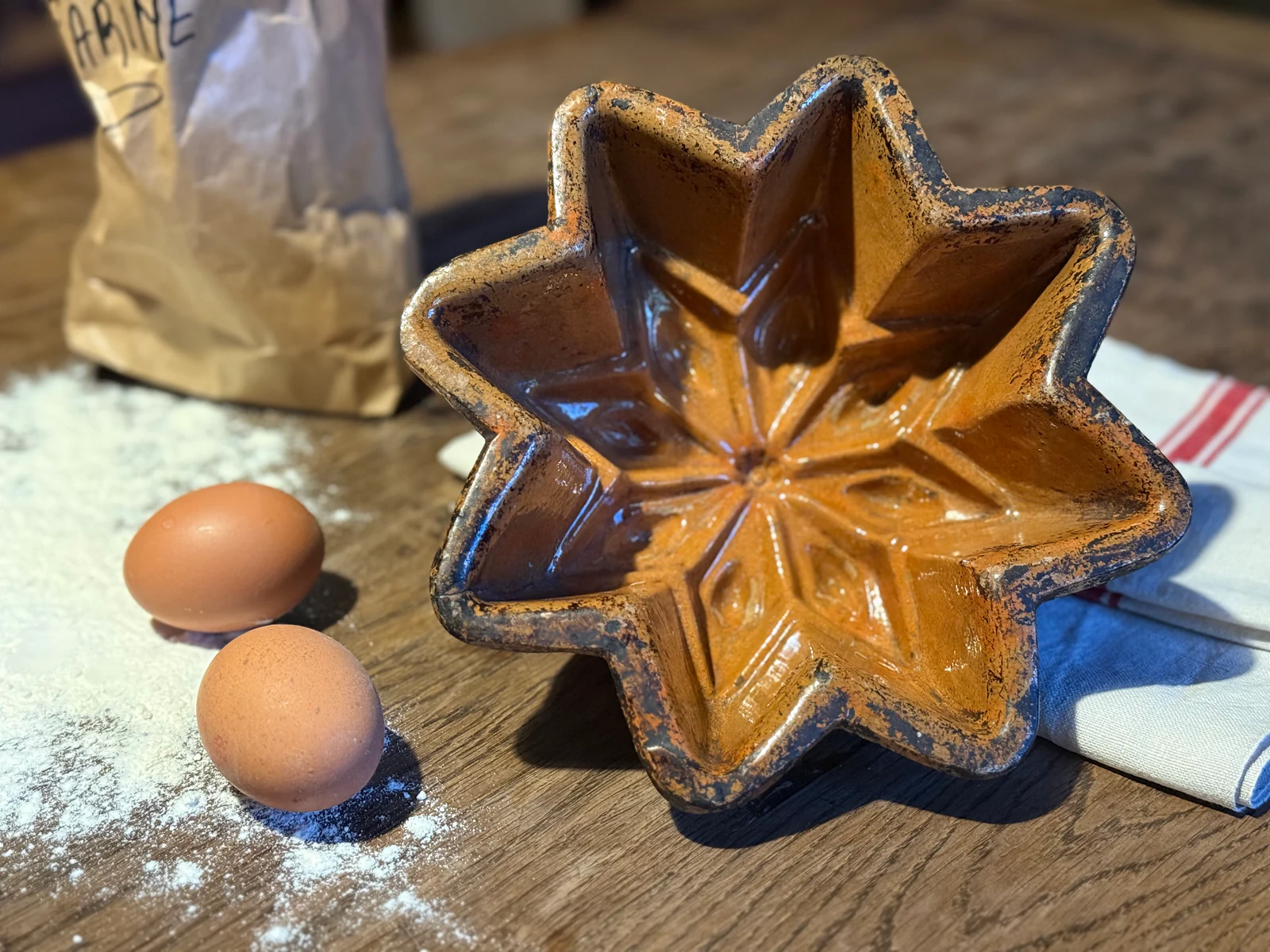
Here is an old mould of a kind no longer made: an eight-pointed star, hand-formed from generous terracotta and glazed in deep ochre. Its crazed glaze, tips browned by time and blackened back tell of decades of baking and festive tables. A piece with real character, rustic and...
☞ Read more
Set it aside — it may be waiting for you
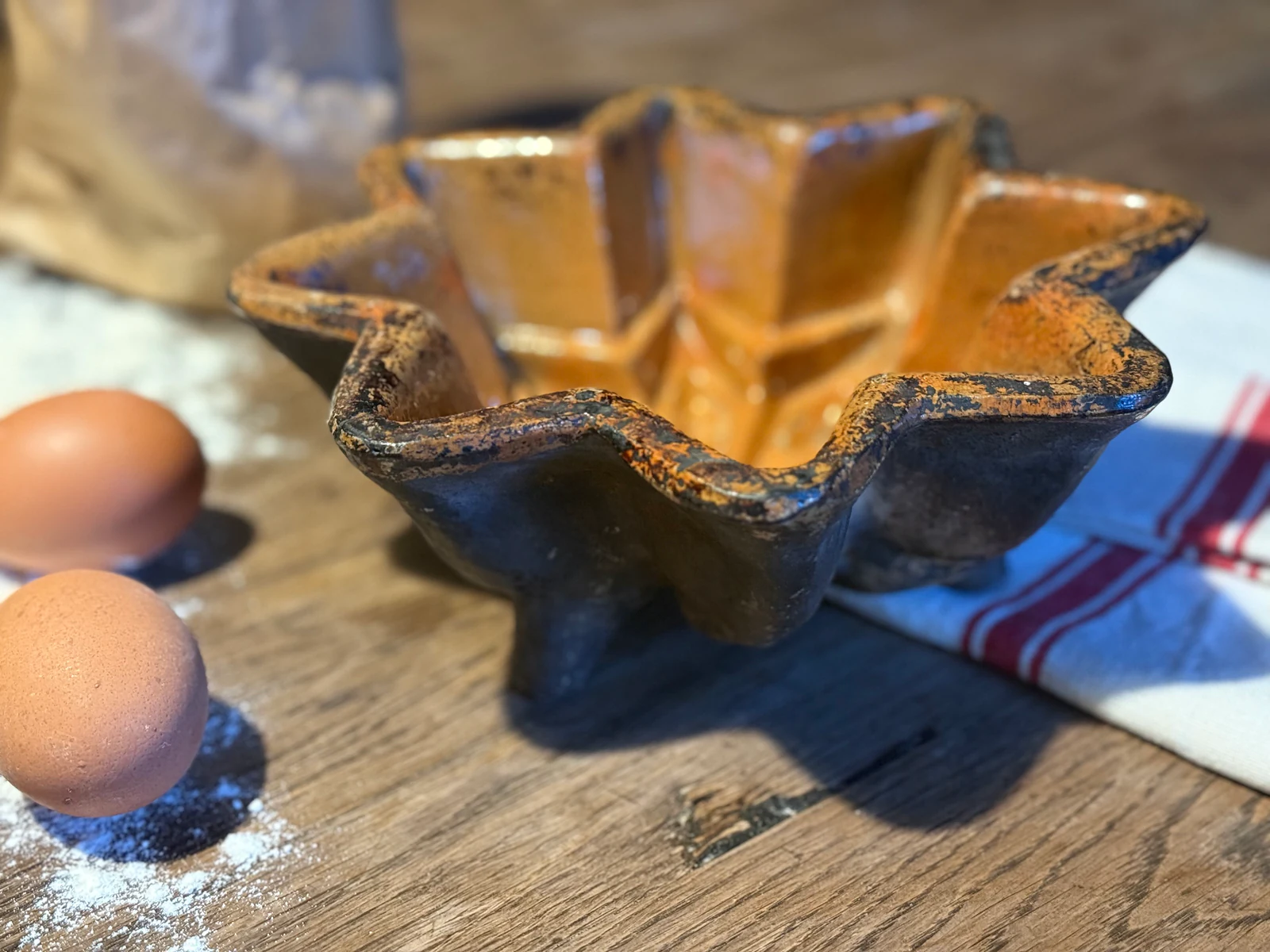
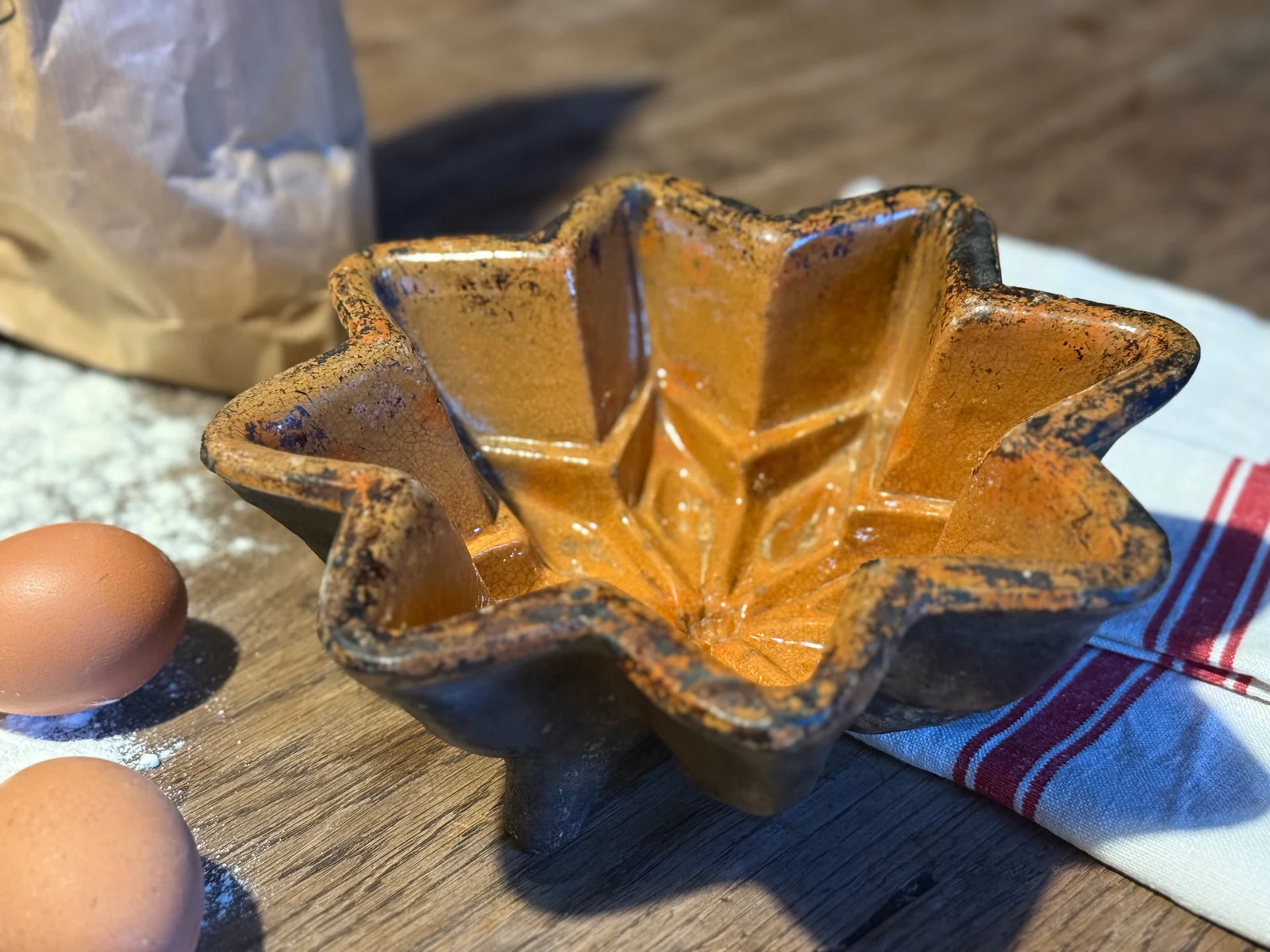
Here is an old mould of a kind no longer made: an eight-pointed star, hand-formed from generous terracotta and glazed in deep ochre. Its crazed glaze, tips browned by time and blackened back tell of decades of baking and festive tables. A piece with real character, rustic and warm, equally at home in a working kitchen or on a collector's shelf.
❝A terracotta star that still holds the memory of Alsace's great feasts. ❞
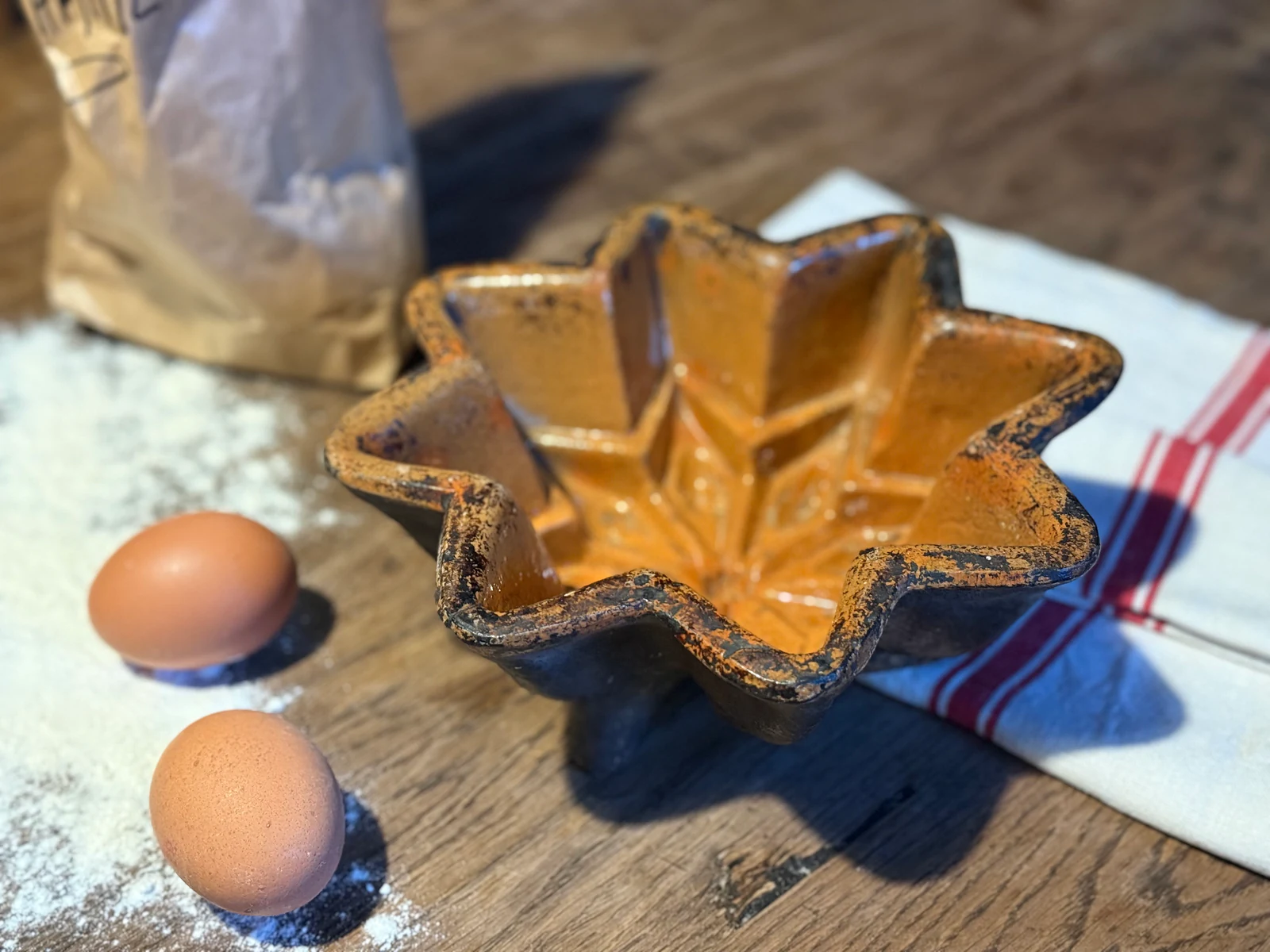
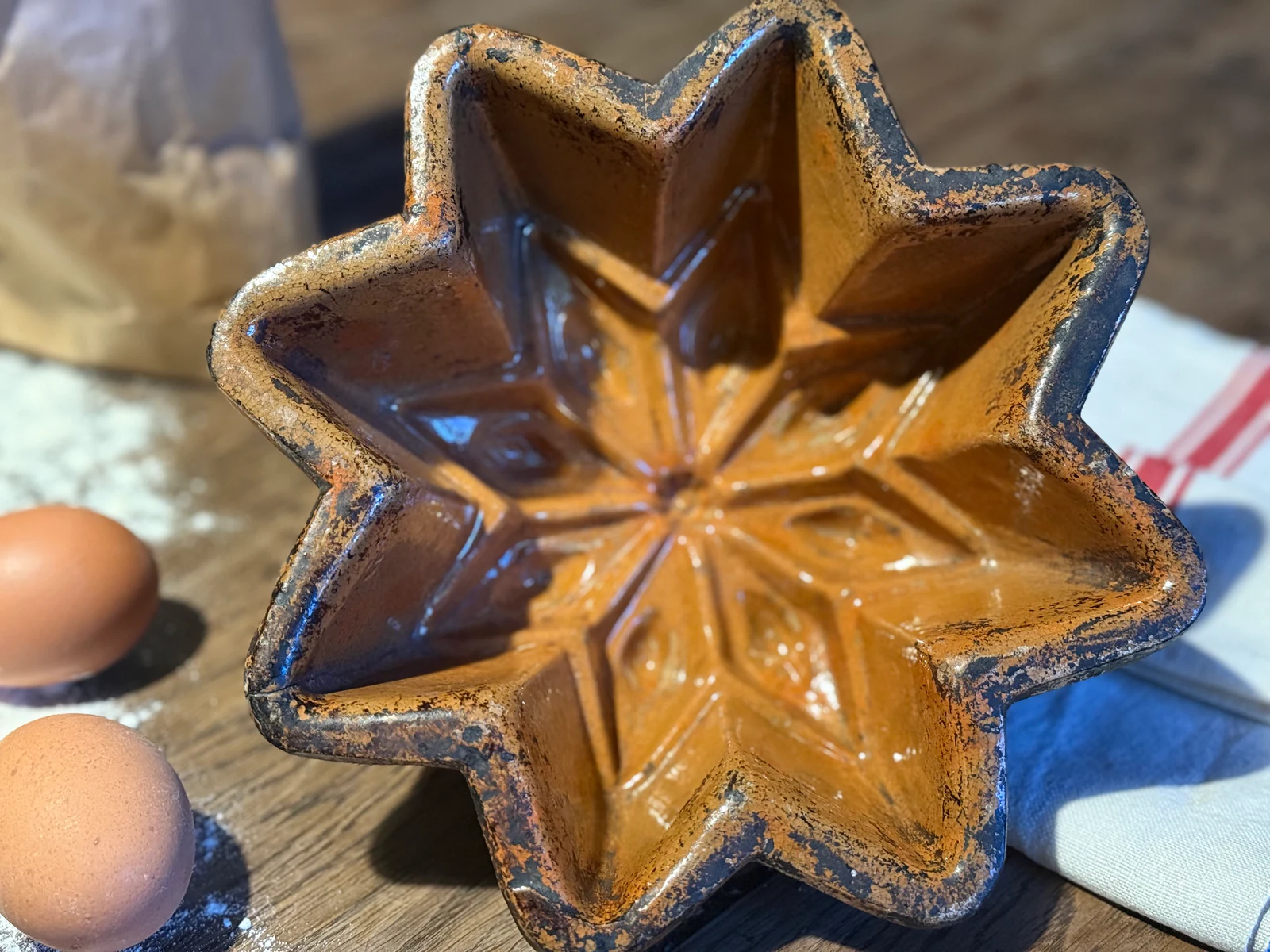
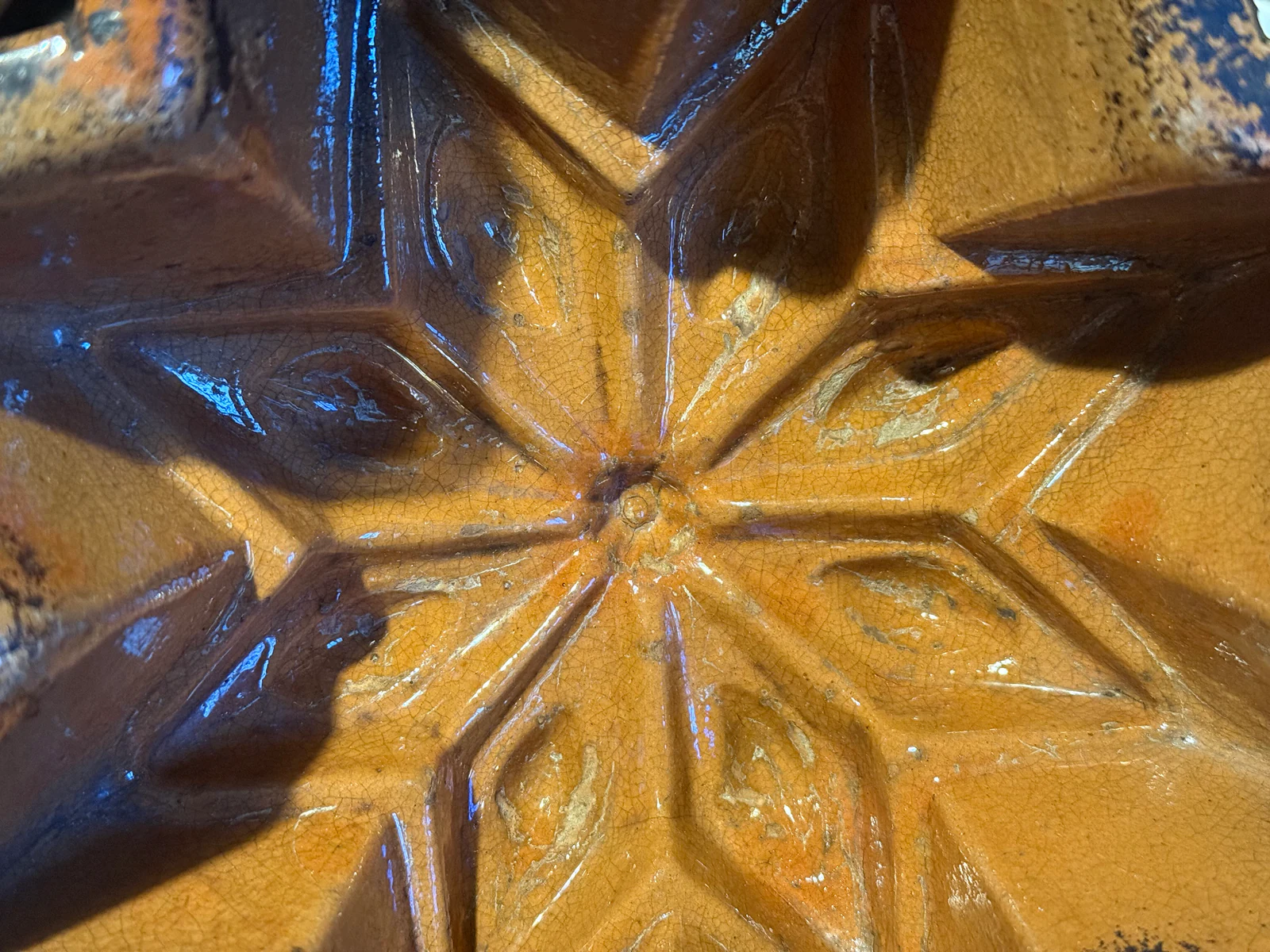
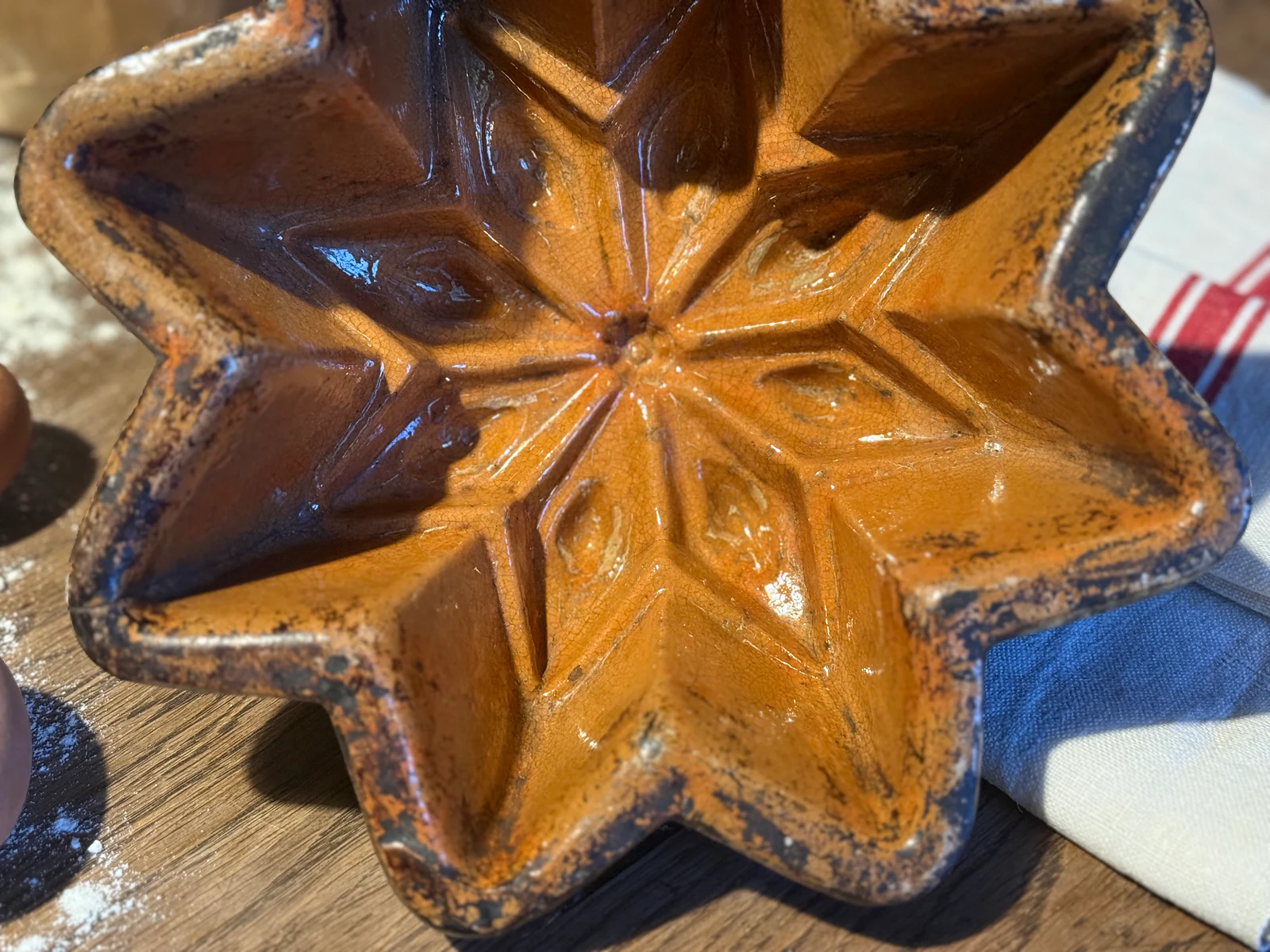
Eight points, gadroons radiating from the centre and rising in crisp ridges to the rim: this mould is anything but neutral. Its dessert-star silhouette alone conjures up the whole atmosphere of an old-fashioned celebration. Set on a wooden surface, it gathers light in its hollows and casts real shadows across the table.
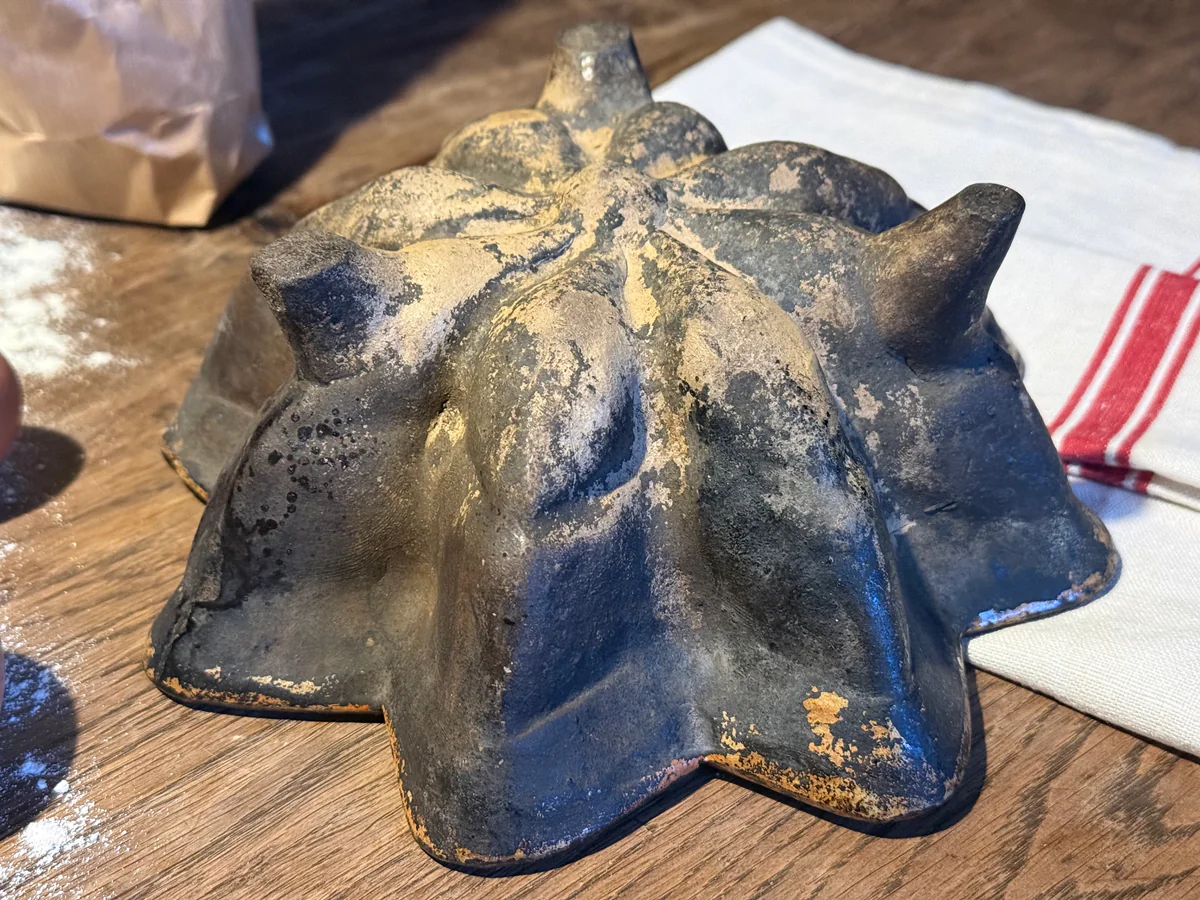
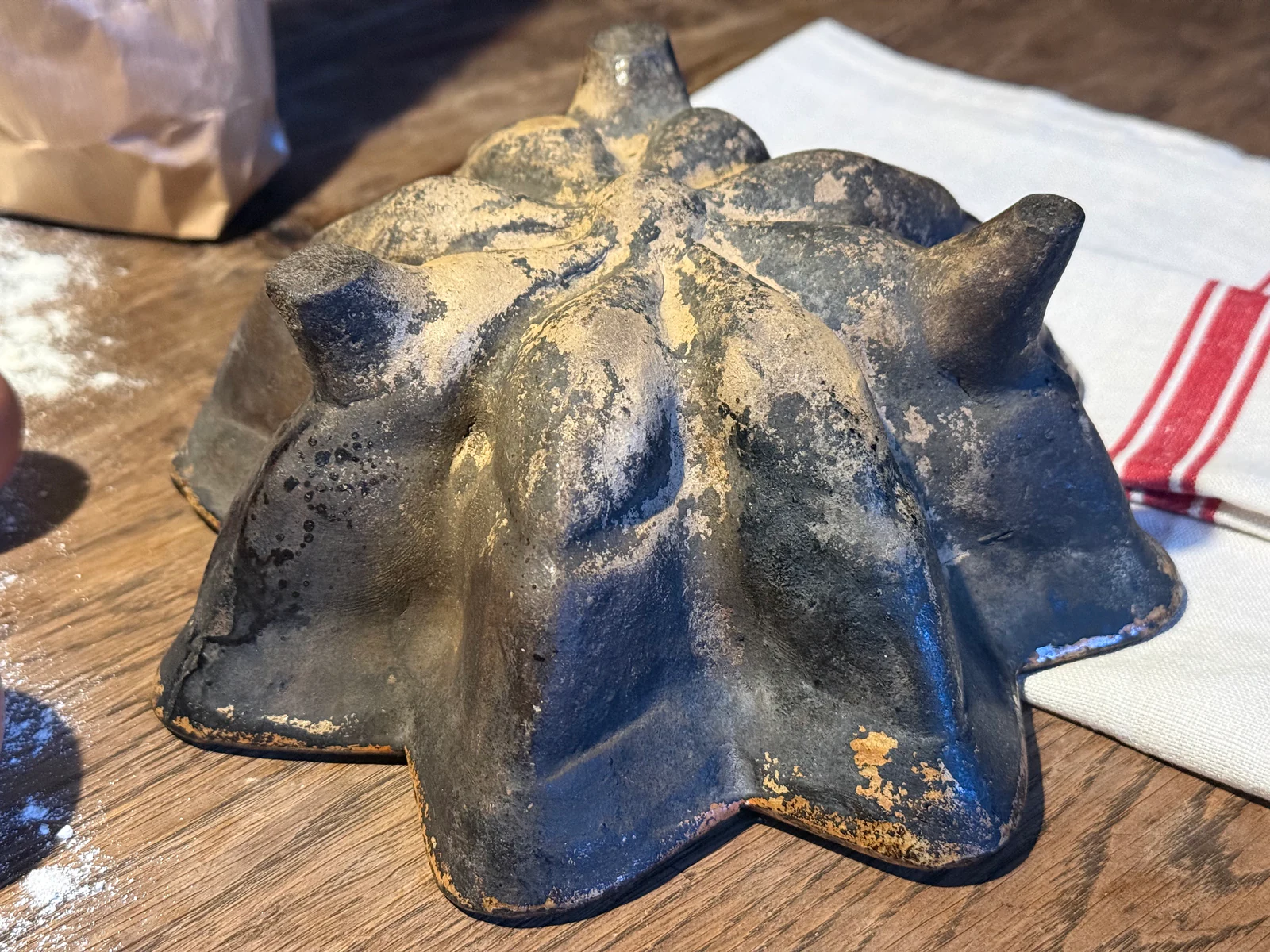
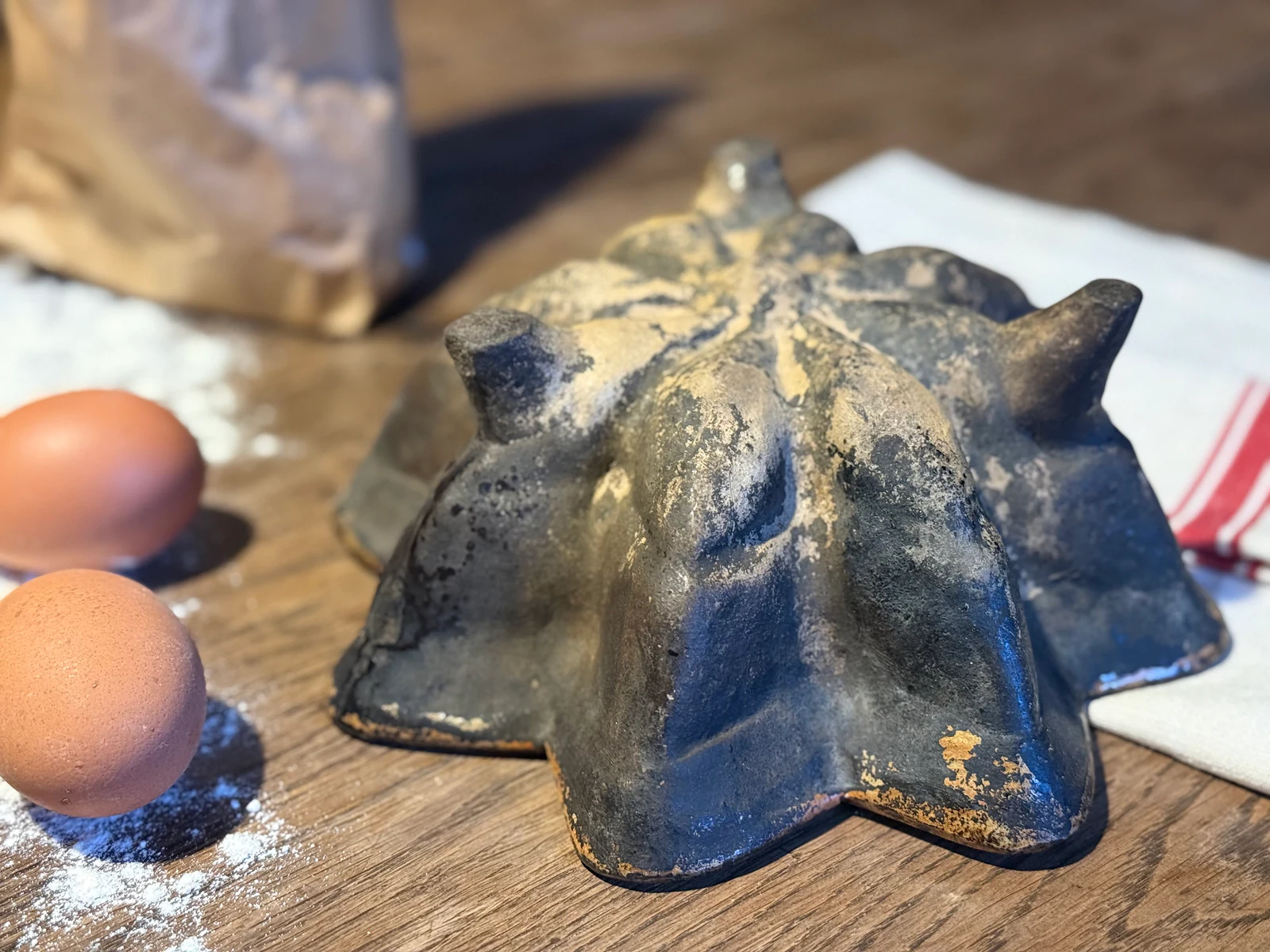
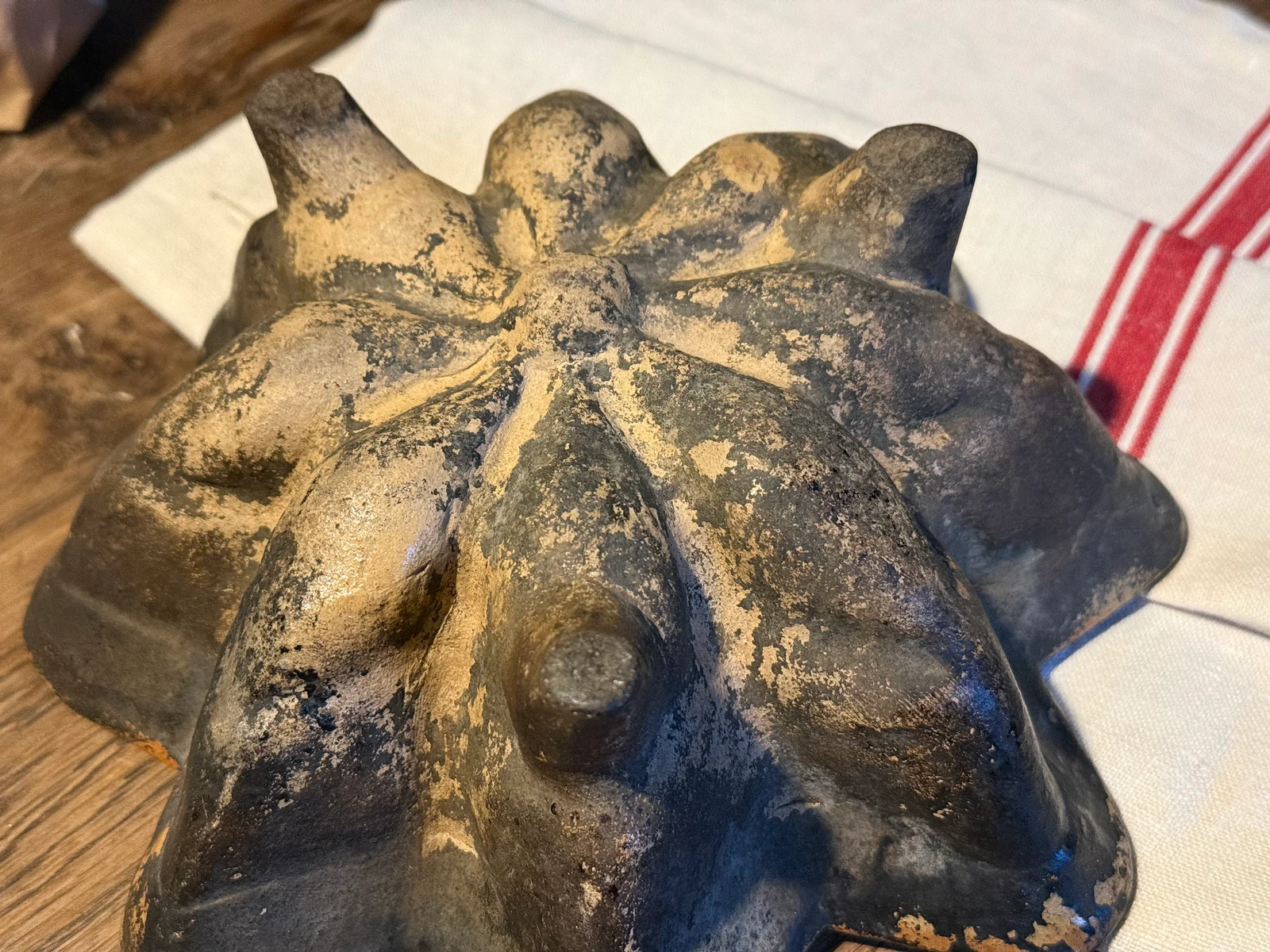
The inside is finished in a deep orange-ochre, glossy beneath the glaze, while the outside shows a very dark, almost black brown, grainy and flecked with small firing marks. The interior surface is entirely crazed: this web of fine lines, known as crazing, is time's signature on glazed terracotta. You can also read in it the trace of the cakes baked there, decade after decade.
According to the information passed down, this mould comes from a pottery in Alsace and dates to the turn of the 19th and 20th centuries. The region has a very old tradition of earthenware moulds, turned, stamped and then lead-glazed to receive cake batters as well as savoury preparations for grand occasions. The central foot, pinched by hand, reveals the potter's speed and practised touch.
The points show losses of enamel and brown chips, the edges are irregular, the back bears marks of setting down and firing. Far from being disqualifying flaws, these scars give the piece all its personality: an object that has lived, never "decorative" in today's sense, but frankly useful.
This mould is still perfectly usable for a celebration cake or a moulded dessert, after gentle washing in warm water and thorough drying, without harsh detergent. It can also be repurposed: as a trinket dish, a soap holder, a jewellery tray, or simply hung on the wall above a worktop. In a country kitchen, a brocante-style home or a collection of French ceramics, it instantly tips the décor towards the authentic.
An old mould from a pottery in Alsace, Grand Est region, France. Estimated date: late 19th to early 20th century, based on the seller's notes and the appearance of the piece.
Why this star-shaped mould will win you over
- A spectacular star shape that creates a whole table setting on its own
- An authentic glazed terracotta, with its crackled glaze and deep ochre
- A pottery piece from Alsace, late 19th or early 20th century, impossible to reproduce identically
- An object that can still be used for a celebration cake, or repurposed as a catch-all or display piece
- A raw, patinated character—exactly what you look for in a genuine flea-market find
Set it aside — it may be waiting for you